We have been back in America since early July and are feeling more and more settled. Our trip home was uneventful with the exception that it took us ten days to get all of our luggage back to Rochester. We had Air Tags in several of the bags which helped us track our bags. I will make a post at a later time about wrapping up our time in Albania.
As usual, I am behind with my posts but I keep telling myself better late than never. When I asked Randy where he would like to visit for my school break he mentioned Gibraltar as a possibility. He has read several books with the setting of the Rock of Gibraltar and was curious to explore that part of the world. I have always been interested in visiting Morocco so since the two countries are so geographically close to each other, we decided to make a trip to visit both of them.
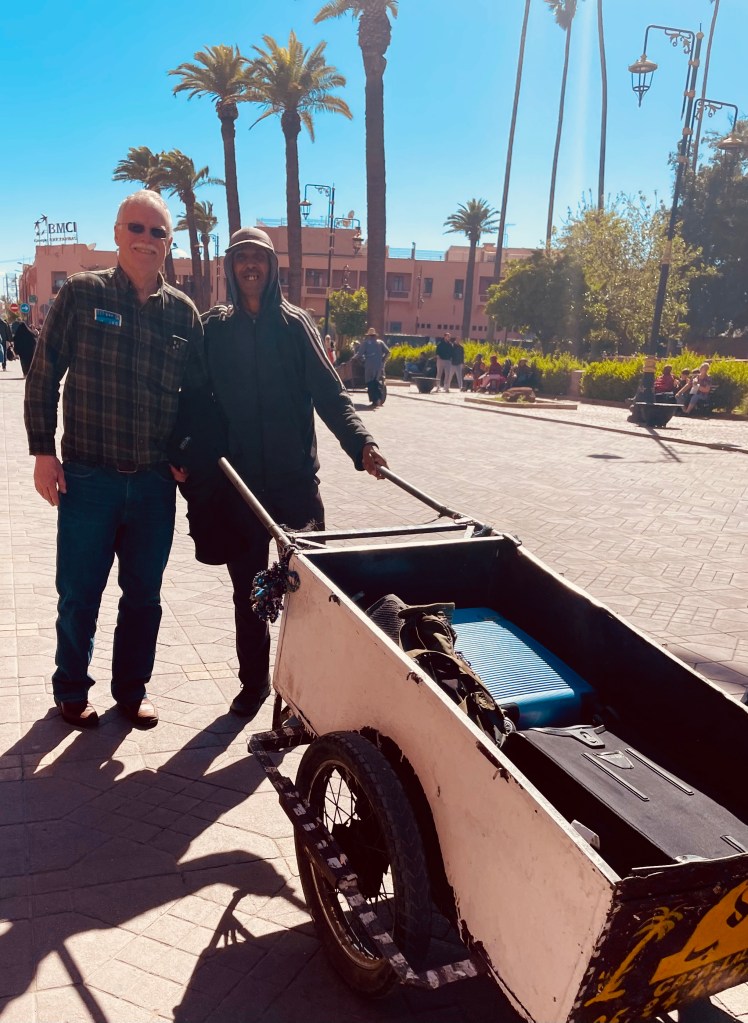
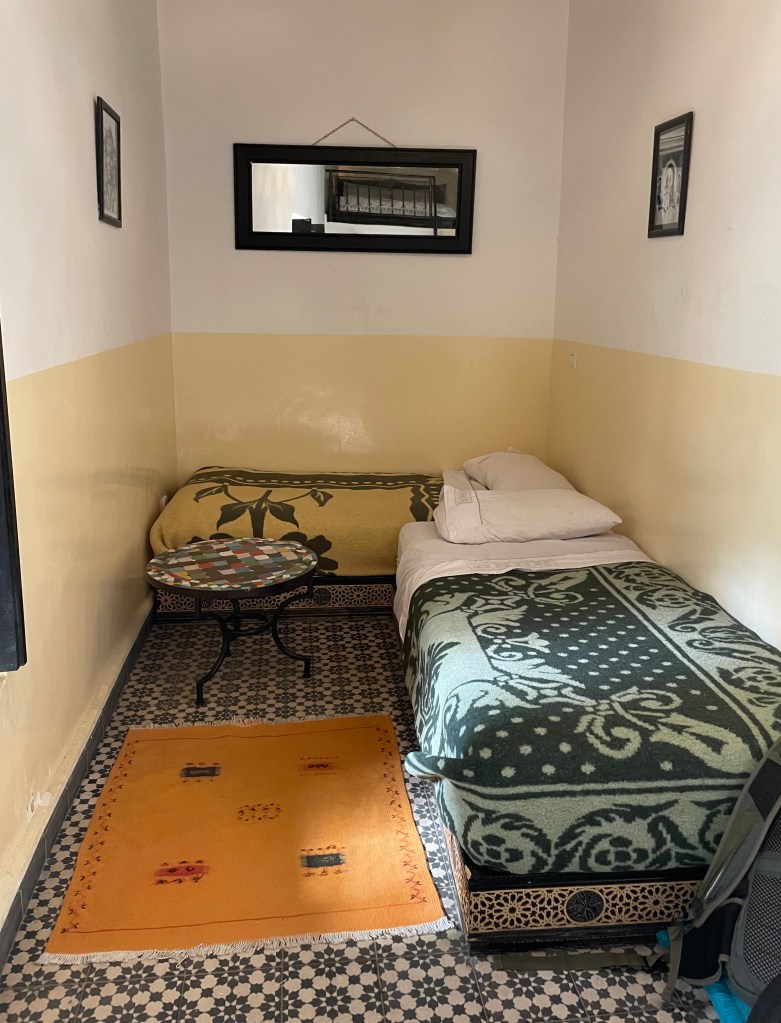
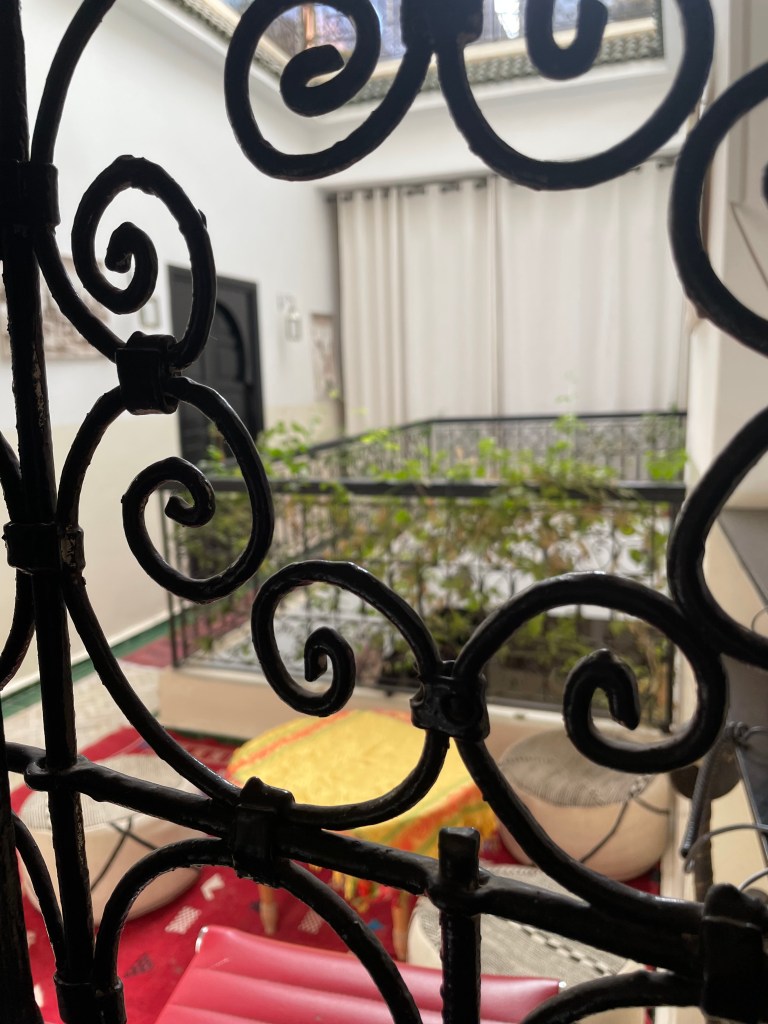
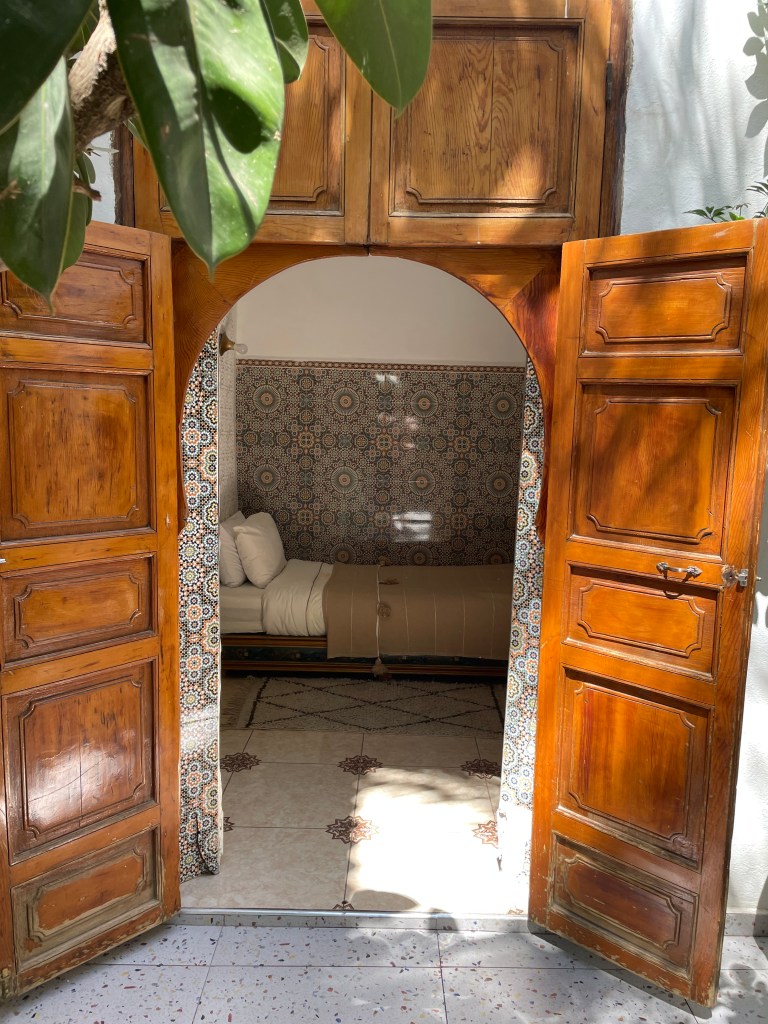
We started our trip by flying into Marakesch. After our taxi driver picked us up at the airport, he dropped us off along a busy street close to our riad. Then the man above picked up our bags, put them in his cart and started walking towards the medina, a very crowded city square. Because of the language barrier, we did not understand what was happening at first. We even thought our bags were being stolen for a few minutes. Everything turned out well despite our initial concerns.In the bottom center of this photo, you can see the man’s cart with my black suitcase and Randy’s green backpack. We were increasingly grateful for this man with the cart as we made our way through the very crowded streets full of people and motorcycles on the way to our riad.The stairs to our room and our first introduction to Moroccan tile work.The door to our room.Our small but comfortable room. I loved all the natural light.Looking out of our room to the open center courtyard.We have now arrived at our riad. A riad is a traditional Moroccan house with an indoor garden and courtyard. Riads are located within the Medina walls and are fully enclosed with high walls to keep out heat and street noise.After we settled into our riad, we went out exploring.
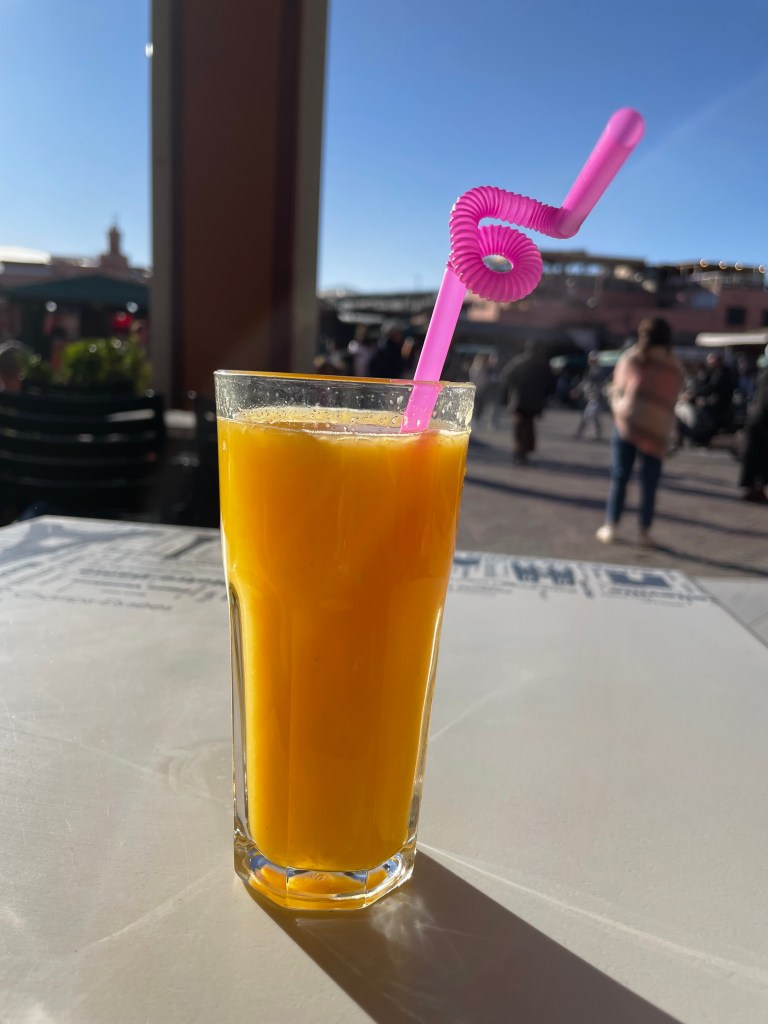
This video shows how absolutely crazy it is to walk through the streets of the medina. A medina is the old city center of a city in Morocco or northern Africa. They were originally built for protection against invaders and bad weather. There are very few cars in the medina because of the narrow alleyways but there are lots and lots of people and motorbikes.This is a classic restaurant, hotel and cafe located in the middle of the medina and has been there since 1912. We were intrigued because the word France was in the name of the business. We later figured out that Morocco was a French colony until 1956. The most common languages spoken in Morocco are Arabic and French. French is a second language for 30% of the Moroccan population.On our first day in Morocco, we enjoyed some fresh squeezed orange juice which is very common throughout the country. We also had our first mint tea. Mint tea is served throughout the day at breakfast, lunch, dinner, mid-morning, mid afternoon and in the evening. I don’t think we had a single meal that did not include mint tea. It is believed that mint tea helps with stomach ailments and heartburn and improves focus and intellectual performance. We did get used to having frequent servings of mint tea and missed it when we left Morocco.
I have included this map to better understand where we visited in Morocco. We flew into Marrakech, spent one night and the following morning left on a three day tour to see the rest of the country. I have circled the cities we visited. We had a choice when choosing a tour, to visit these cities or go out into the Sahara Desert for two nights. We only had time to do one of the tours. If we ever go back to Morocco, I definitely want to sleep in the Sahara Desert.
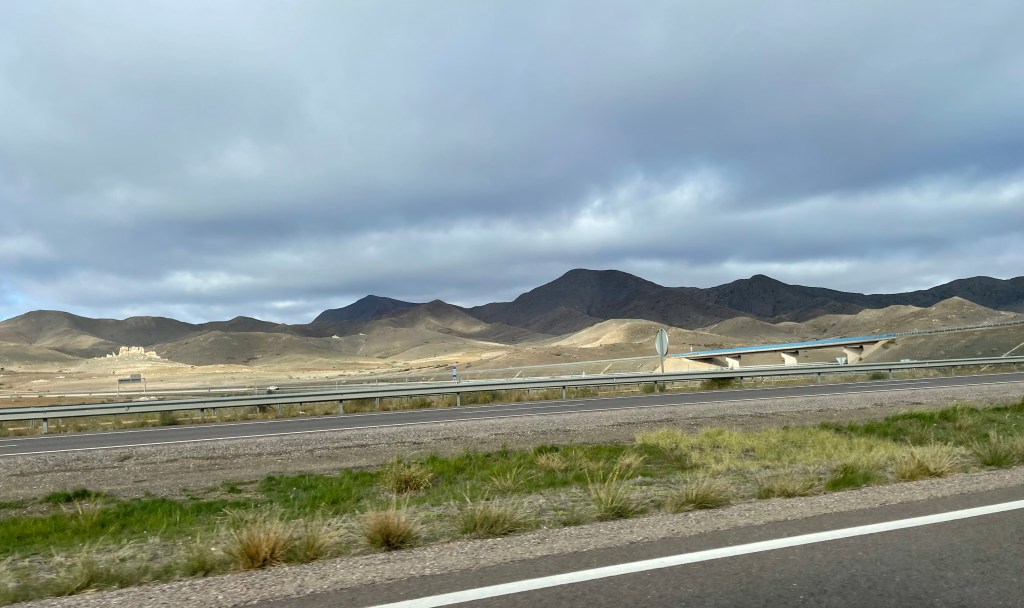
This is what much of the countryside looked like as we drove along in the tour guide’s car towards Casablanca.Of course, I know that there are Starbucks throughout the world but I still find it a bit startling when we saw this in a remote area of Morocco.
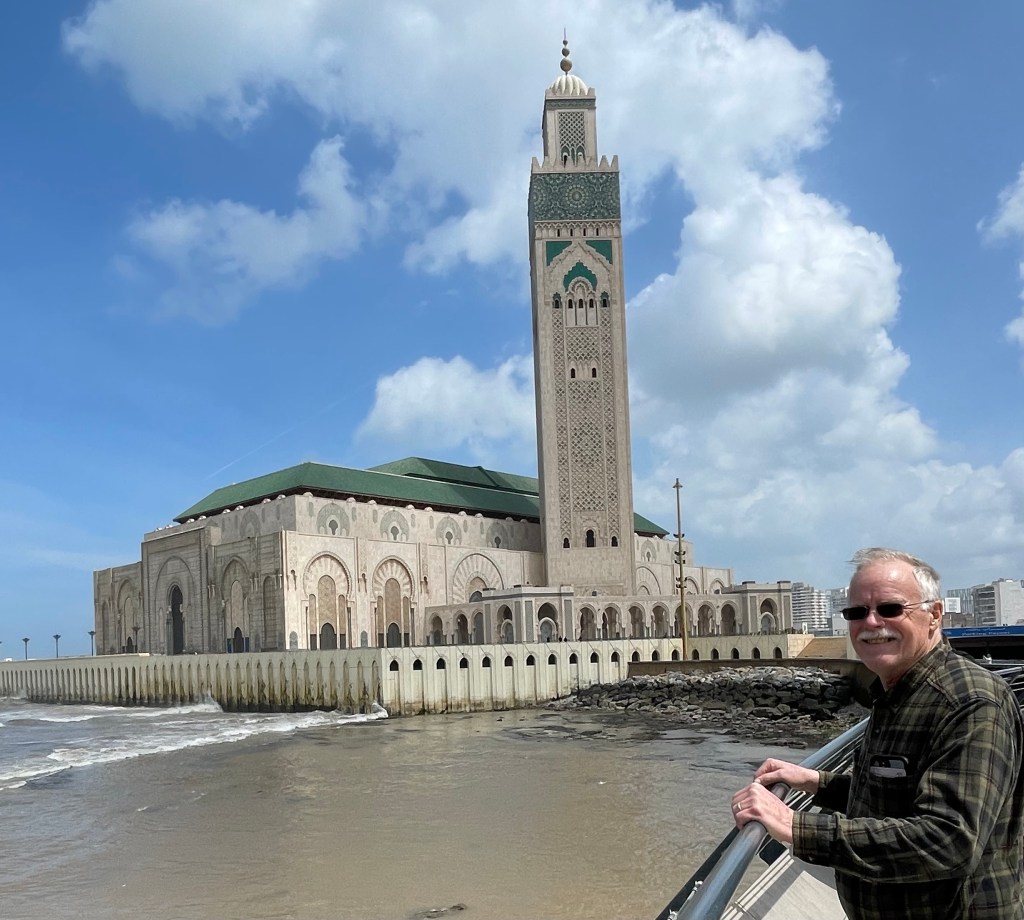
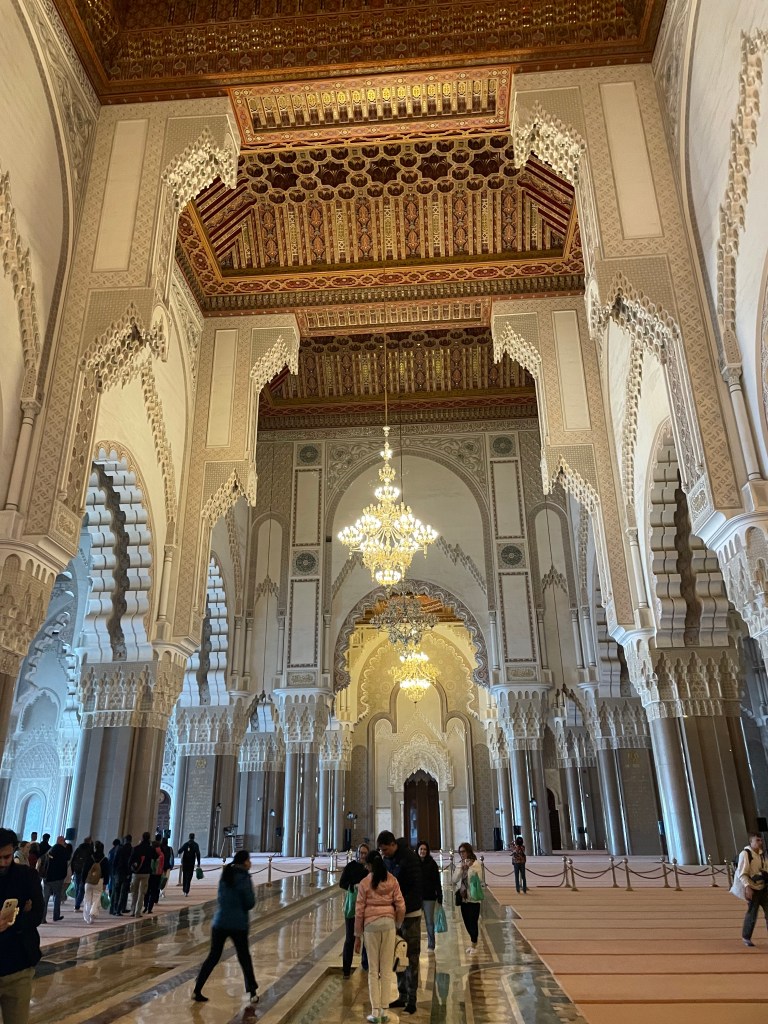
Casablanca is one of Africa’s largest cities and is the economic and business center of Morocco. It also has one of the largest ports in Northern Africa. However, as a tourist destination there is not much to see. We spent a few hours in Casablanca visiting the beautiful Hassan II Mosque.
The Hassan II Mosque is the second largest mosque in Africa and was built in 1993. The tall tower part of the mosque is called a minaret. The purpose of a minaret is to call to prayer. This minaret is the second tallest in the world, it even has an elevator inside of it.
Before a Muslim prays in a mosque they are required to wash their faces, hands, arms and feet. This is the beautiful spot where people wash in this mosque.The men pray in this huge beautiful room.The women pray upstairs in this small area.While we have lived abroad, we have visited many mosques. Without exception they have been beautiful, spiritual, calm places of worship. The only problem with each of them is that the men always are allowed to pray in the most beautiful, big part of the mosque while the women are shuffled off to a side room that is not nearly as beautiful or as big. 😦
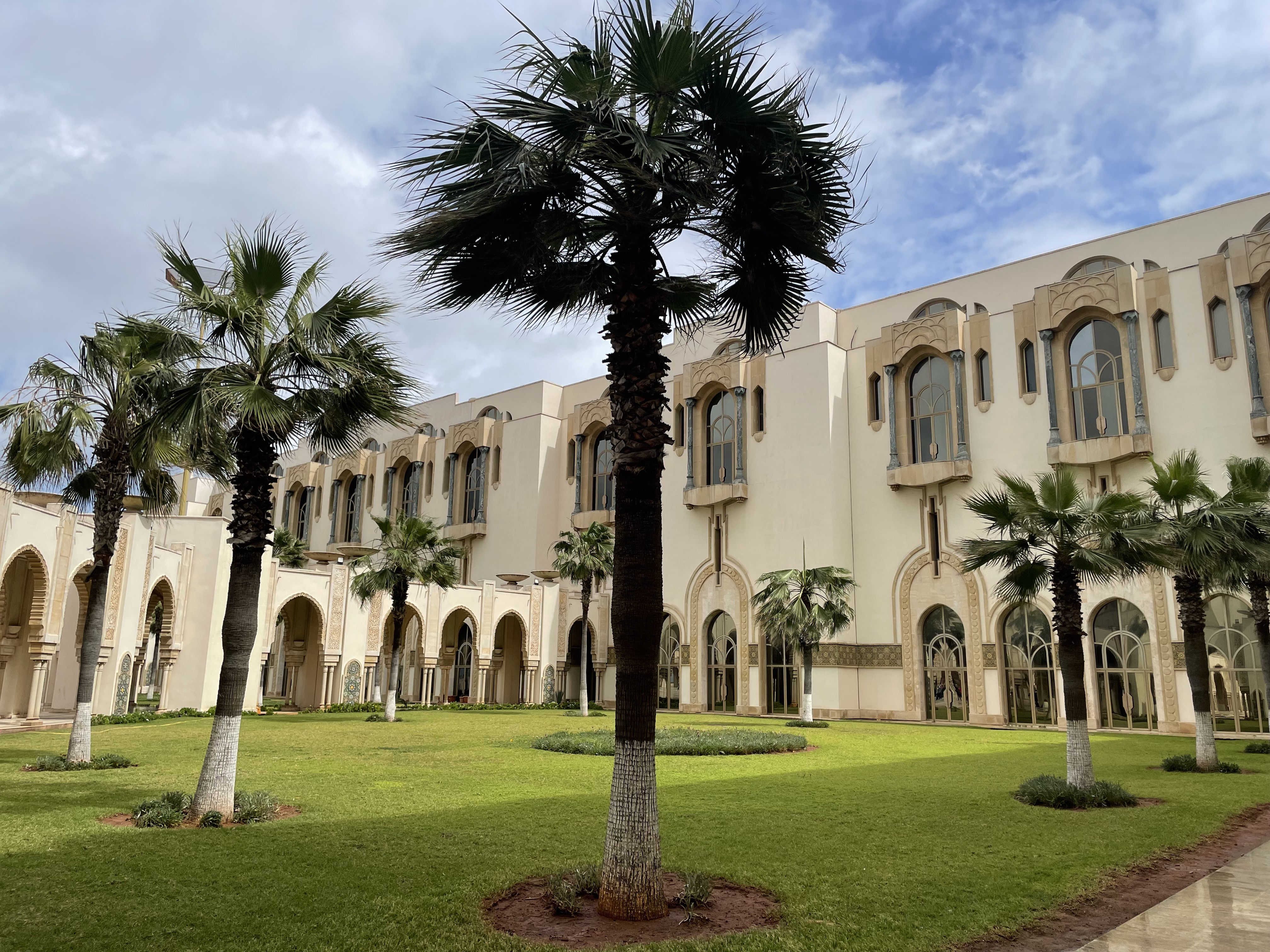
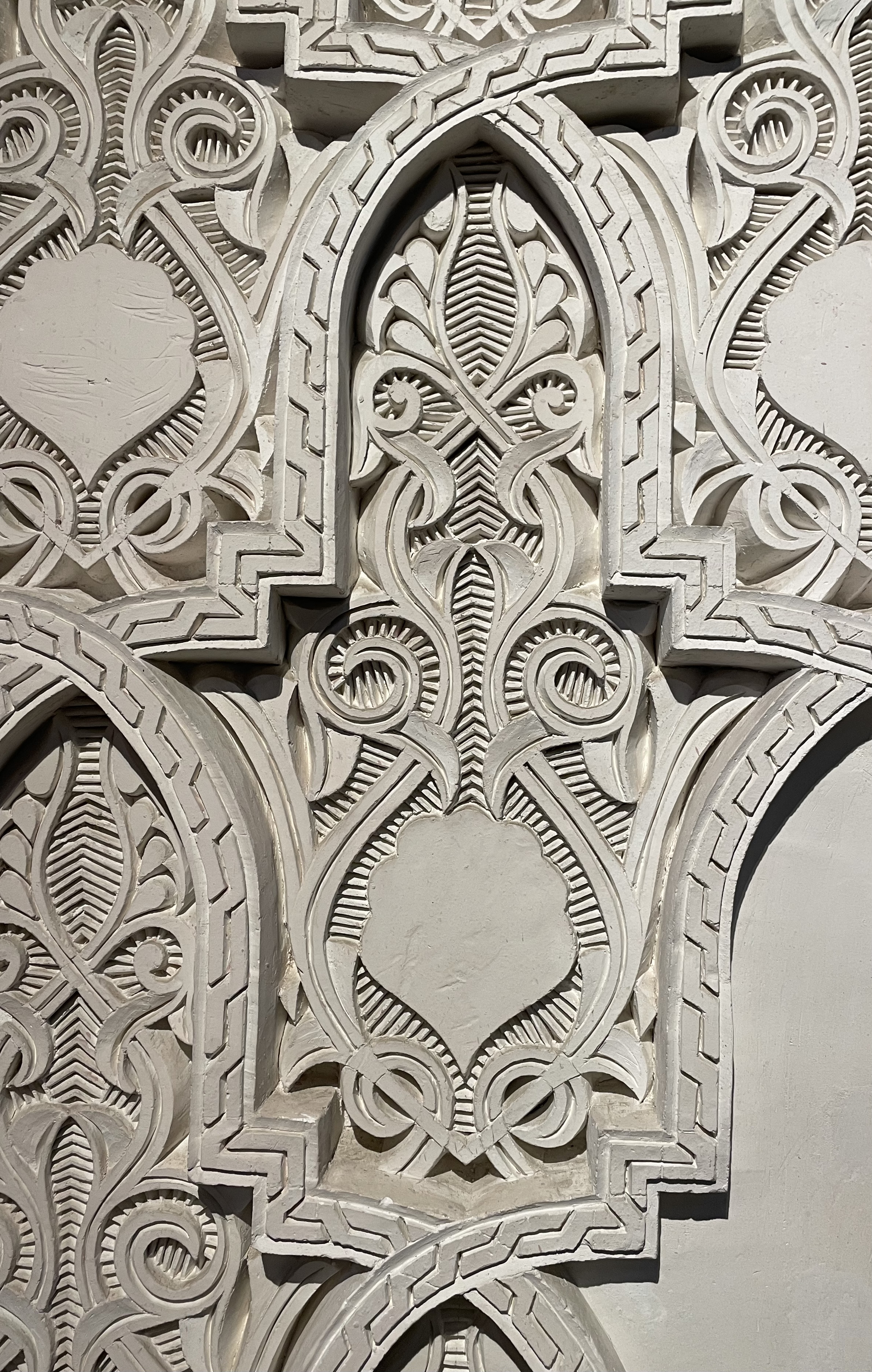
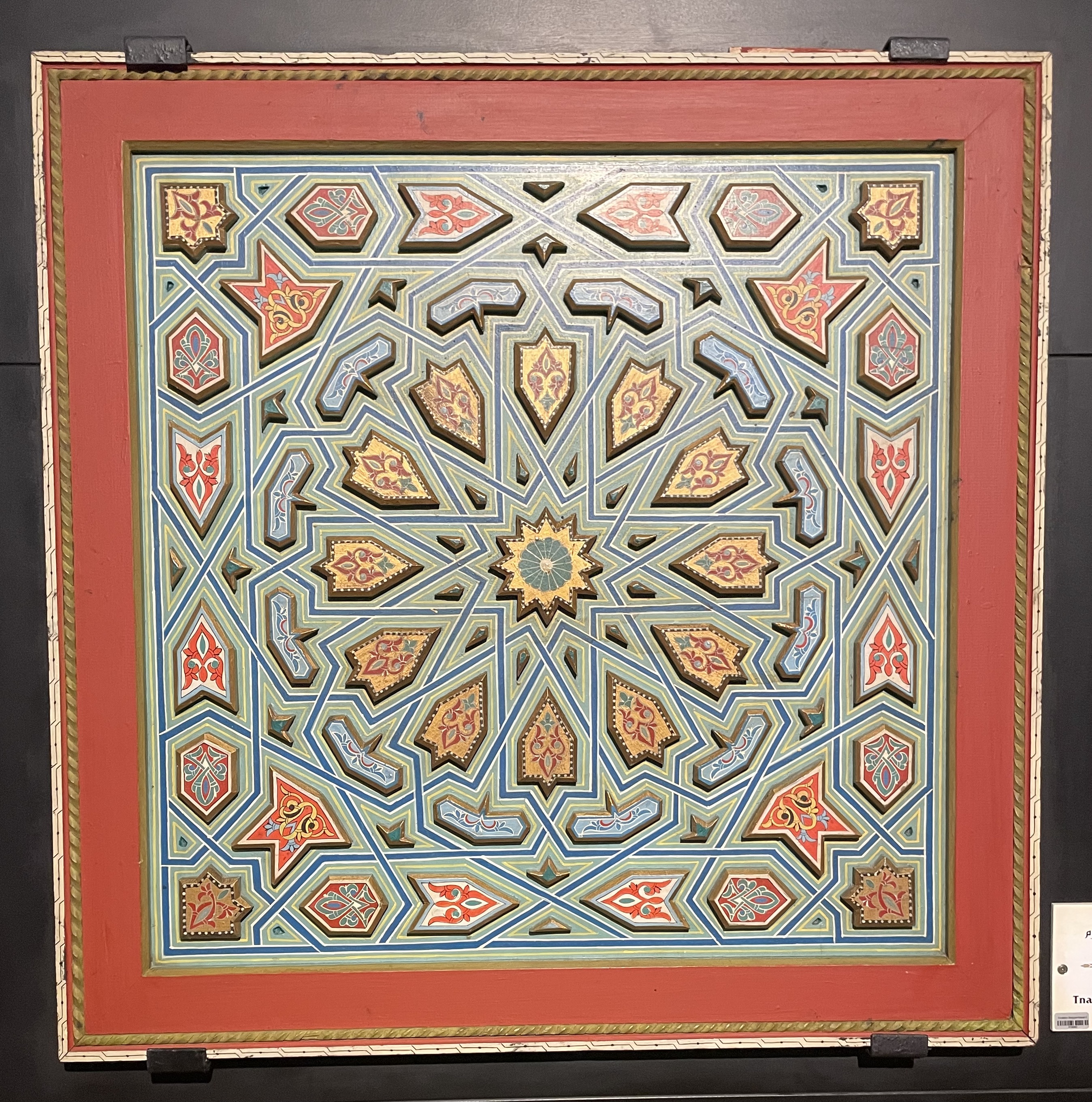
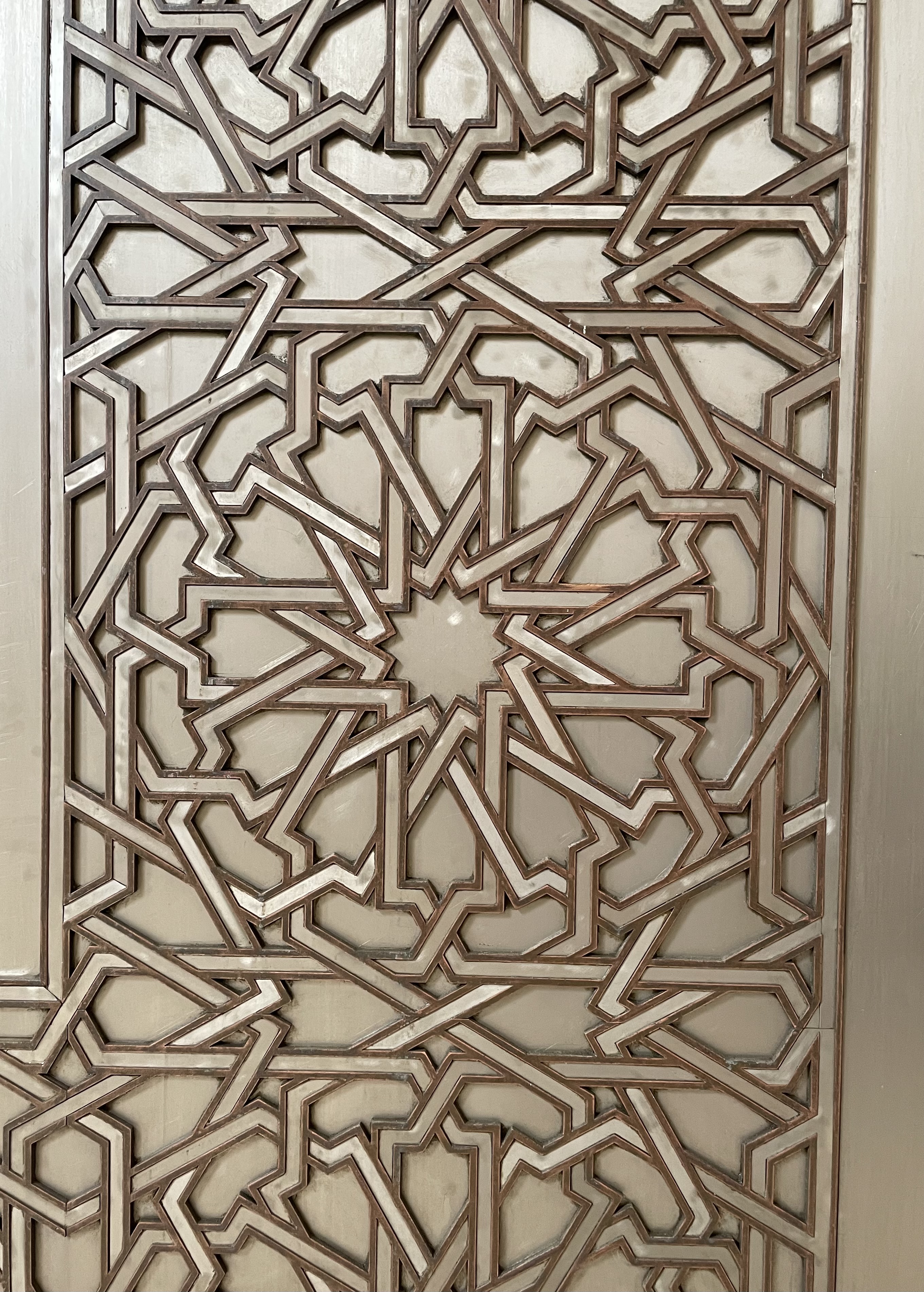
This is just a small sample of the beautiful artwork/tilework in and around the mosque.
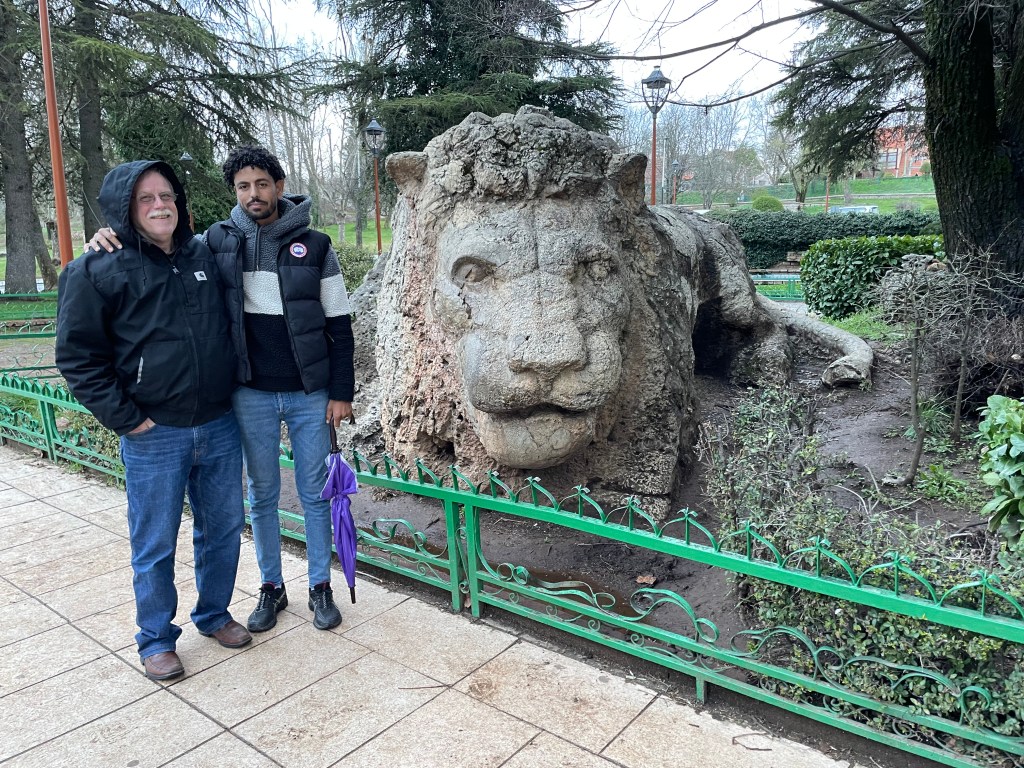
We have now left Casablanca and are headed towards Fes. Along the way we drove through the Atlas Mountains which is populated by these baboon monkeys.It was rainy so we only stopped briefly in the small town of Ifrane which is known as “Little Switzerland” because of the architecture. Randy is pictured here with our tour guide, Kamal. Lions symbolize strength and power and are the national animal of Morocco.
When we booked this tour of the Imperial Cities of Morocco, I assumed it was a small group tour. Instead it was simply Randy, me and our tour guide who drove us around in a very nice car. The tour included two nights accommodation, breakfast, transportation, Kamal and two other tour guides in the other cities we visited. It was extremely reasonably priced and allowed us to experience many different aspects of Morocco. When we visited Morocco it was during Ramadan. Because of that Kamal did not eat or drink from sunrise to sunset. When the sun set, he was ready to eat as shown in this photo. He even had an app so he could track exactly when he was allowed to eat. As you can understand , sunrise and sunset are different every day so that is why the app was helpful. Notice the fresh orange juice and mint tea as part of Kamal’s meal. Whenever we visited a restaurant between sunrise and sunset, the only people eating there would be tourists.
Observing so many Muslims celebrating Ramadan over the week really caused me to gain even more respect for their culture. Everyone seemed to be practicing their religion but at the same time not being pushy about it. Unfortunately, many Americans seem scared or uncomfortable when thinking about Muslims. Our experience has been nothing but positive when interacting with people whose religion is Islam. Of course, there are Muslims who cause problems but I do believe that the vast majority of Muslims are good people with very similar value systems to my own.
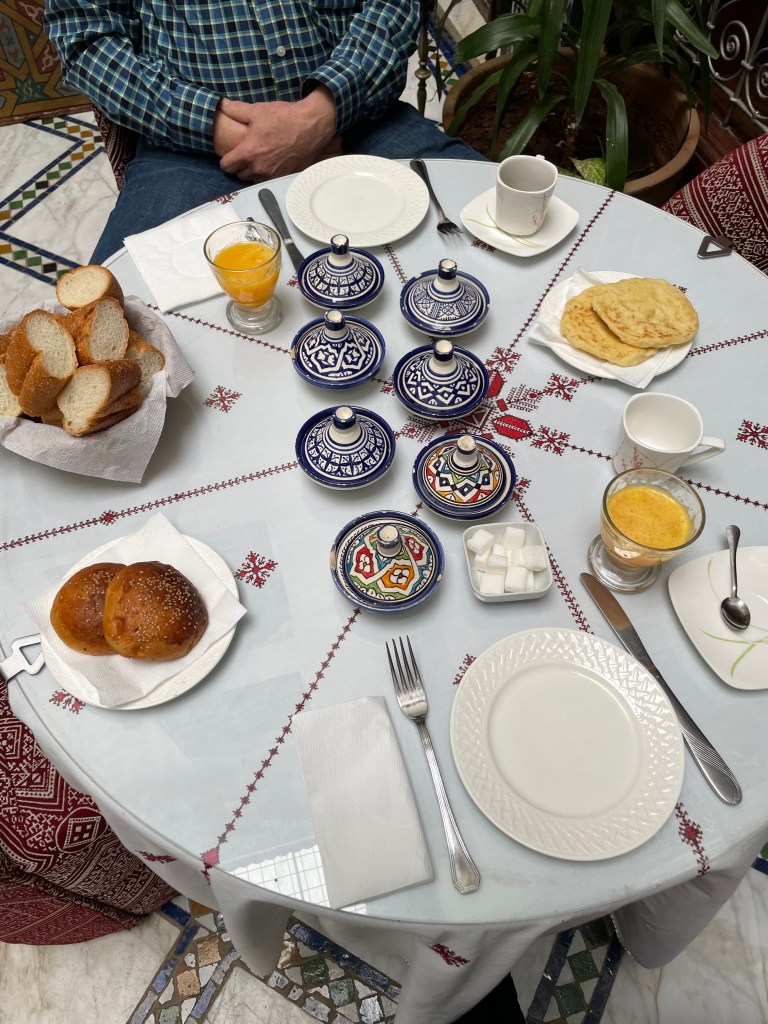
This is a really long video that I made to share with our kids. I wanted to share it with you so you could see the gorgeous riad we stayed in when we were in Fez. Staying here helped me understand how prolific tilework is in Morocco. This was our breakfast the following morning. Isn’t it beautifully presented?!? Each of the small covered bowls had a different food i.e. olives, honey, jam, etc. The mint tea has not yet been served in this photo.
We are now in Fes which is considered the cultural capital of Morocco. Fes is a UNESCO World Heritage Site best known for its walled medina called El Bali. The medina is believed to be the world’s largest car-free urban area.
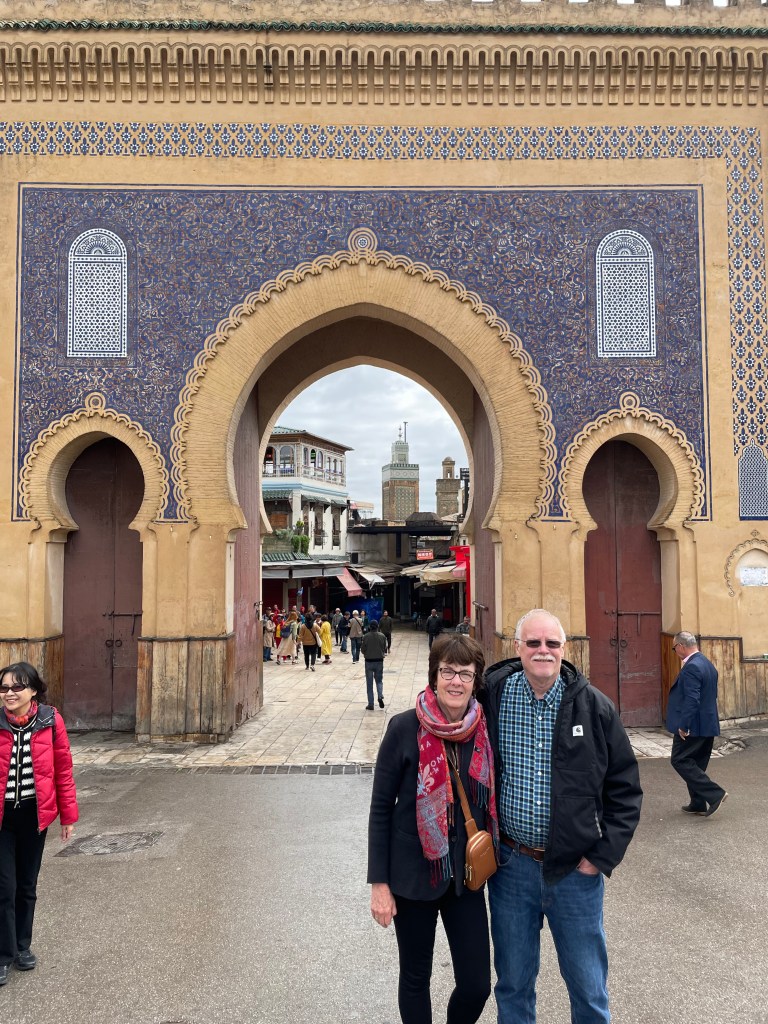
Here we are at the entrance to the Medina of Fes which was founded in the year 700.
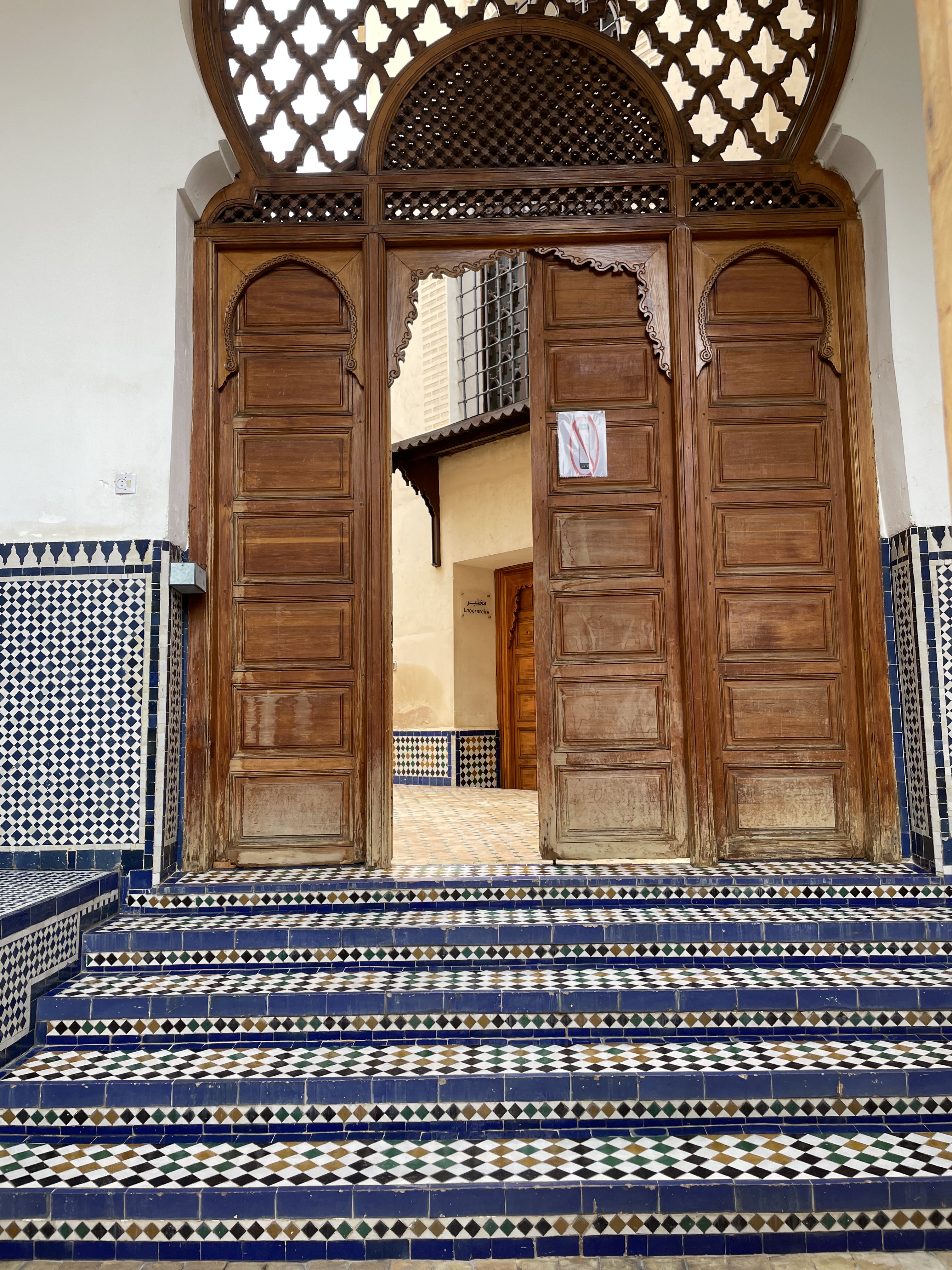
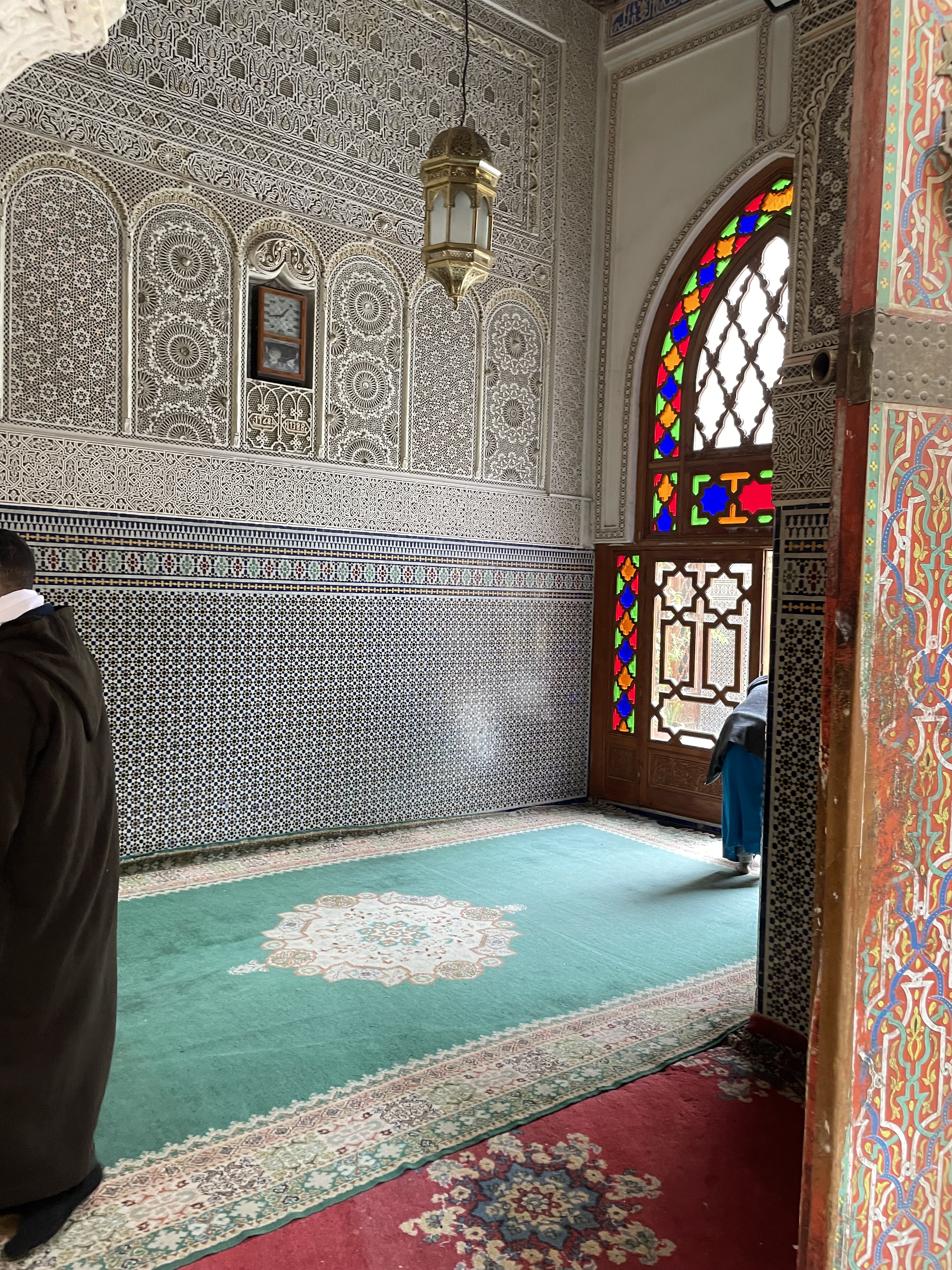
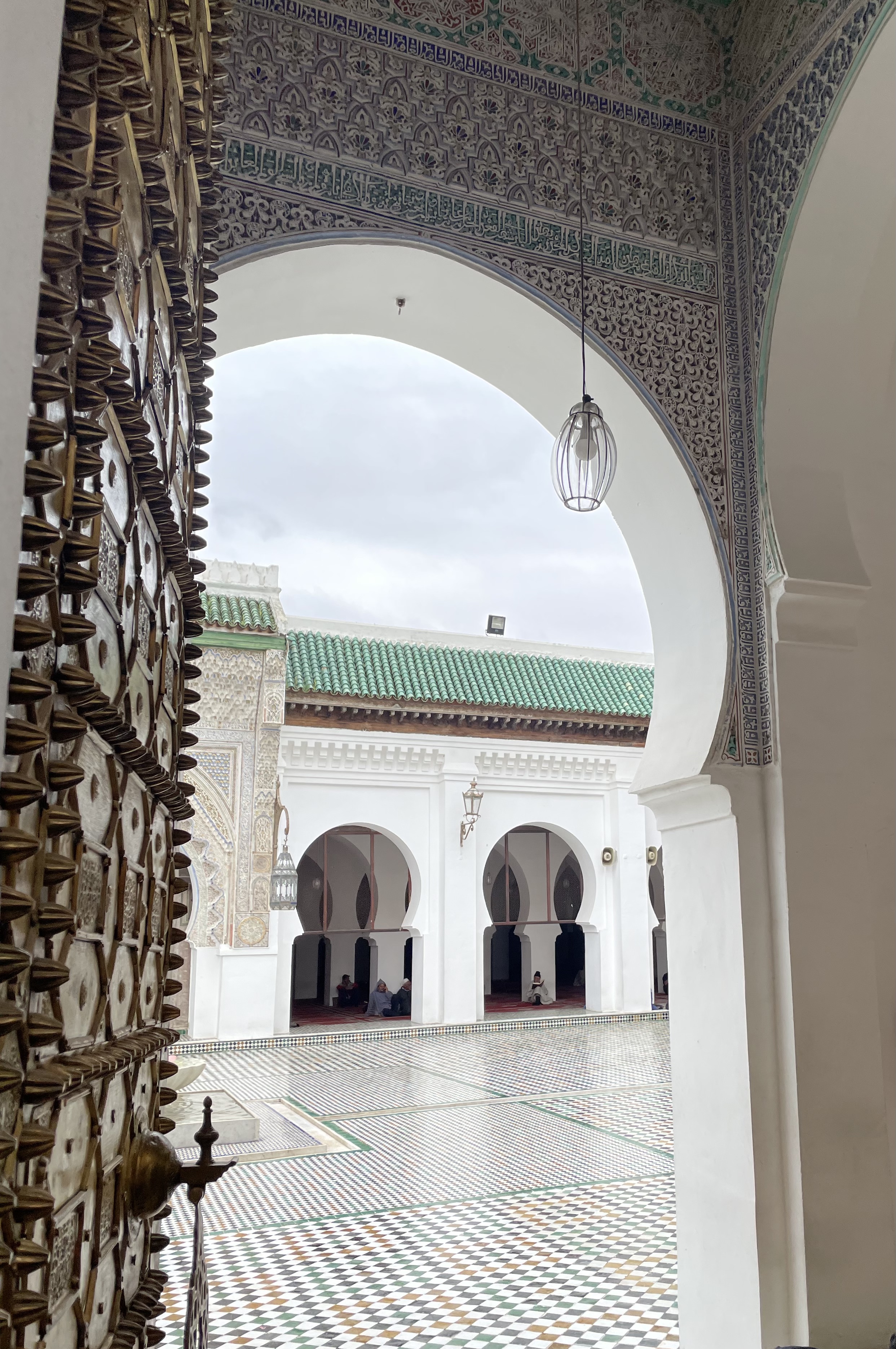
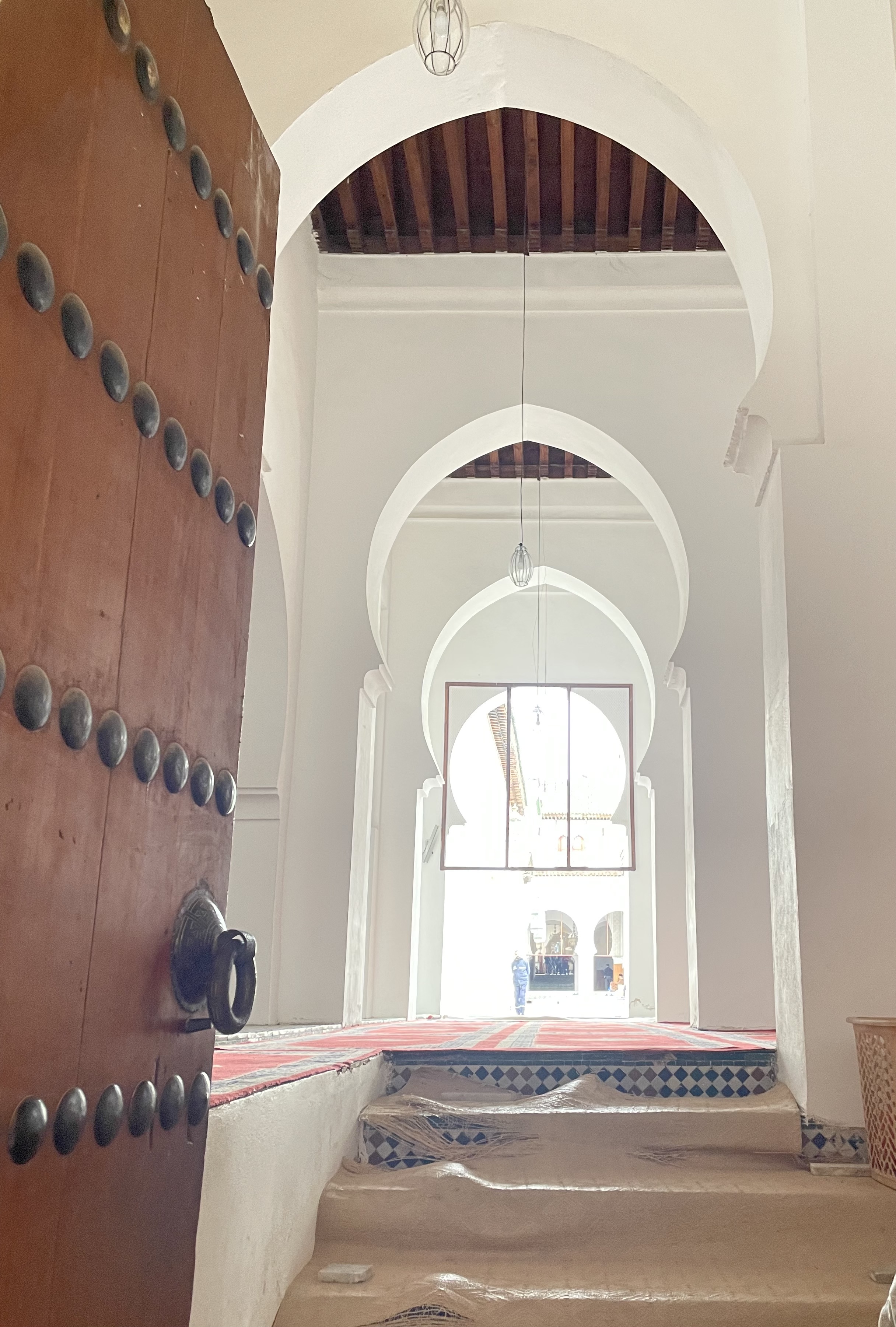
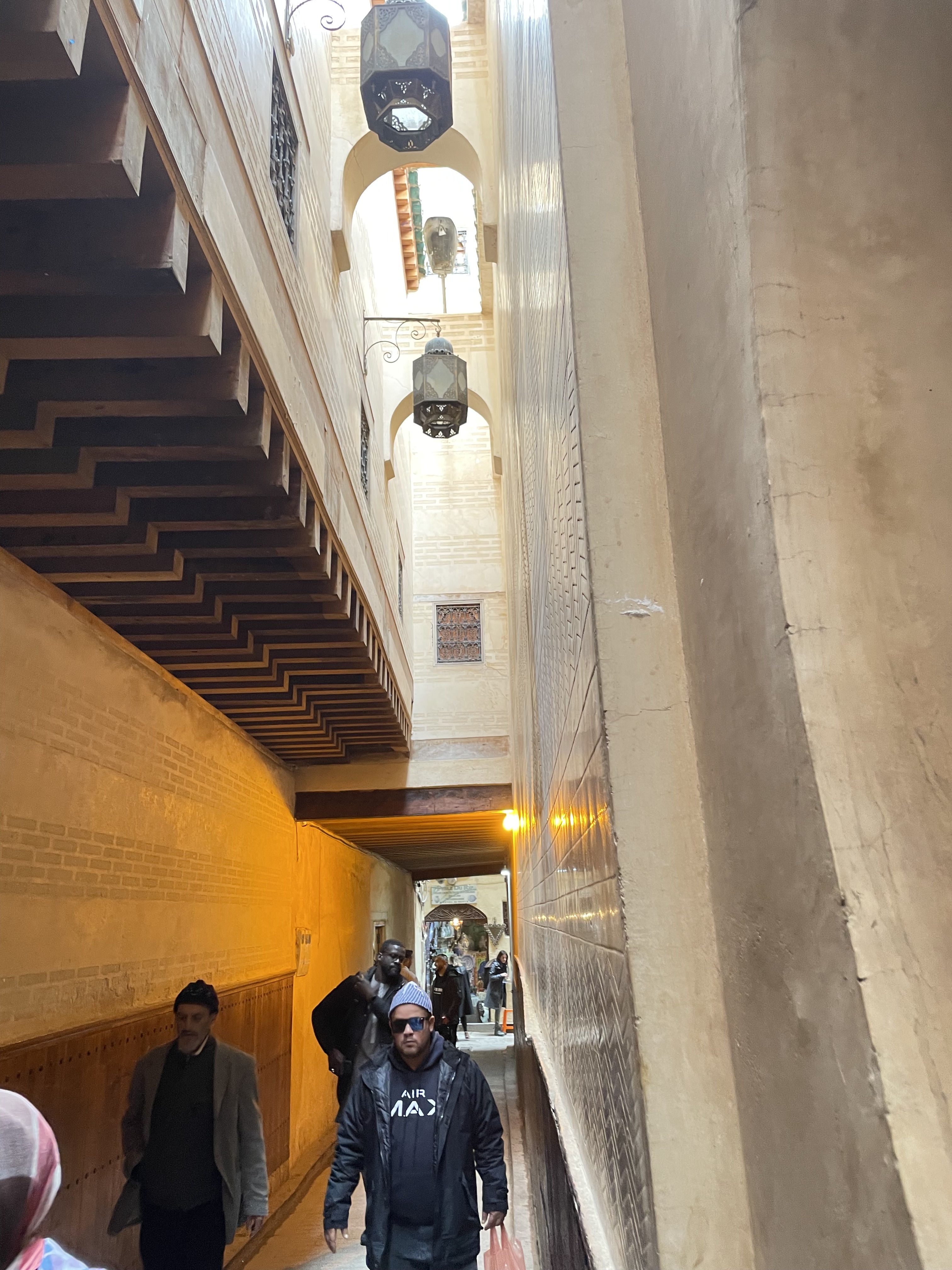
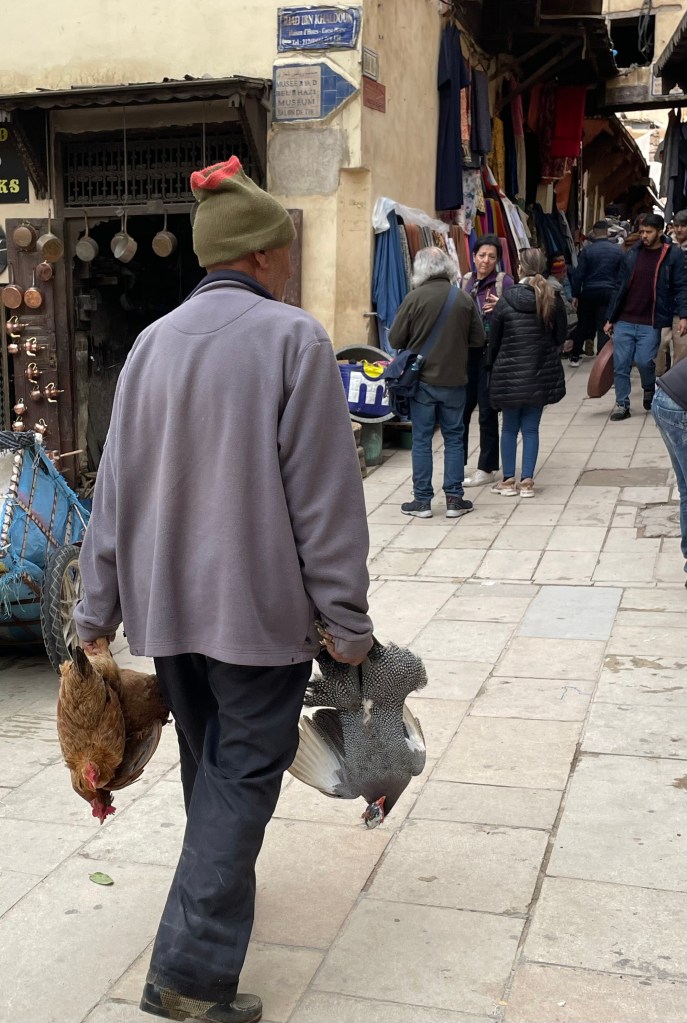
These pictures were taken as we wandered around inside the medina. The pictures show a few different mosques, the labyrinth of narrow alleyways and artwork found on the walls of the medina.
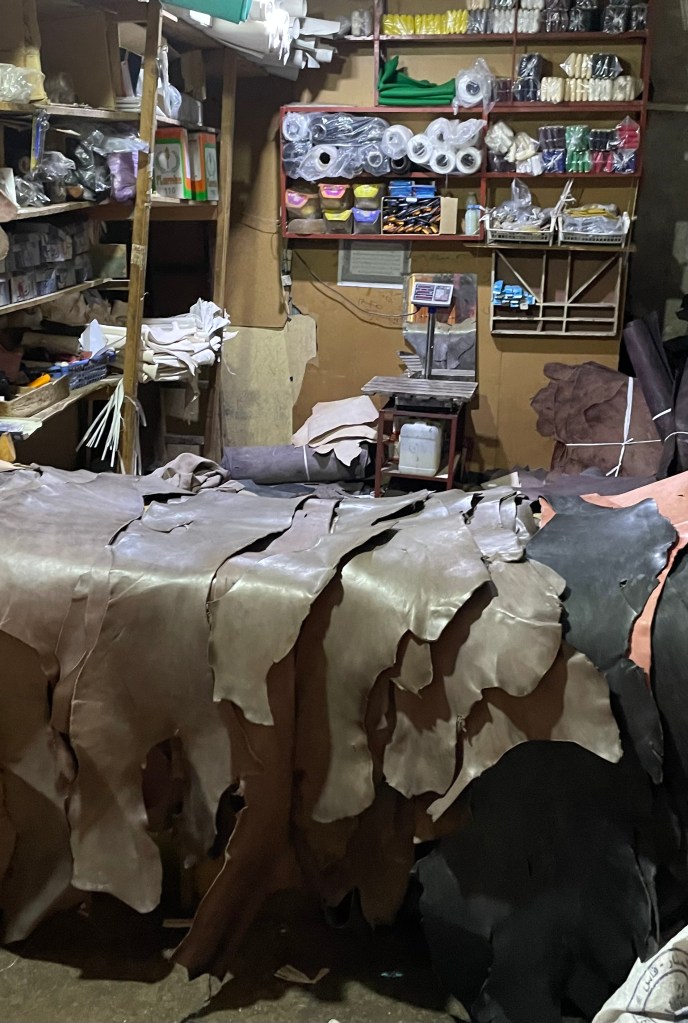
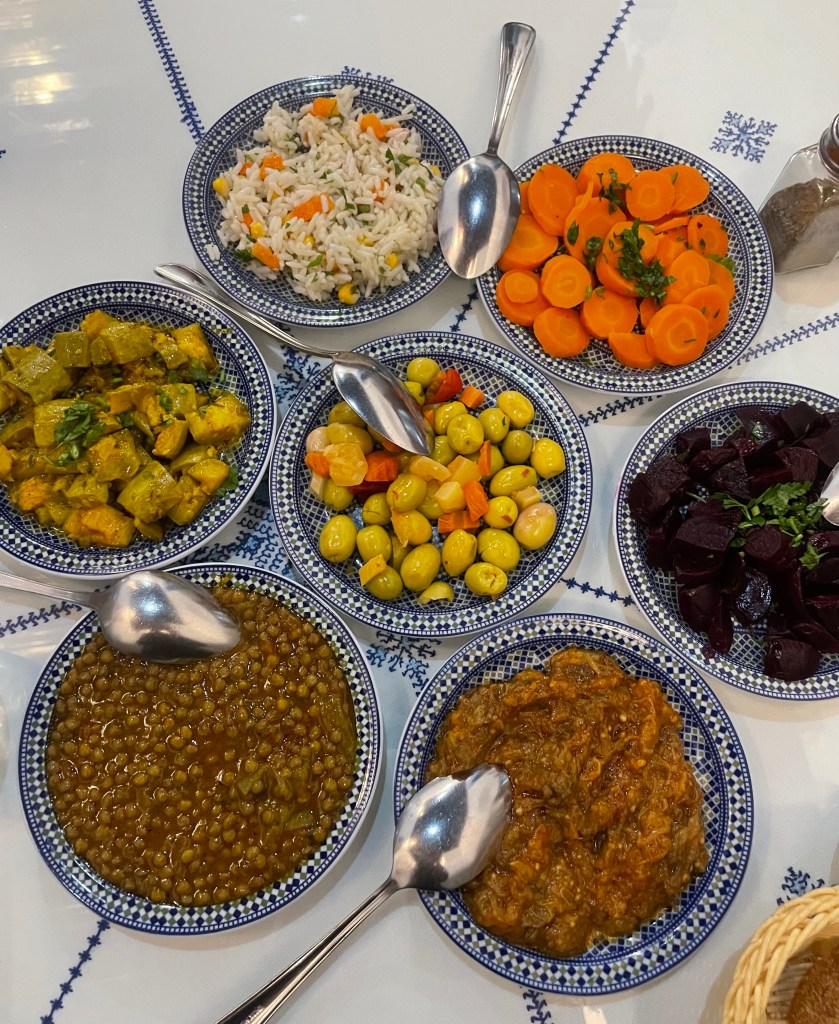
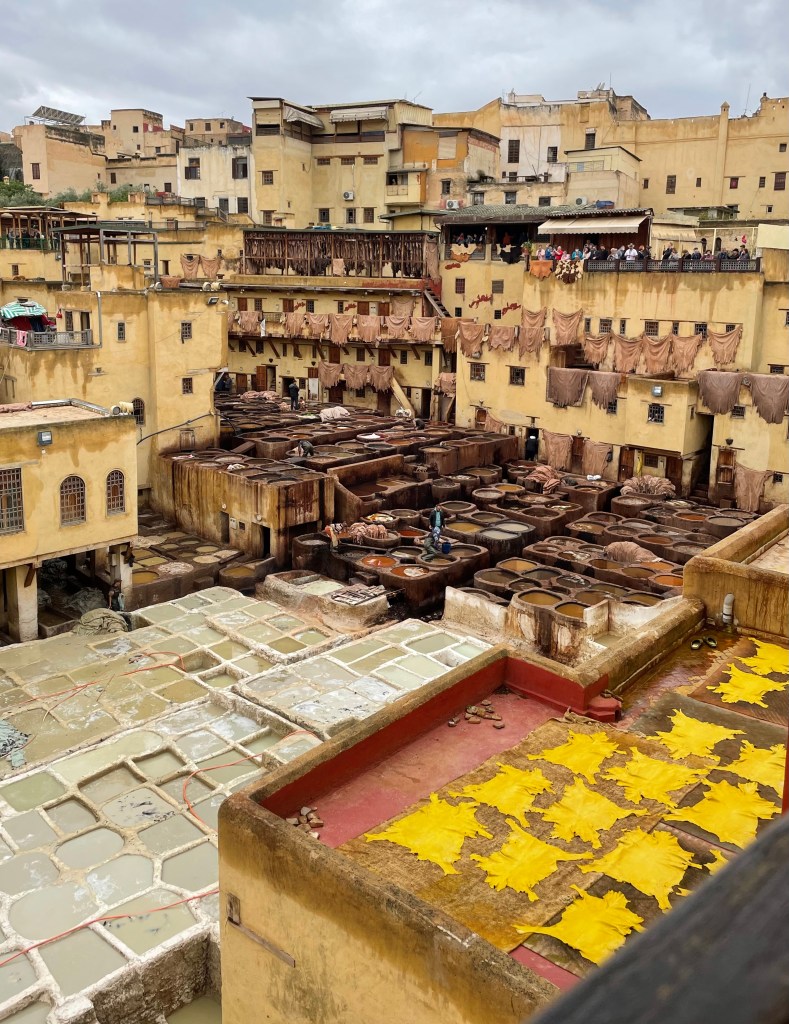
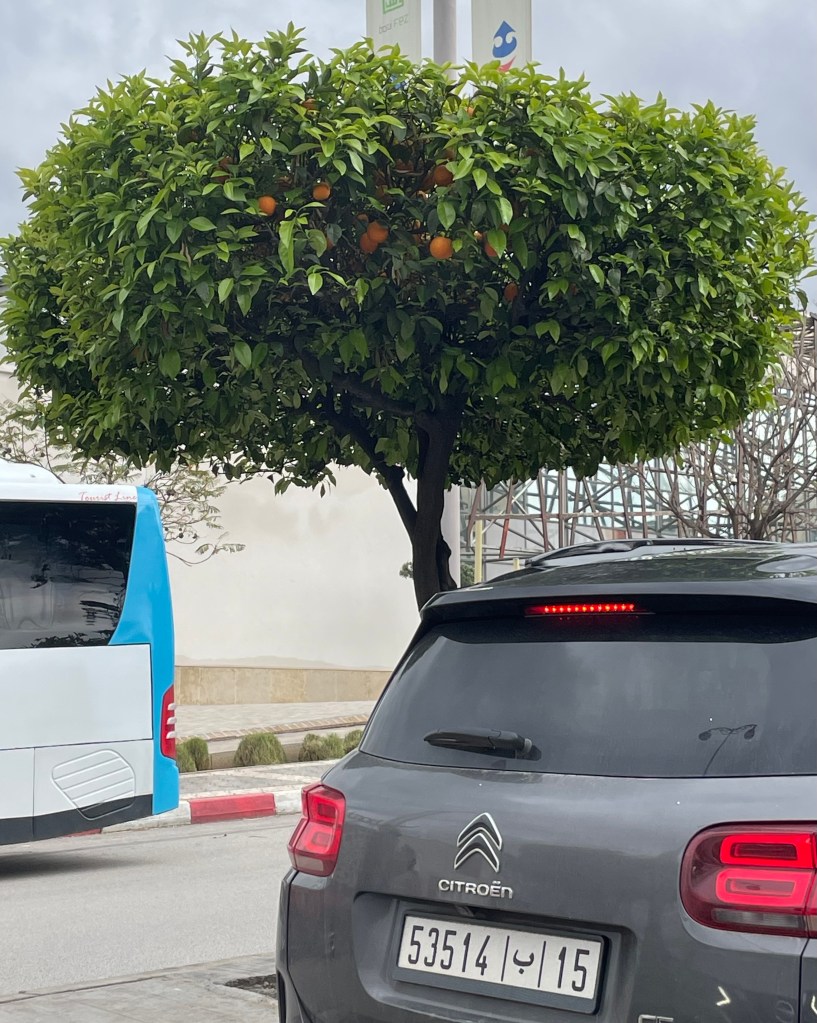
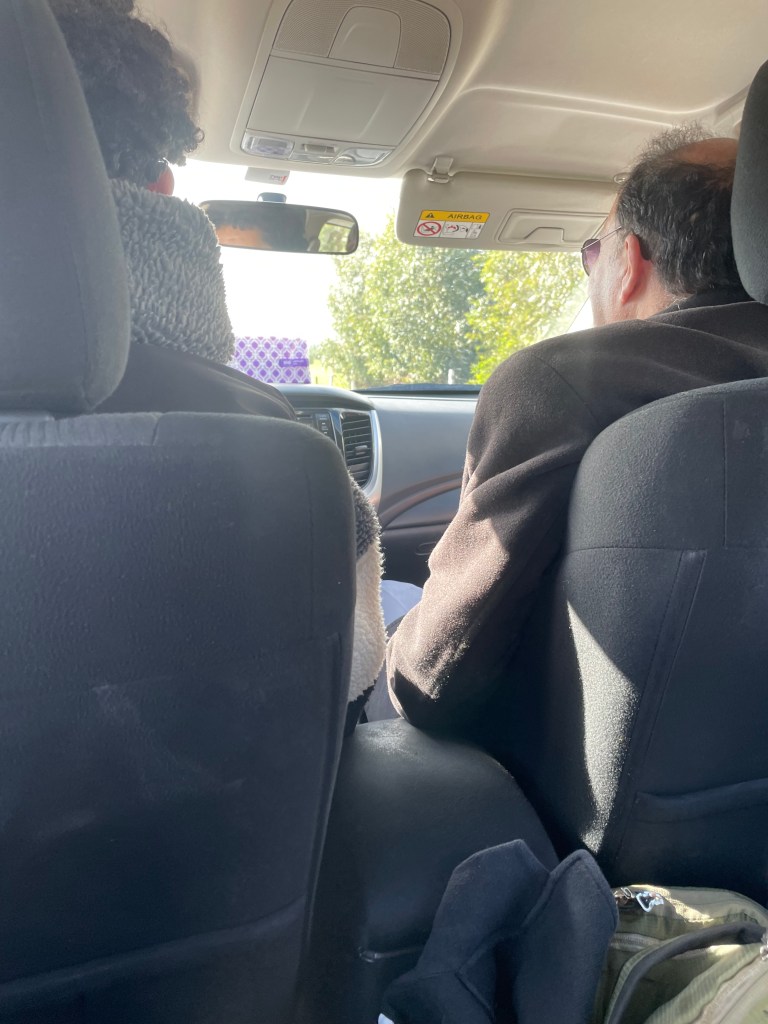
I wonder what this cat might be thinking.Look at all the small markets that sell everything you would ever need. The El Bali Medina is know as being one of the best preserved historic towns in the Arab Muslim world which we well understood after visiting.These pictures add to the Old World charm of the Fes Medina.Lunch is served and consists of beans, carrots, beets, rice, eggplant, olives and chicken.One of the stressful parts of going on a tour is that the tours often involve being taken to various shops and then being given the hard sell to buy some merchandise. This situation has happened to us in Egypt, Turkiye and Morocco. Many of these shops have beautiful merchandise which can make the visit more enjoyable. This pottery and tile shop is named Art Naji and was fascinating. You can see the tiles being made and then turned into intricate mosaics. The colors in the pottery were stunning.Next we visited the Chouara Tannery which is the oldest tannery in the world at a thousand years old. The tannery operates almost the same as it has for centuries. In the picture on the right you can see the large stone vats that are filled with a white liquid that softens the hides. The yellow hides get their color from saffron. The products from this tannery are sold all over the world.We are now leaving Fes and driving further north towards the town of Chefchaouen. I took this picture to show how prevalent orange trees are throughout the country. They are even growing in the middle of a divided street!As we drove through the various Moroccan cities there were many stops where the police would ask a few questions and then we would drive on. This happened three or four times on our four hour drive to Chefchaouen. Kamal did not seem bothered by this and said it was the usual protocol for his country.At one of the stops, a police officer asked Kamal if he could drive him to the next town. Kamal leaned into the car to ask us if we were okay with it. Of course, we said yes. So for the next 45 minutes the officer rode with us and chatted with Kamal in Arabic. Kamal did not think anything was unusual about the situation. It is always SO very interesting to learn about another country’s way of life.
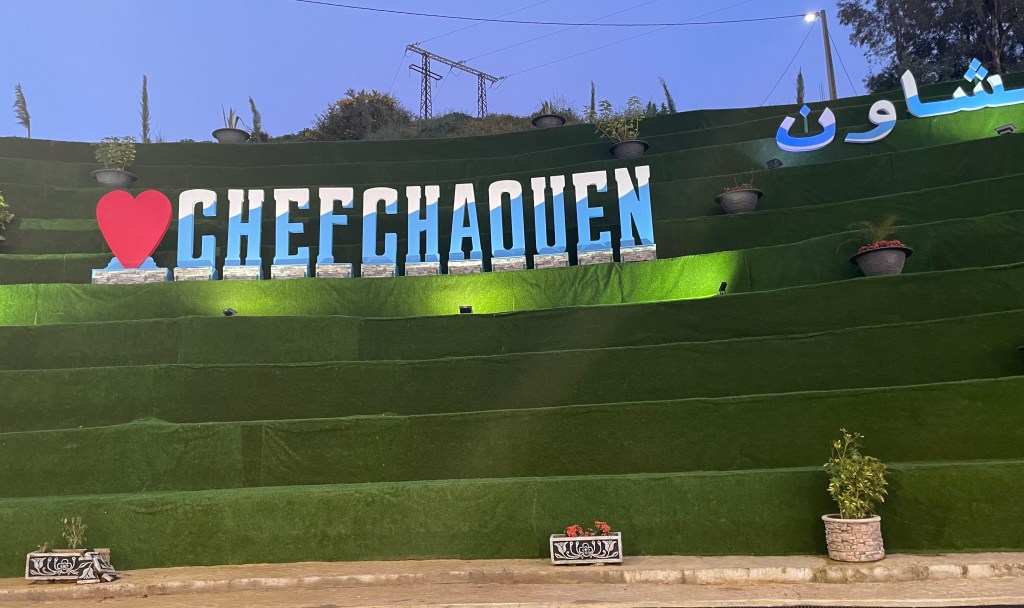
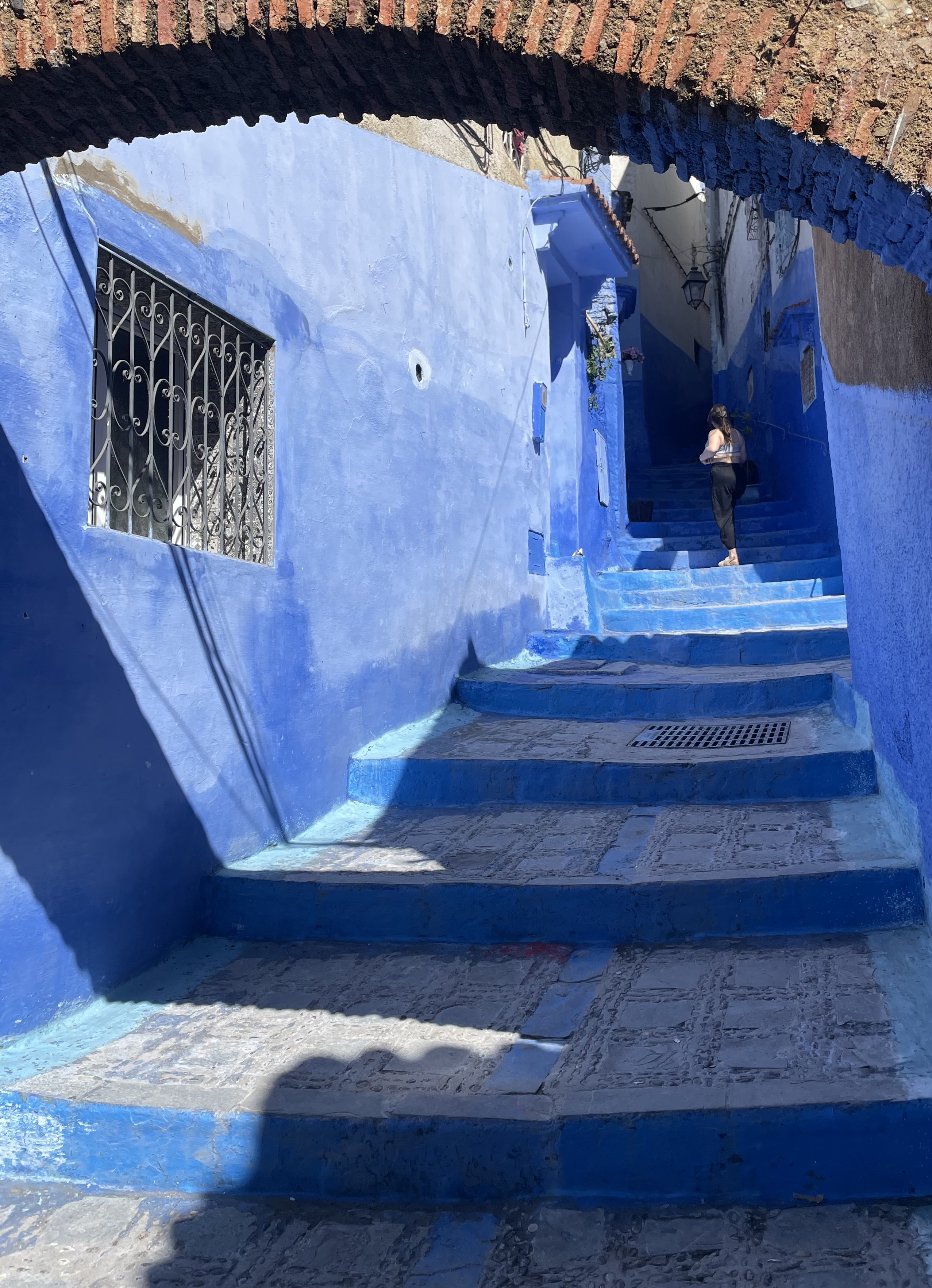
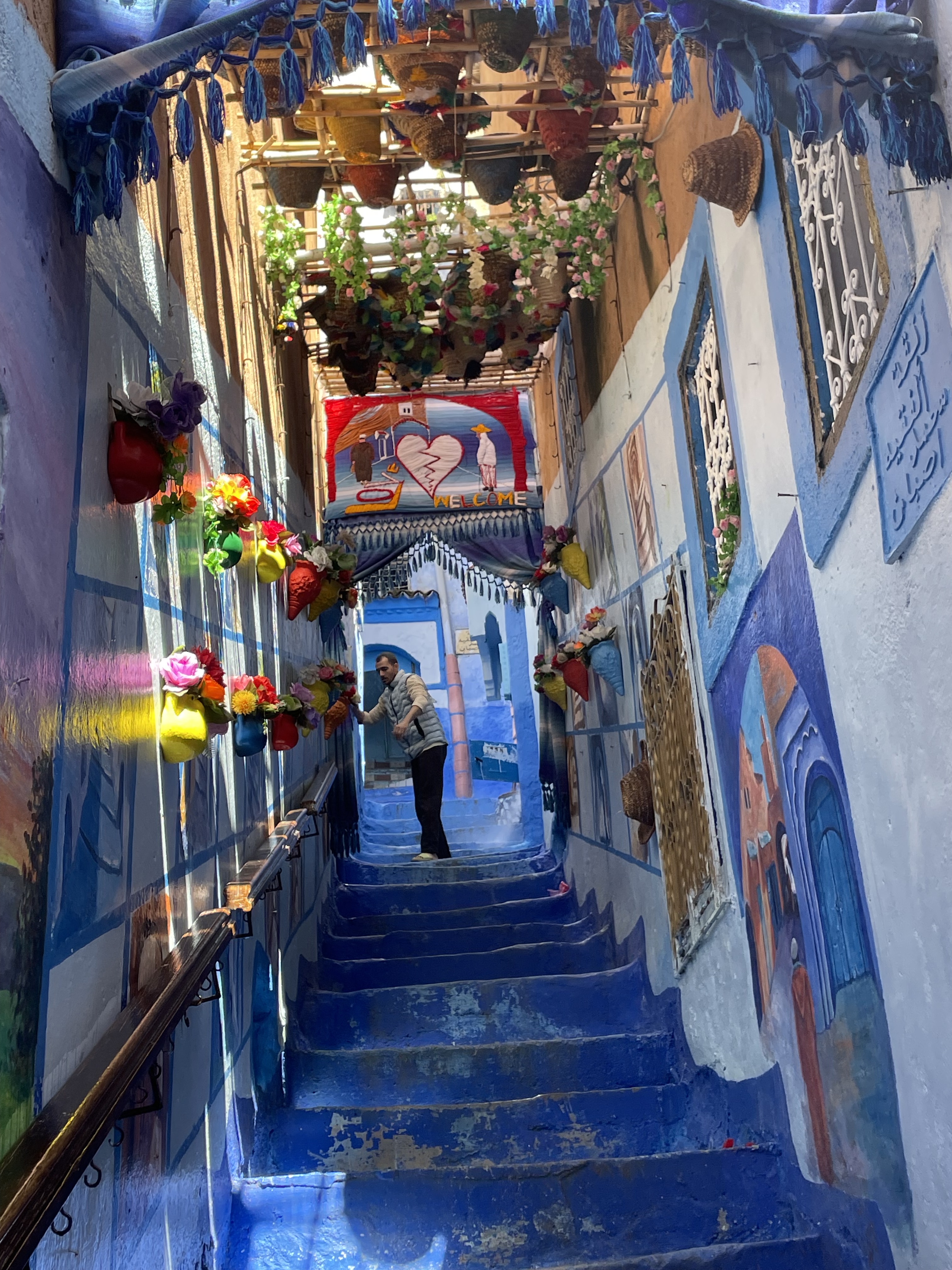
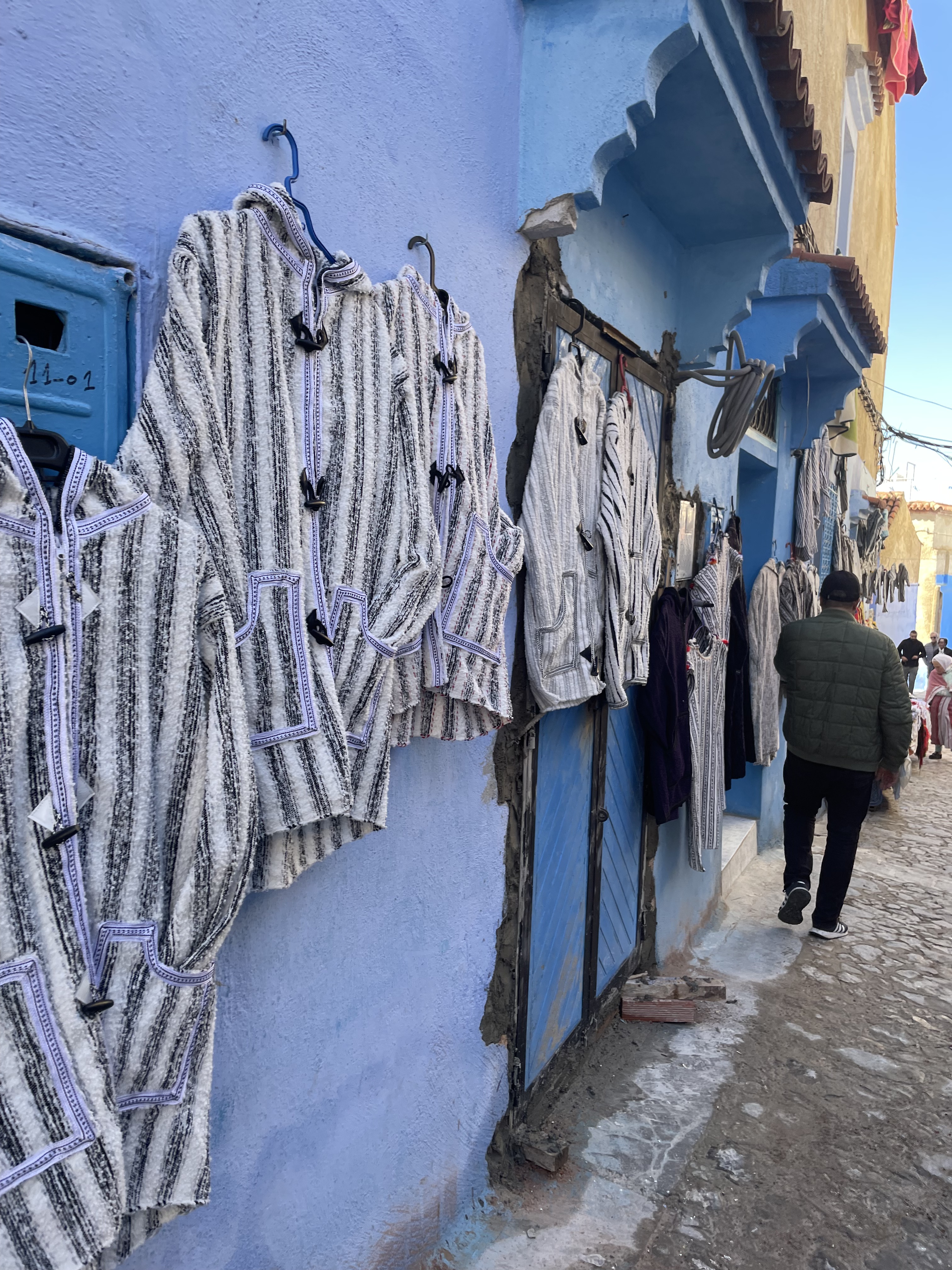
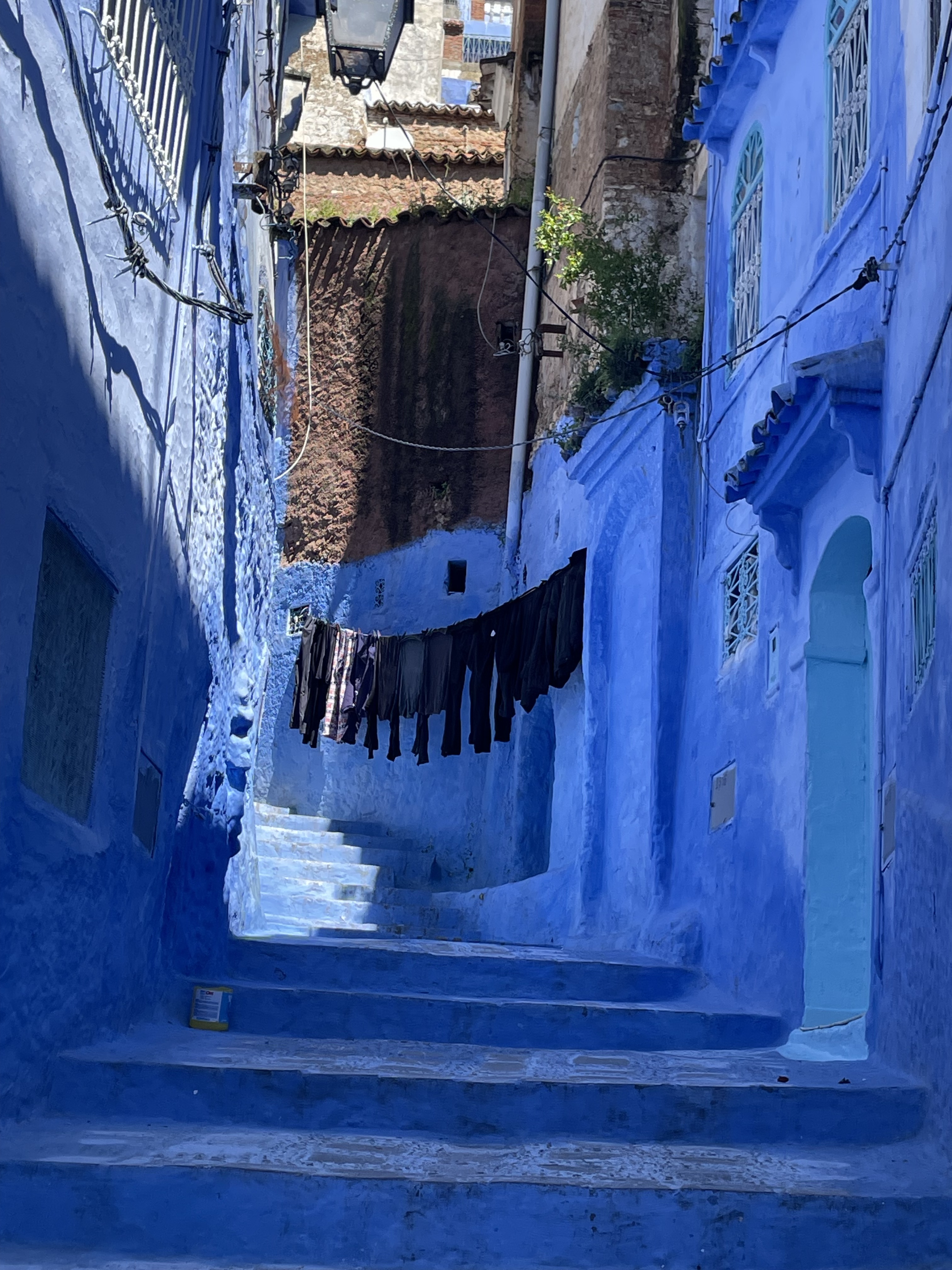
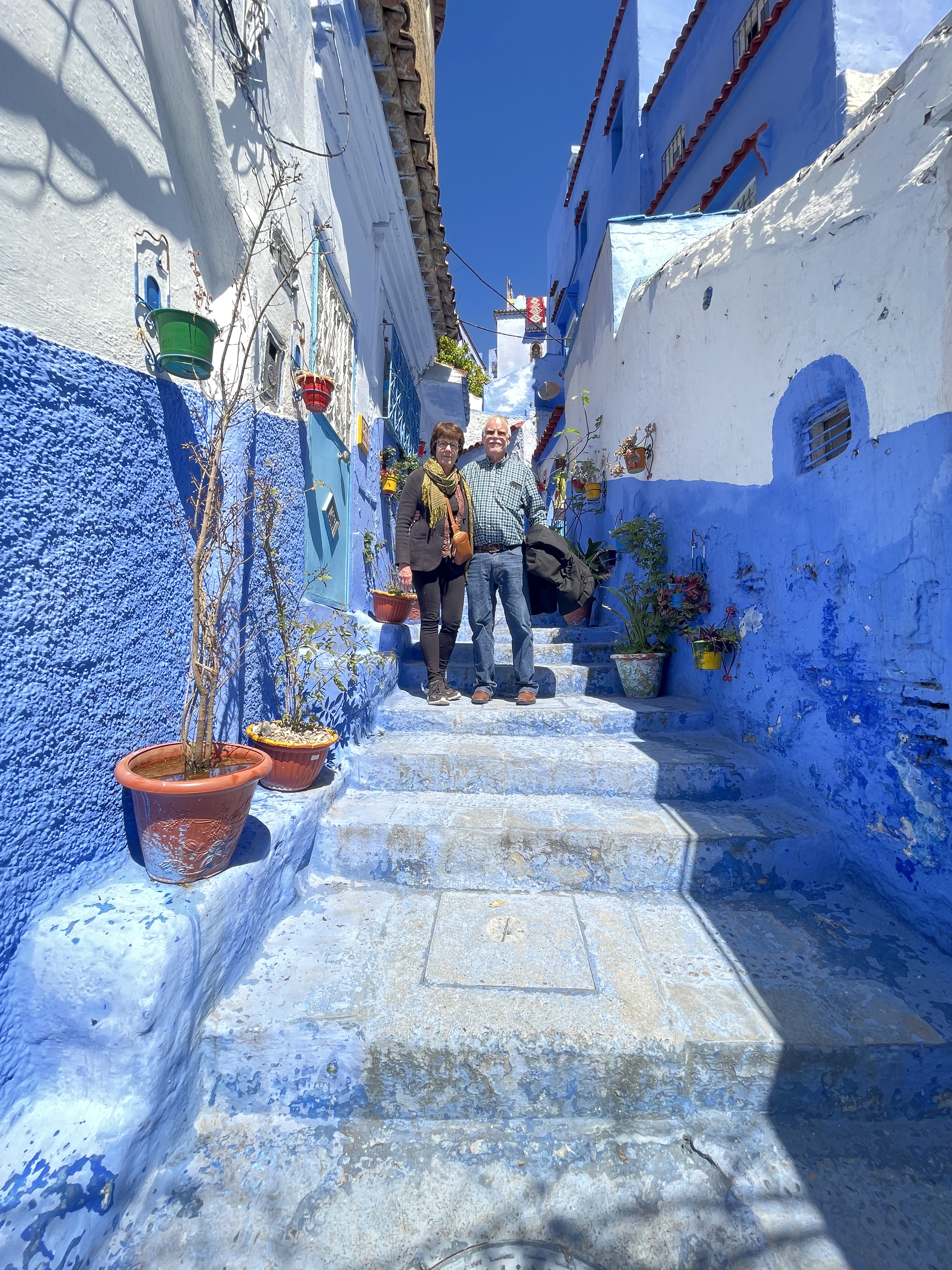
We have now arrived in the city of Chefchaouen also know as “the blue city”. This is the hotel where we spent the night. Chefchaouen is a quiet, peaceful city unlike the chaotic busyness of the other Moroccan cities we visited. There are many stories about why the city is blue. A common story is that it was painted blue in the 1930’s when many Jews fled to Morocco to escape Hitler. The blue came from the Jewish tradition of weaving blue into their prayer shawls to remind people of the sky, the heavens and God’s power. Most of the Jewish population in Morocco immigrated to Israel in 1948. Today Morocco and Israel are on friendly terms with many Jews visiting Morocco annually as a pilgrimage or to visit the homes of their forefathers.
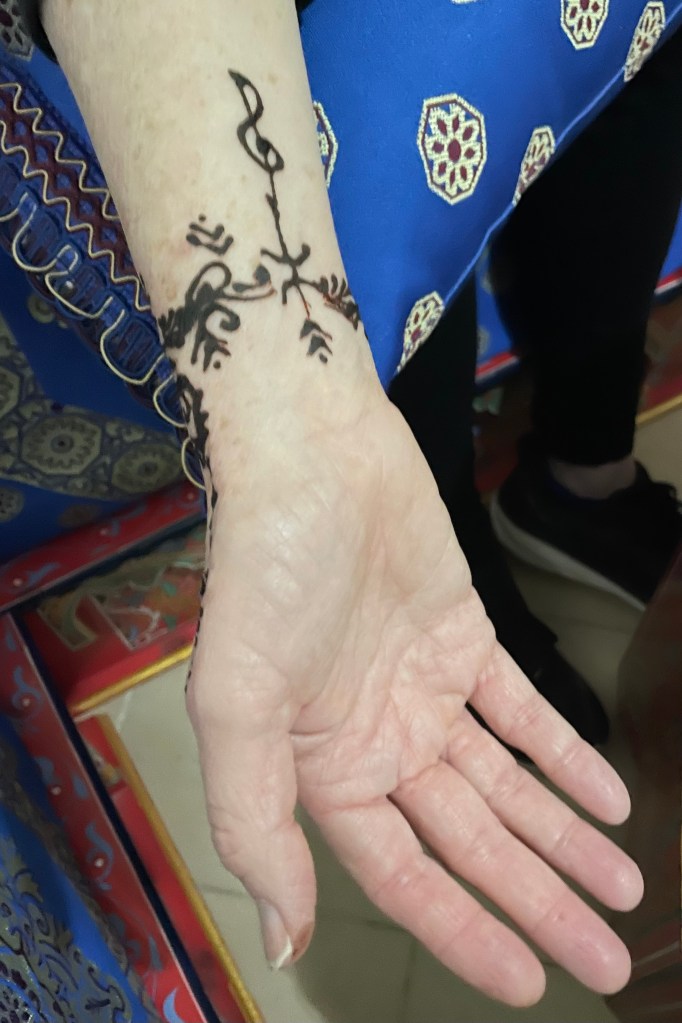
Look at the henna I got while in Chefchaouen! I have always been interested but never done it. The designs used in this henna are Berber. Berber are the indigenous people of North Africa and pre-date the Arabs arrival in Morocco. You probably know that henna stays on your skin for about a week. It is typically used at weddings, festivals and to celebrate life. I loved my henna and will readily have it done again when the opportunity presents itself.Overlooking Chefchaoeun with a population of 60,000 people. You can see the Old Town to the right at the base of the mountain. That part of the city has all the blue color.
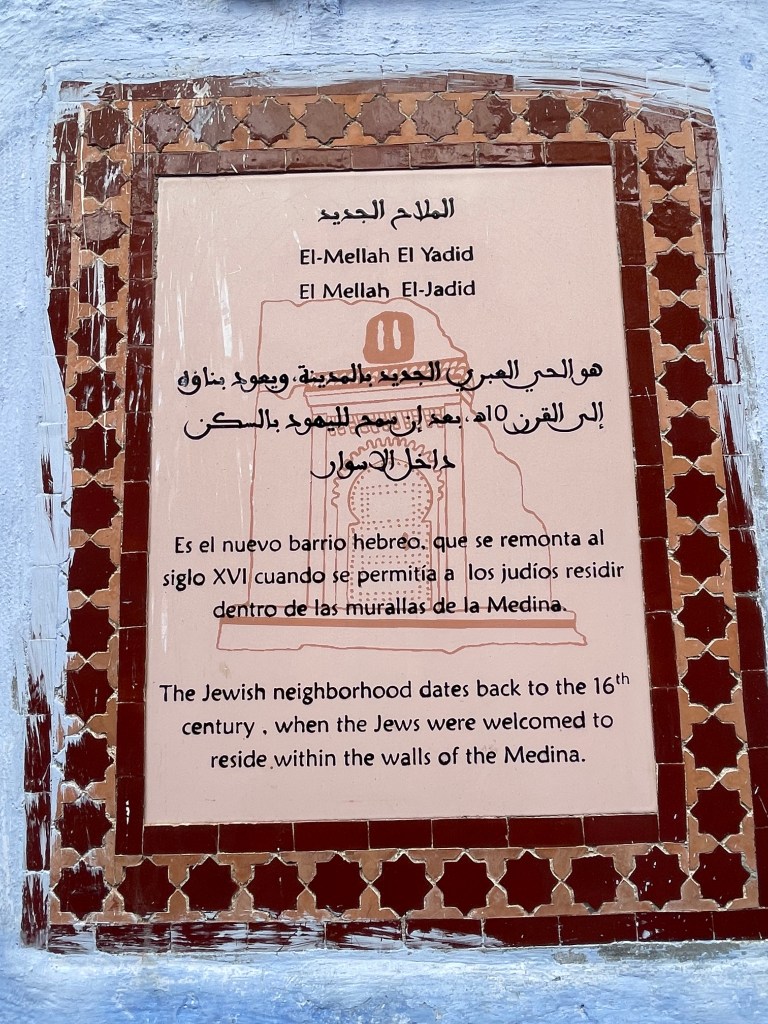
Two things were interesting to me about this sign. First, it speaks to the Jewish history in Morocco. Second, Spanish is part of the sign. Geographically, Chefchaouen is located very close to the country of Spain.
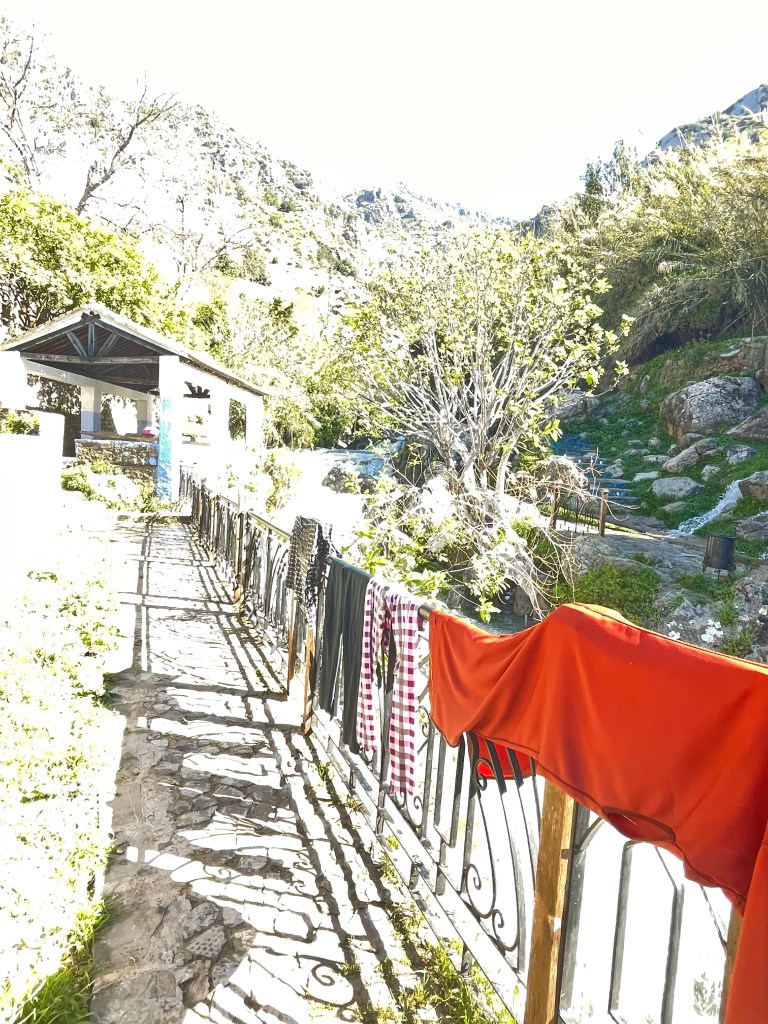
This is where many of the local women bring their laundry. Washing it in the cement tubs and hanging it on fences to dry.
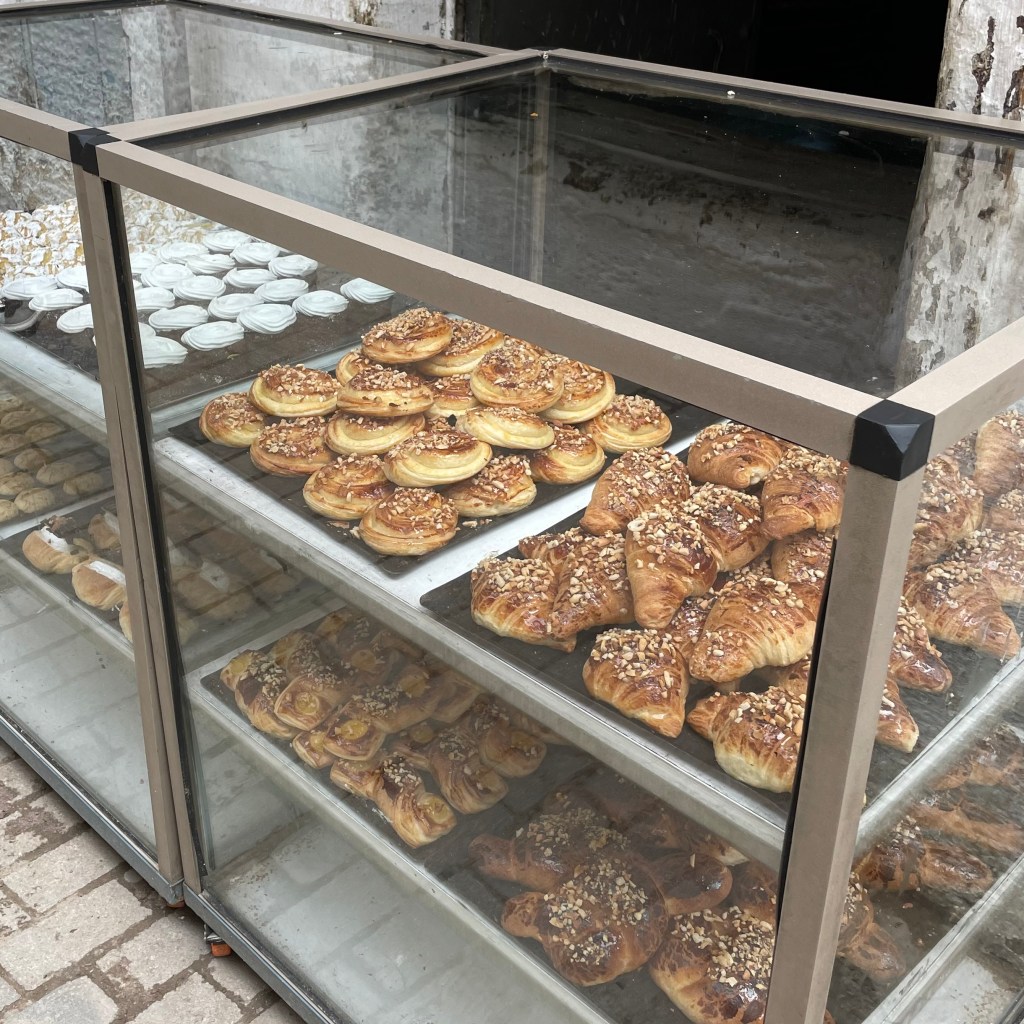
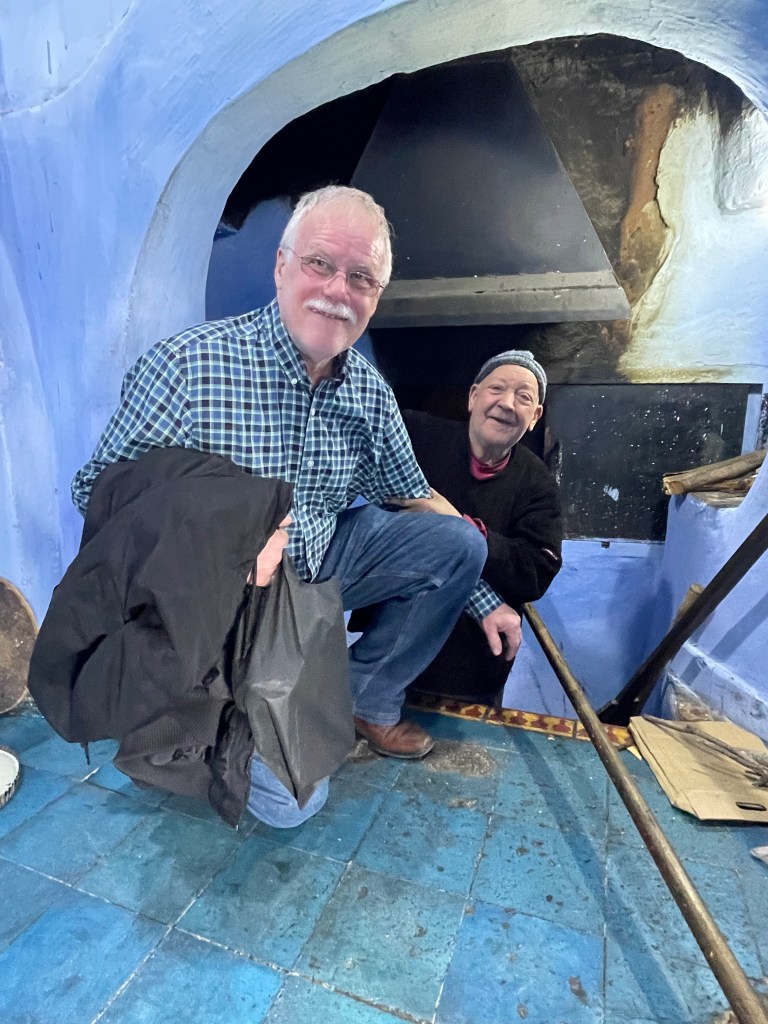
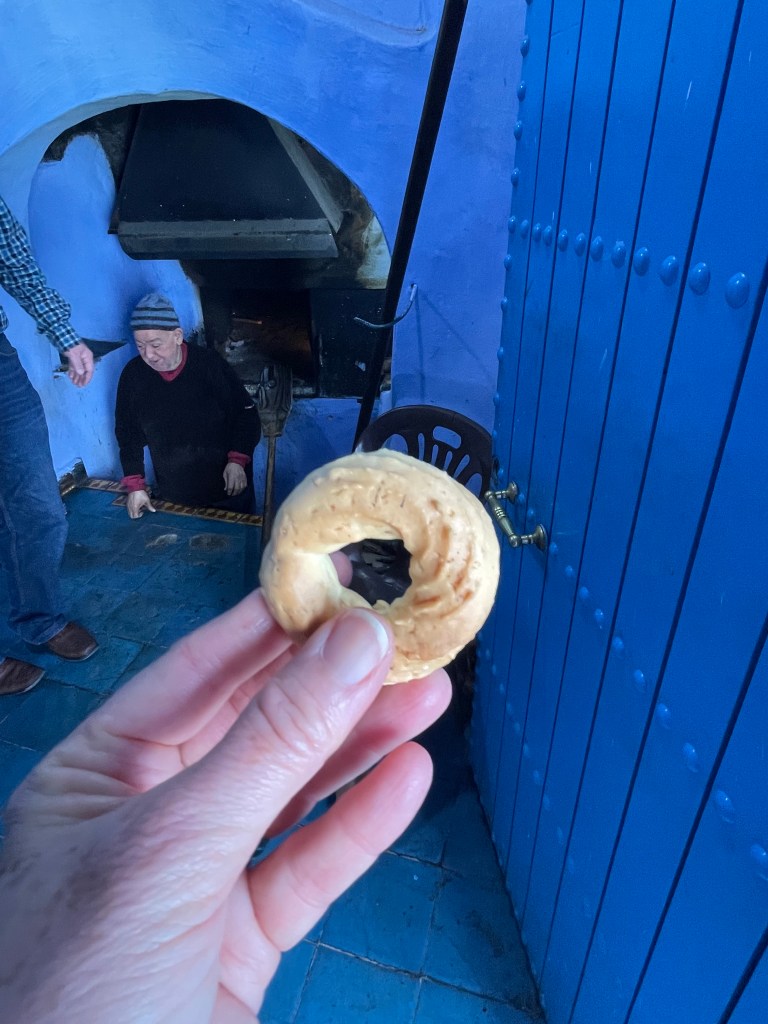
This is a bride carrier used in a marriage ceremony to move a woman from her parents’ house to her husband’s house. This tradition still exists in smaller cities like Chefchaouen.Visiting a small bakery where these delicious cookies are made.
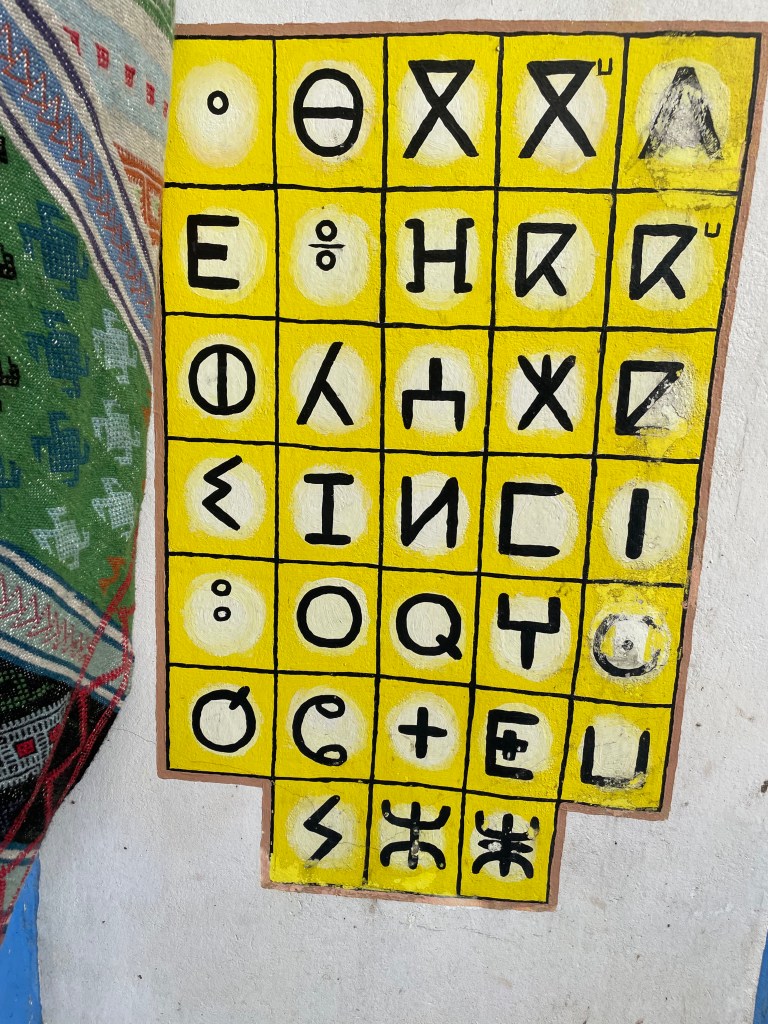
We have observed several weavers in our travels but never one as fast as this man.The yellow on the left is the Berber alphabet. As mentioned earlier, Berbers are the indigenous people in northern Africa, arriving before the Arabs. It seems to be like the Native Americans are in the States. On the far right is our tour guide whose brother owns a rug shop.
We loved Chefchaouen. It is a place I would like to return to someday. We are now driving four hours south to Rabat, the capitol of Morocco. I saw this sign so I just had to snap a photo.
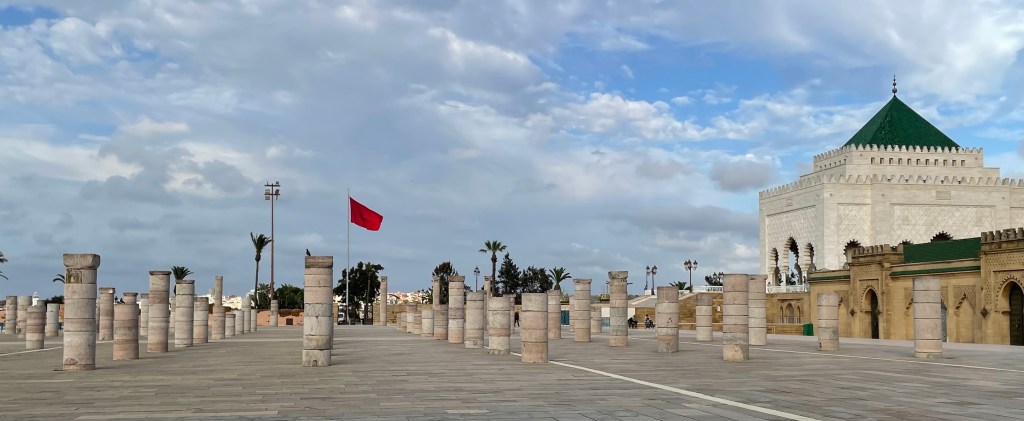
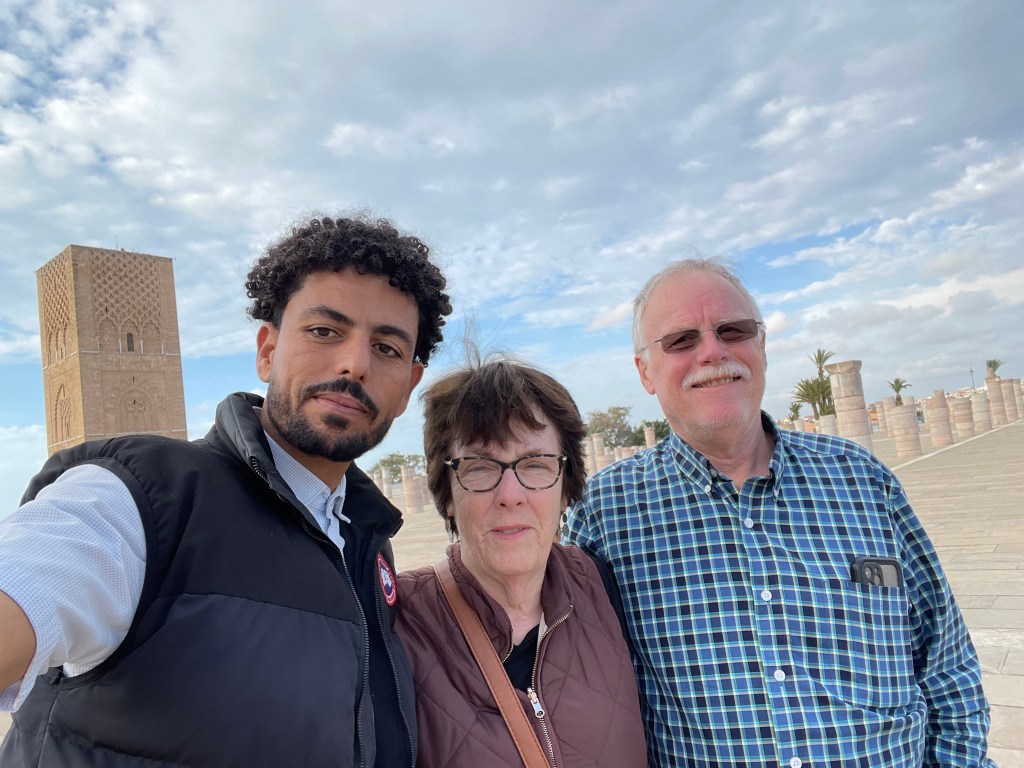
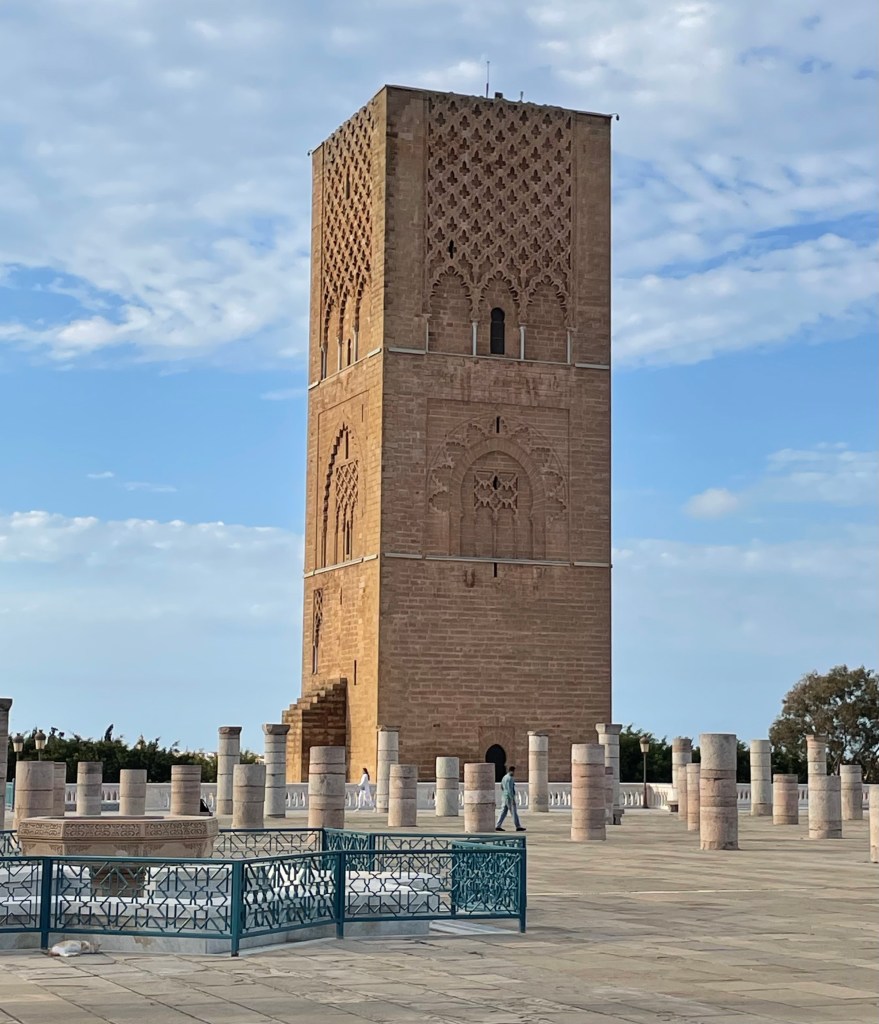
We are now in Rabat visiting the thousand year old Hassan Tower. It seems that it is best known for being unfinished. This minaret was originally planned to be twice this tall. At the time construction stopped in the year 1200, it is thought that the mosque was used both for religious reasons and as a fortification since it has protective walls surrounding it.I like this photo because of the contrast between old and new in Rabat.This is Kasbah des Oudaias ( a UNESCO World Heritage Site) which was a former seaside fortress on the Atlantic Ocean. It is now a residential area with lots of shops. The modern building in the background is Mohammed VI Tower and is the third tallest building in Africa at 55 stories high. It is used for offices, retail and residences. The billionaire who financed the building of the tower visited NASA at Cape Canaveral and was then inspired to make the building in the shape of a rocket.I saw this cross next to the Kasbah des Oudaisis and wondered if there is some history of Christianity being in Rabat.
I took these two pictures to show how much the Moroccan people love their king. His picture hangs everywhere; in hotels, restaurants, coffee shops, retail shops. His name is Mohammed VI and he has been king since 1999. Our tour guides and riad hosts always had positive comments to make about him. In Morocco, the king has ultimate power over the armed forces, and anything having to do with religion and foreign affairs.
Do you see the orange colored, cone shaped pottery on top of the green serving table. That is called a tagine and is the most famous meal in Morocco. They are sold by street vendors (as pictured here) and in almost every restaurant. When the lid is removed, the picture on the right shows what the food inside looks like. A tagine includes meat, vegetables and couscous. They were really quite good.
We arrived back in Marrakech from our three day tour and when we checked into our riad, it was dark. Thankfully our guide led us to where we were staying. I must admit that I was very concerned that I had made the wrong choice of places to stay as we wound our way through the alleyways. Everything ended up being perfectly fine and the riad was a beautiful place to stay. This video shows the route to our riad during the day.
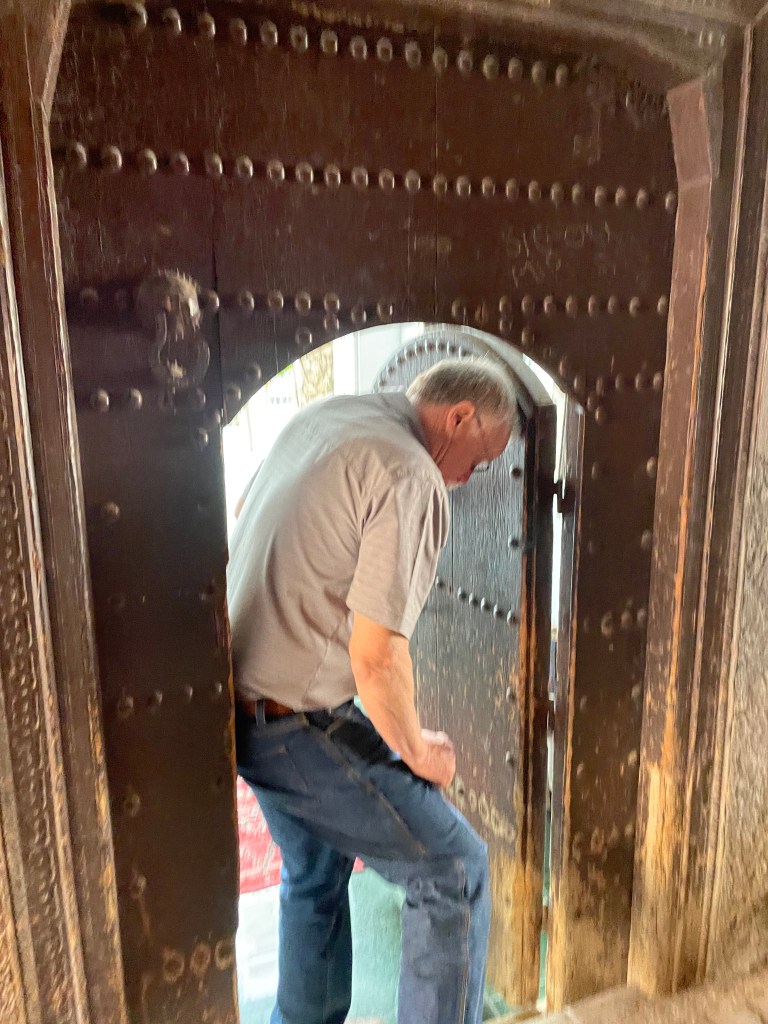
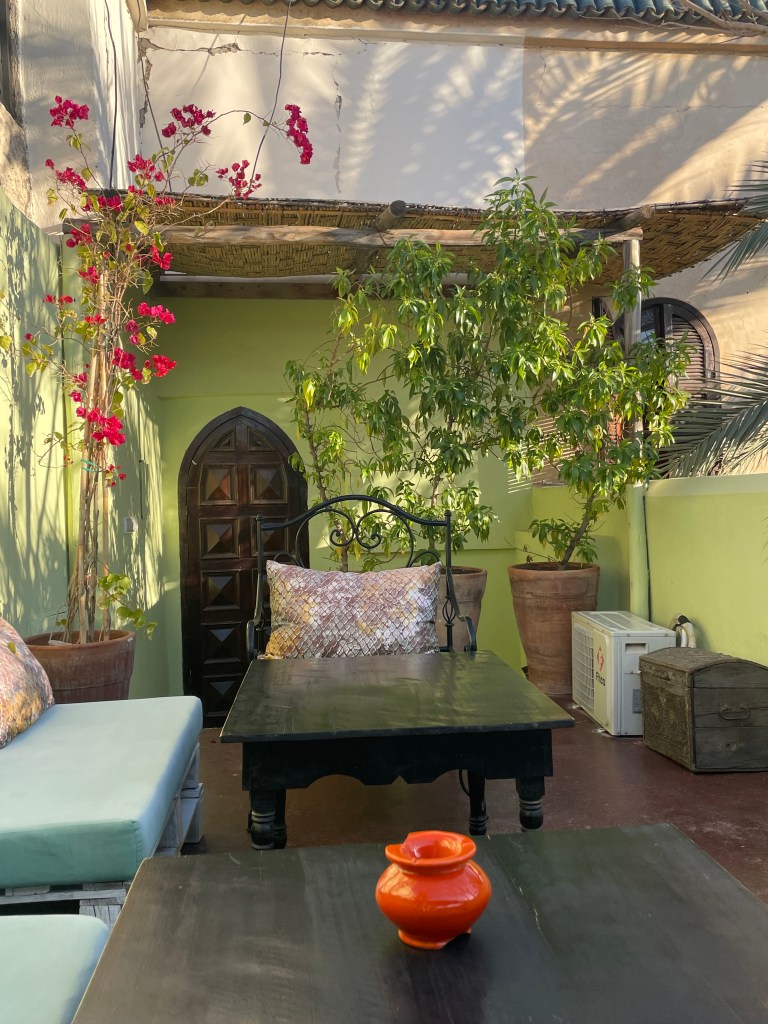
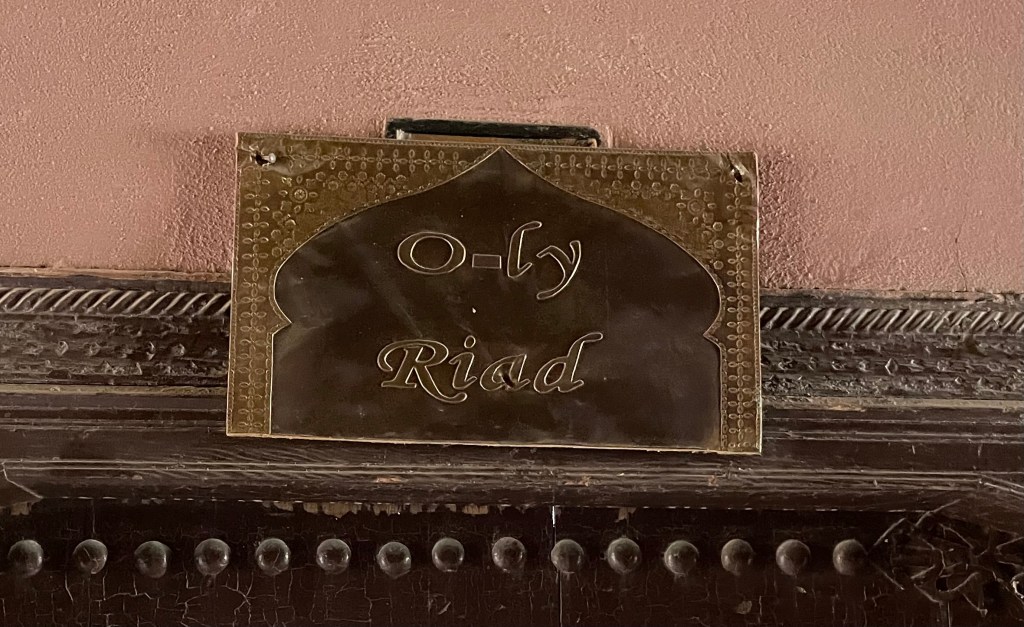
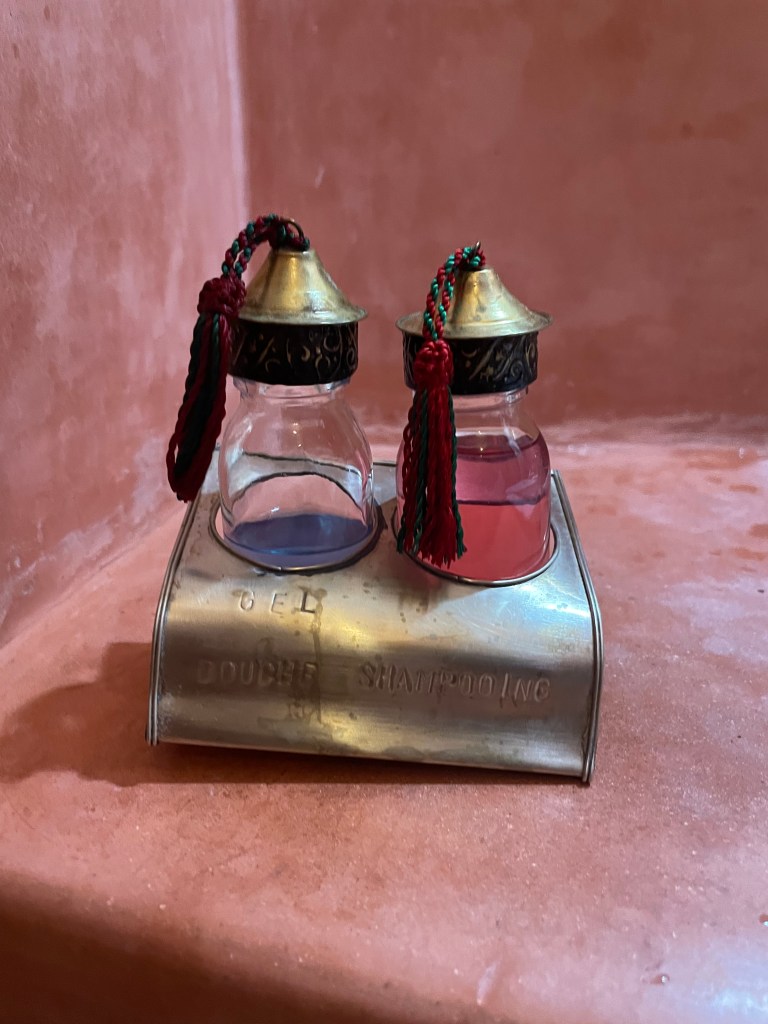
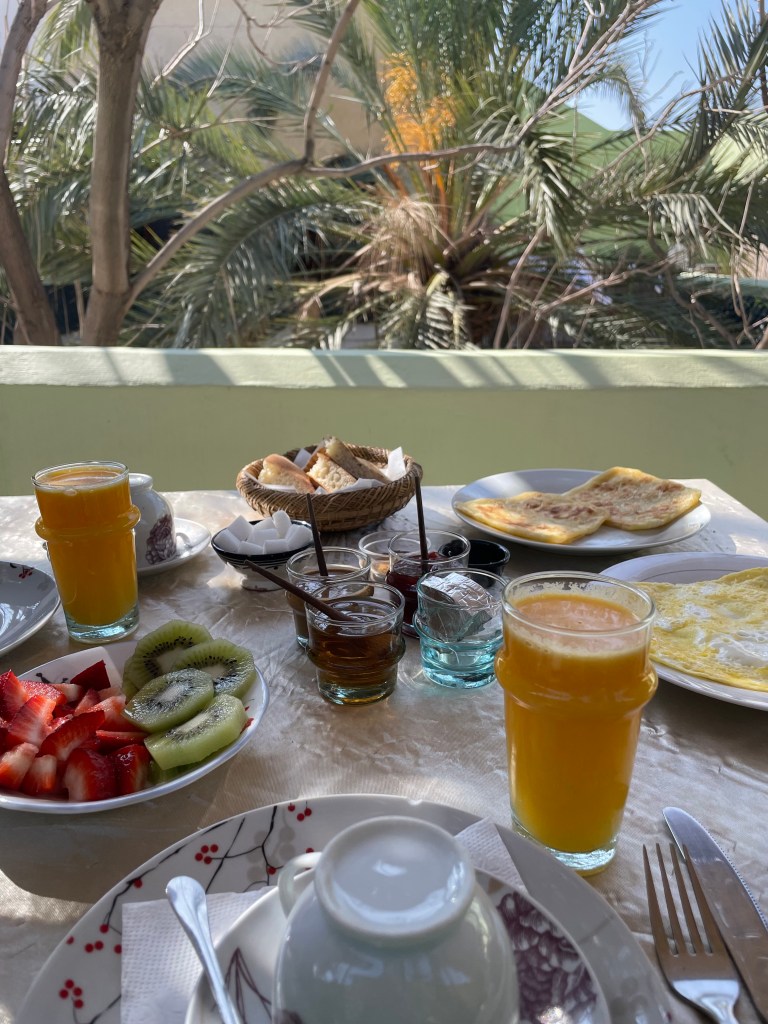
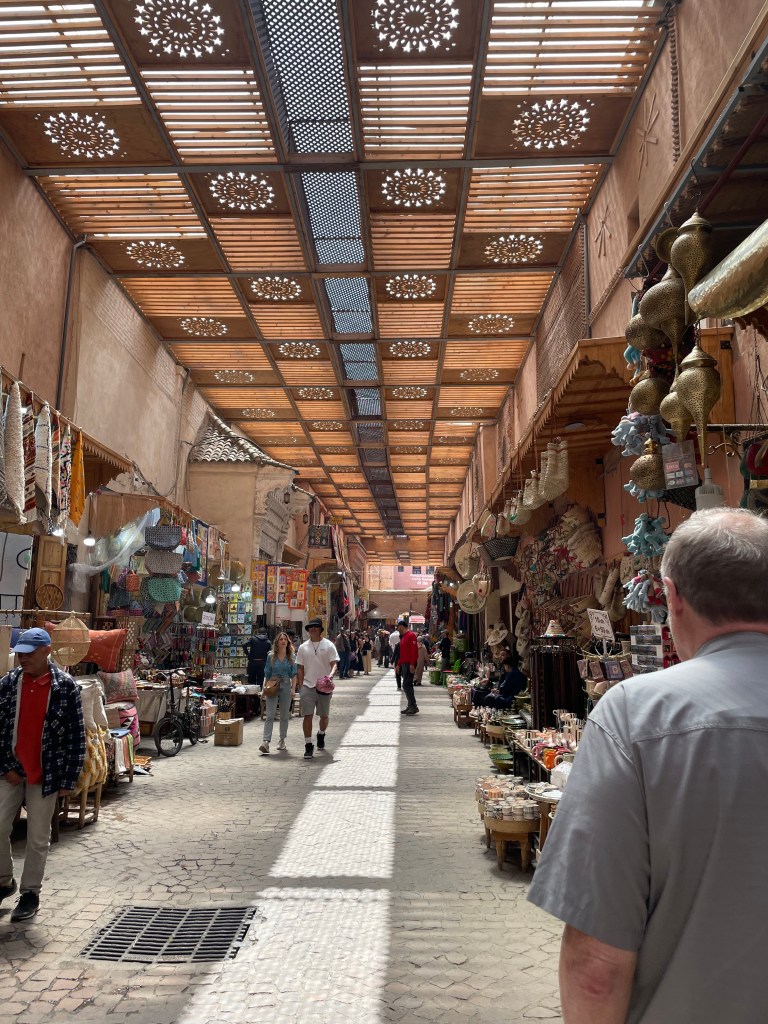
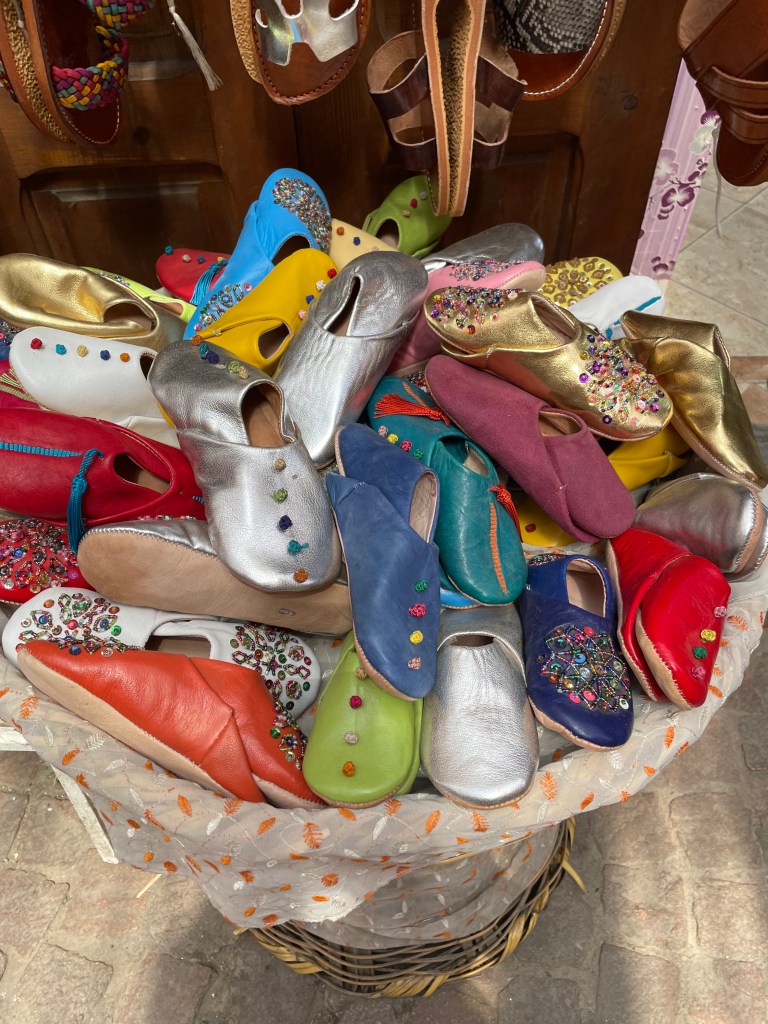
We were never sure why the entrance to the riad was so short.The center courtyard that is part of all riads.Look how the shower gel and shampoo are offered in our private bathroom.A delicious breakfast was always part of our riad stays. This breakfast was served at the top of the riad overlooking the courtyard.A few pictures from our stay at the O-ly Riad.We spent a morning exploring the shops in the medina. Most of these shops were geared to the tourist not the local Moroccans.
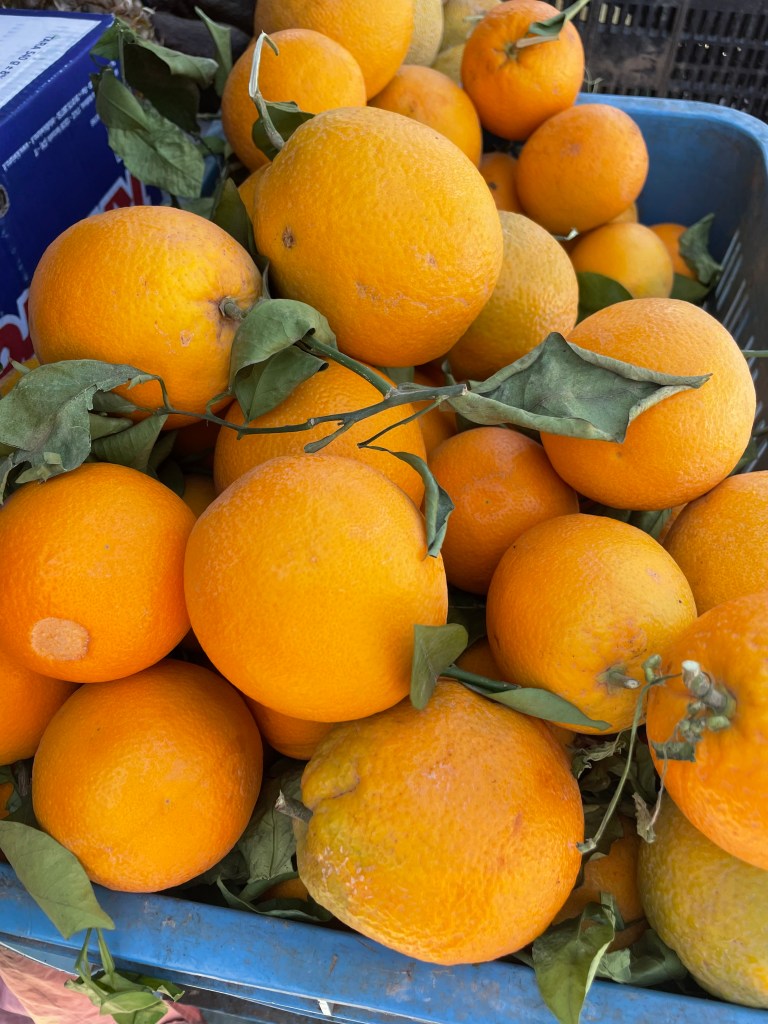
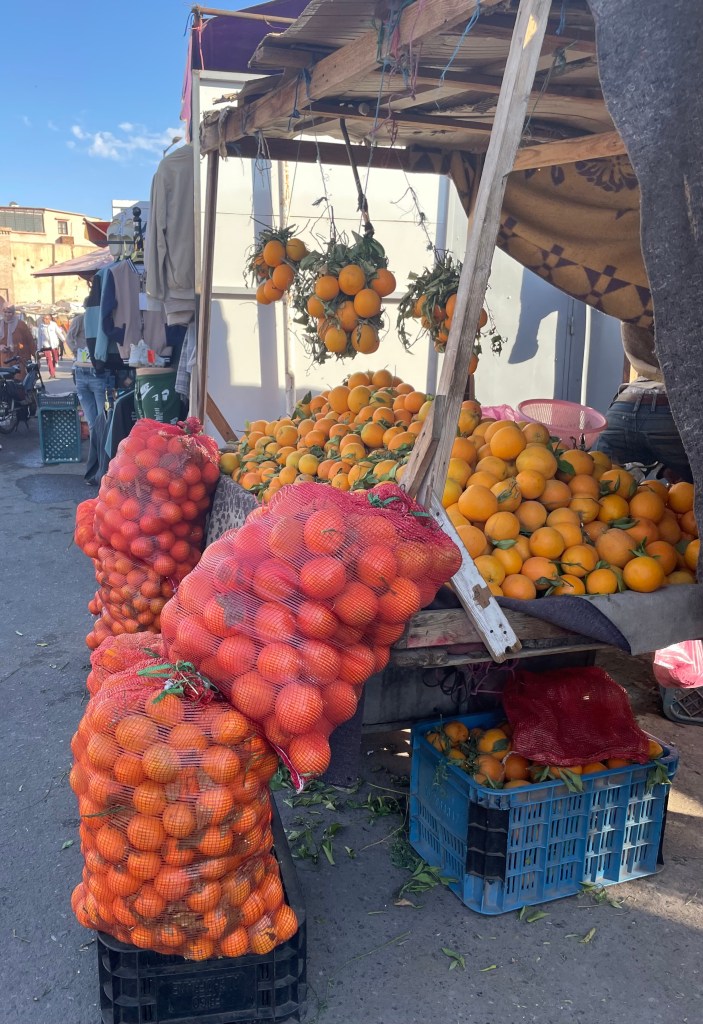
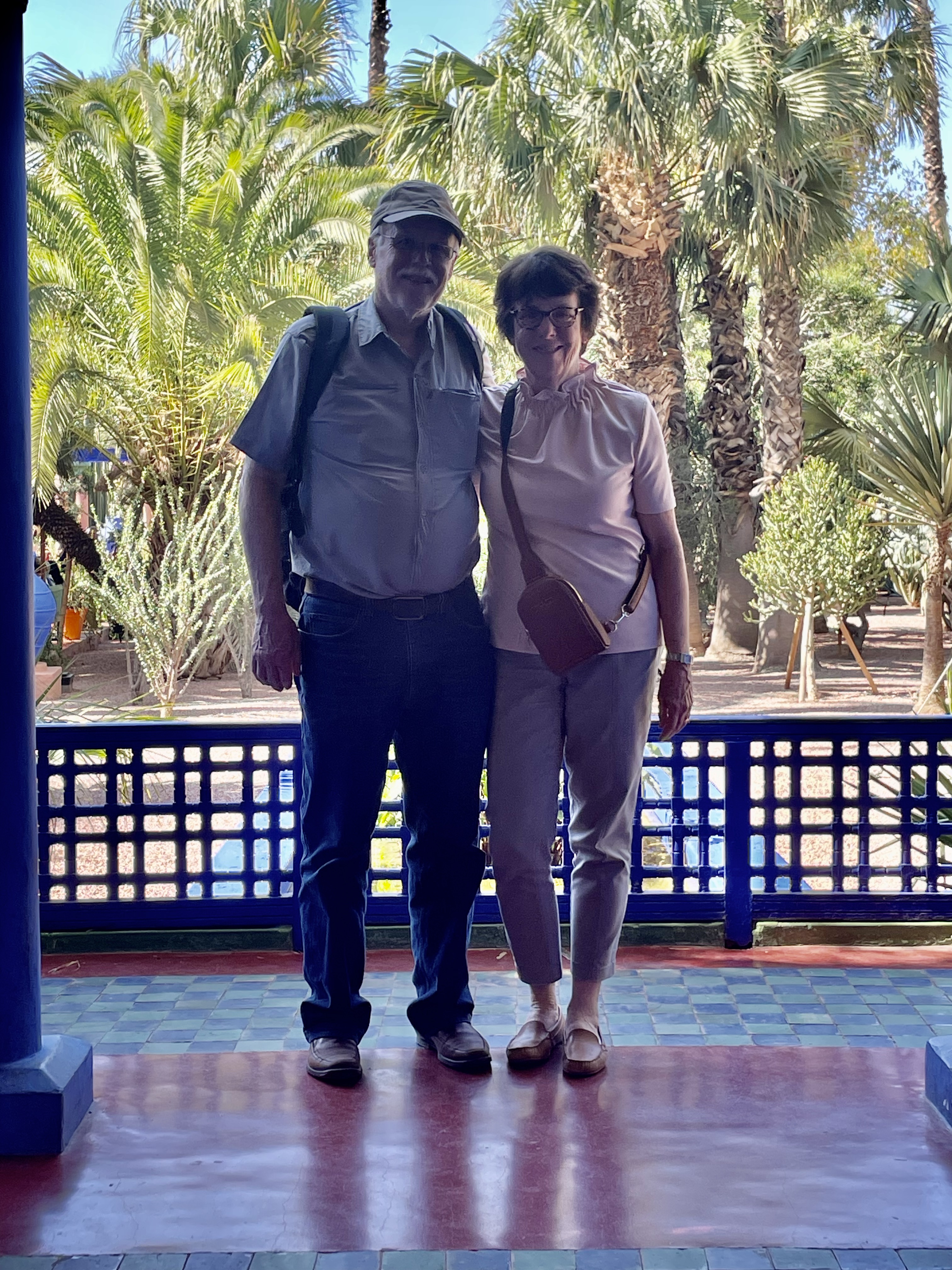
Later in the day we took a 30 minute walk to Jardin Majorelle which took us out of the tourist area and into the local area. We felt perfectly safe but it did have a different feel.Oranges, oranges and more oranges
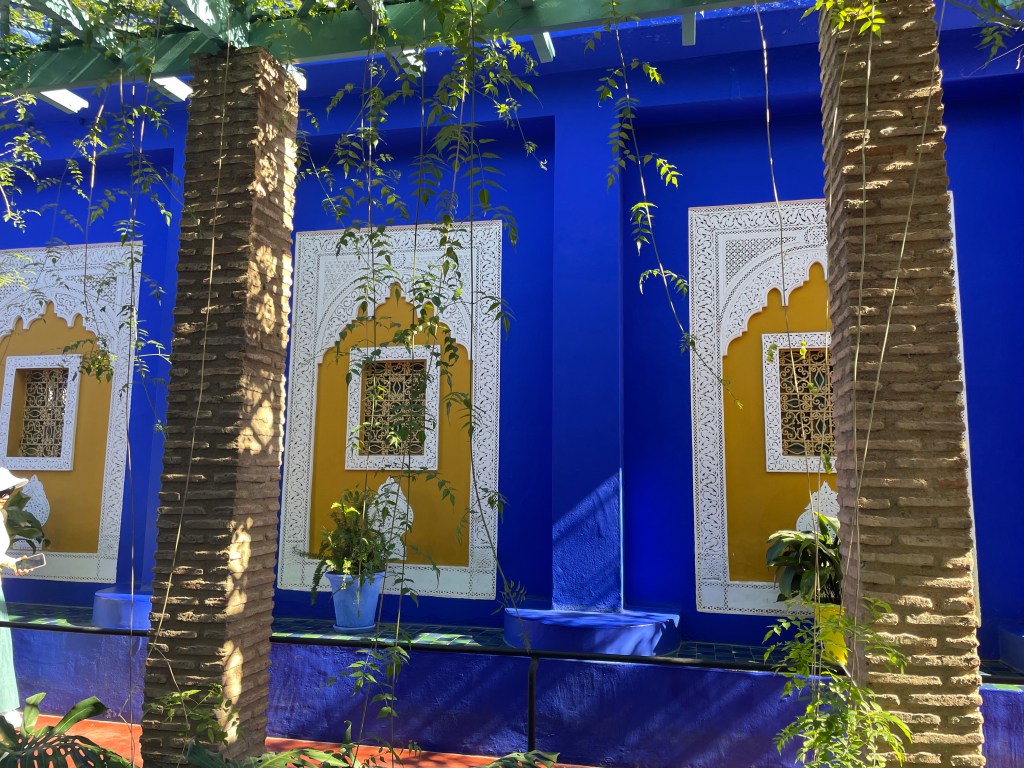
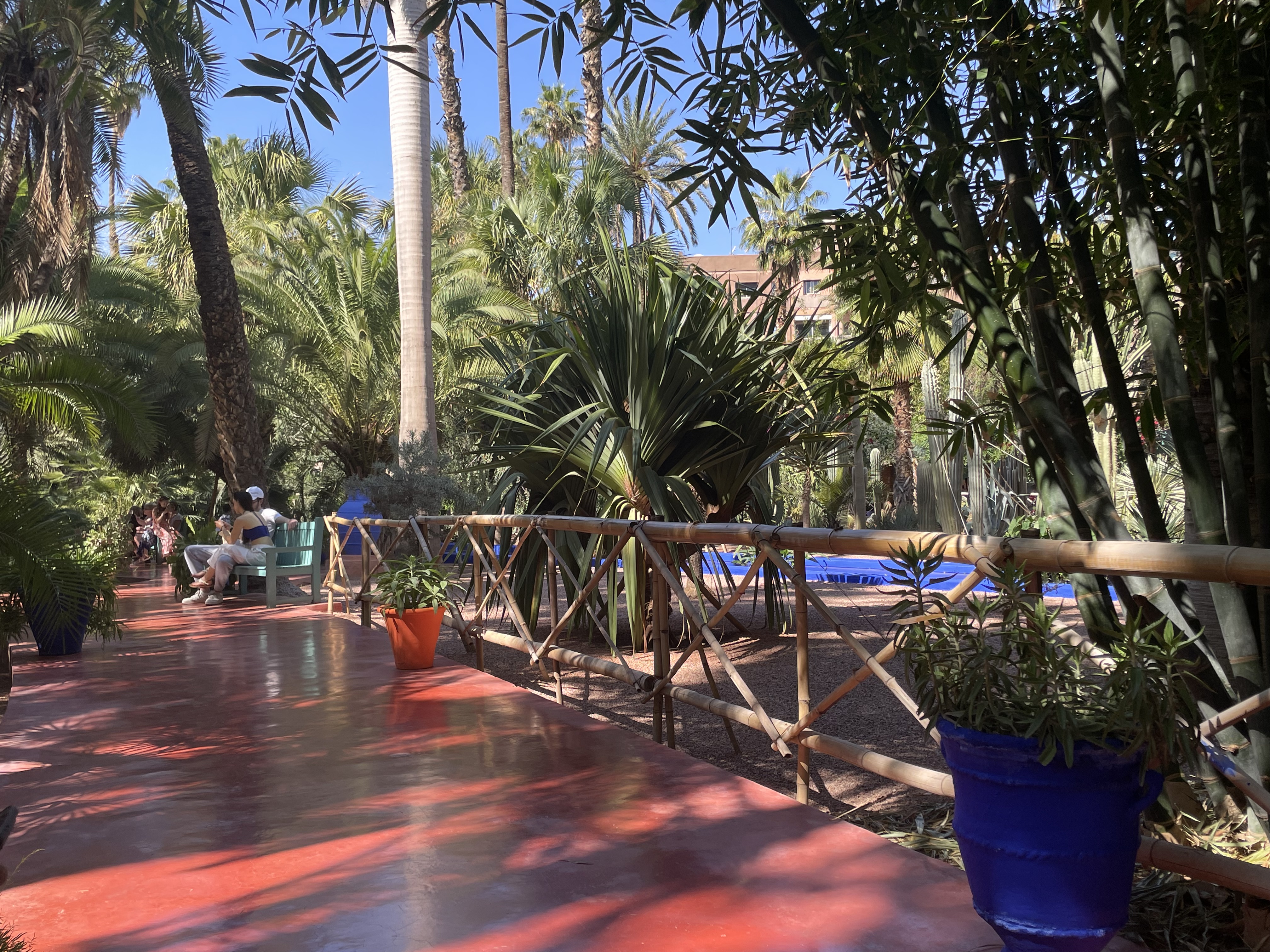
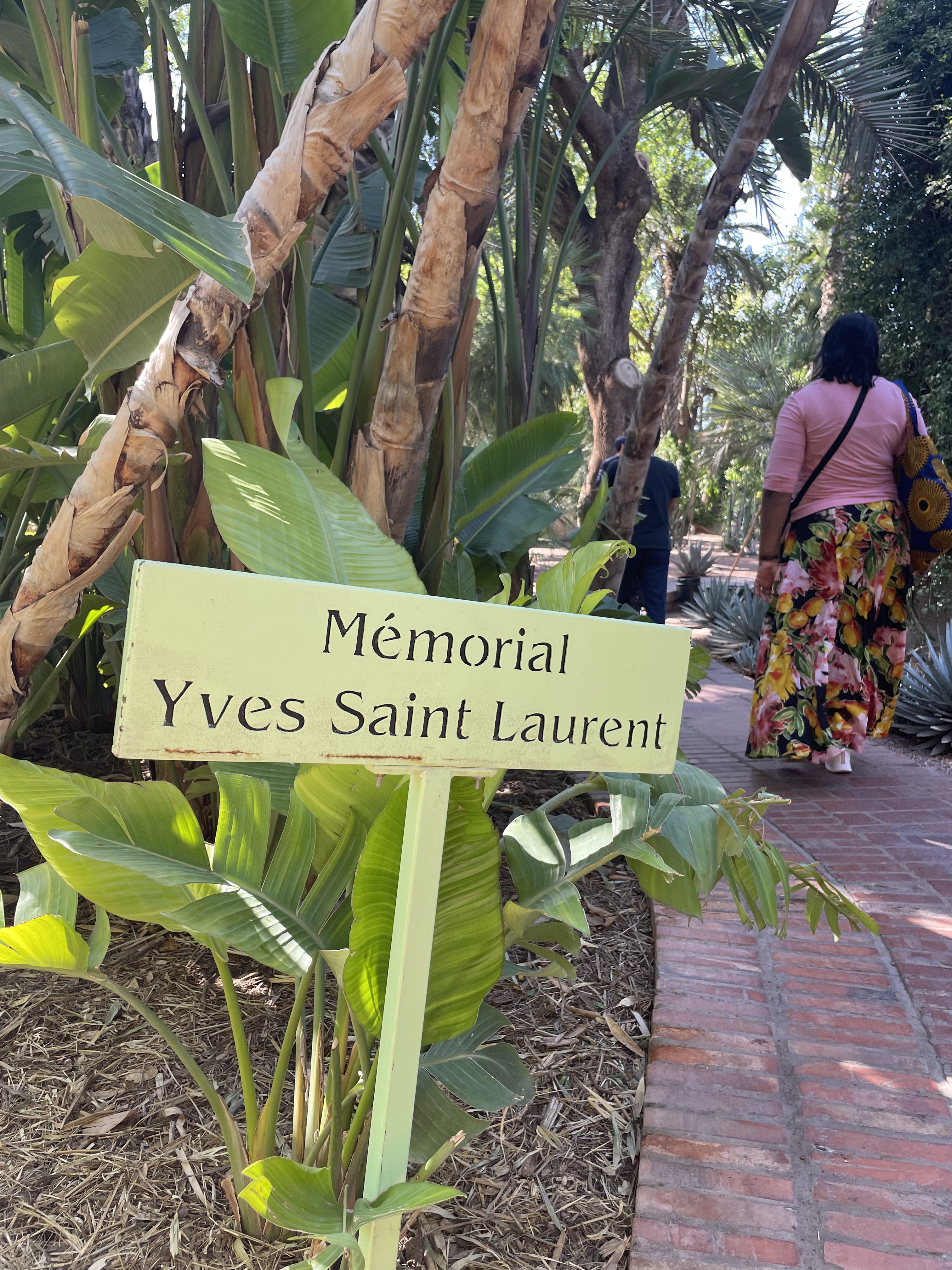
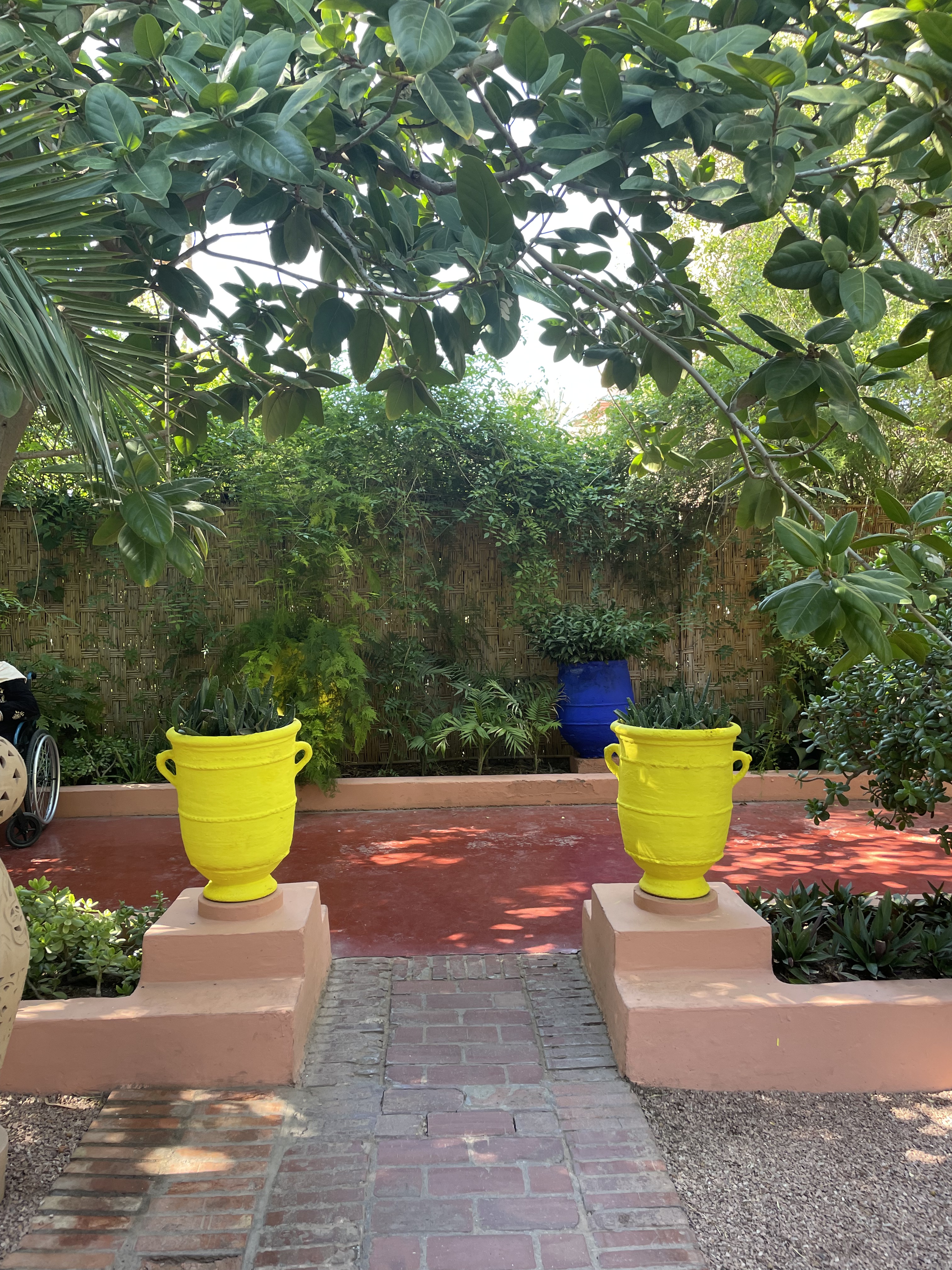
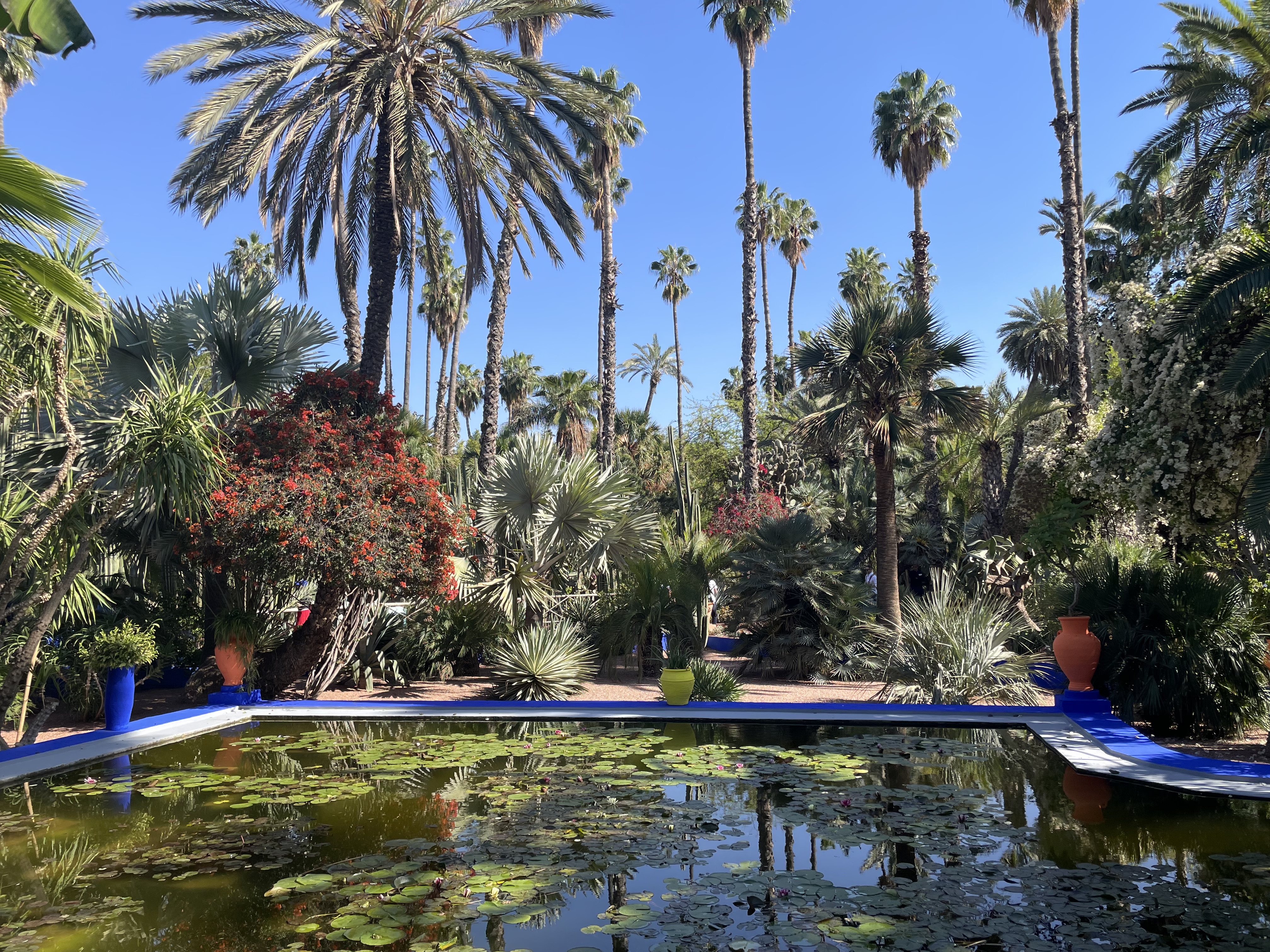
This gorgeous garden is located outside the medina which means it is a much calmer, less congested part of Marrakech. The garden is named after the French artist, Jardin Majorelle who created it in the 1920’s. He spent 40 years of his life developing the garden but by the 1960’s he could no longer afford the upkeep which caused the garden to fall into disrepair. In the 1980’s fashion designers Yves Saint-Laurent and his partner, Pierre Berge purchased the garden and worked to restore it. After Yves Saint-Laurent passed away in 2008, his ashes were scattered in the Majorelle Garden.
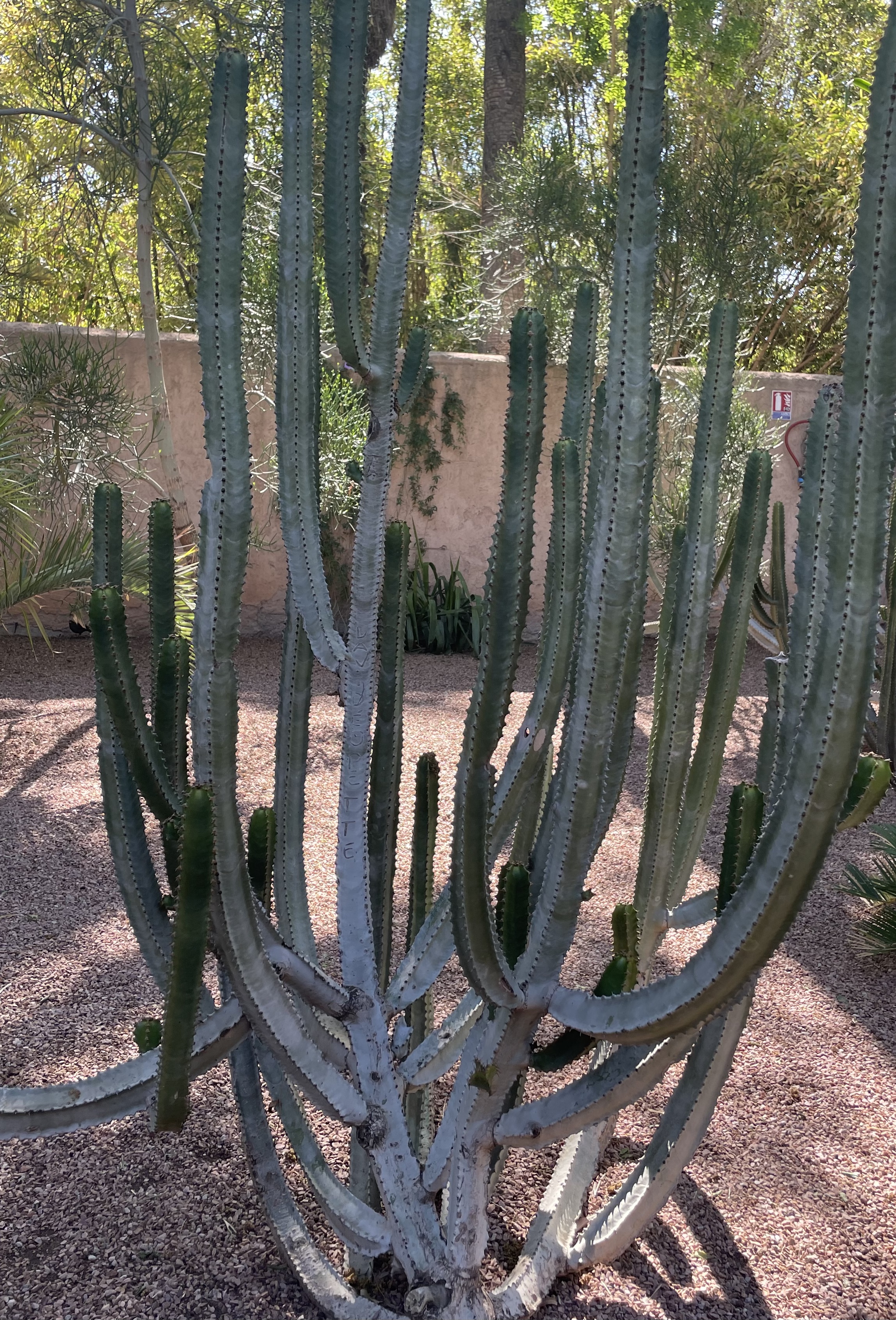
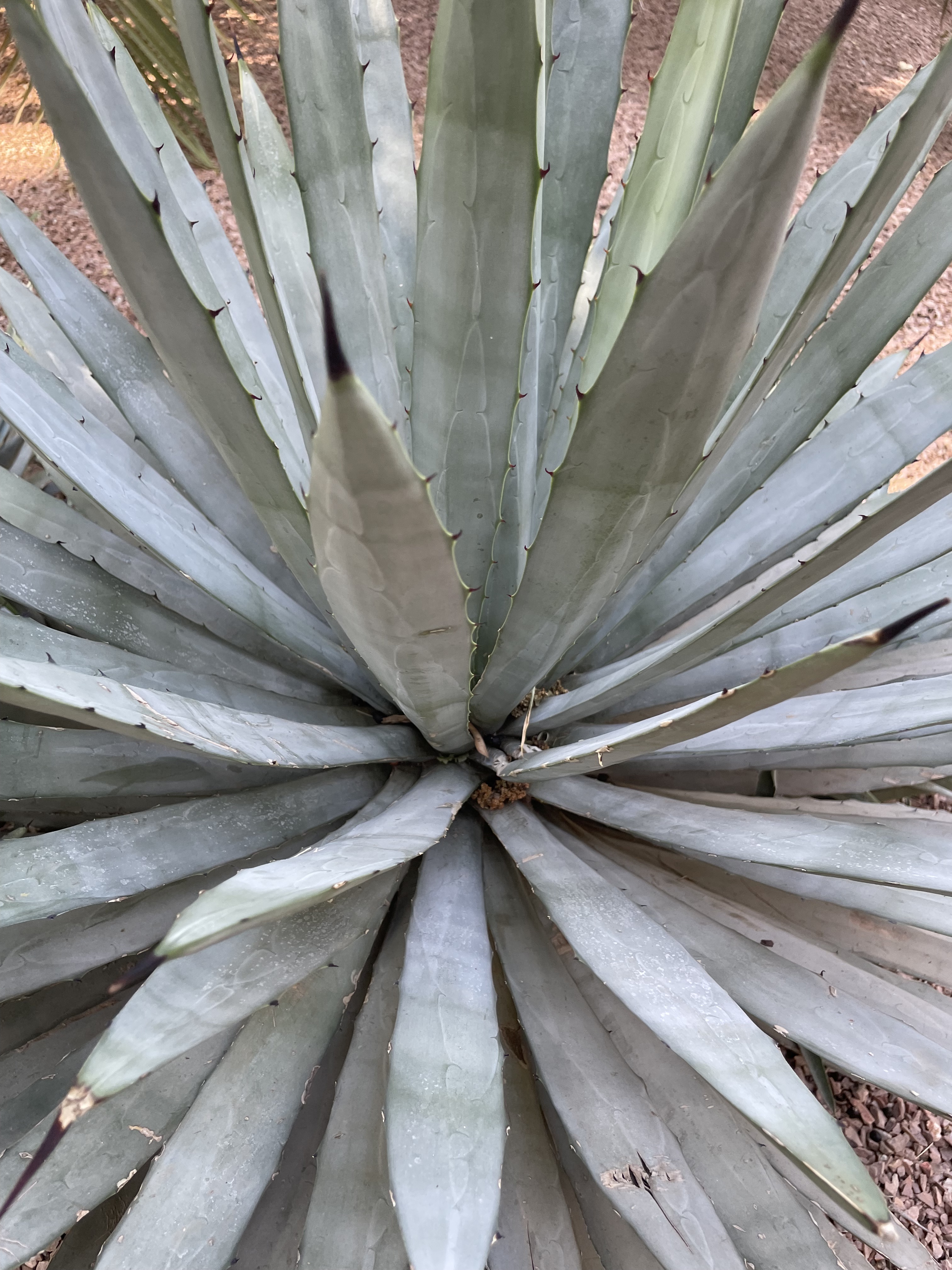
Beautiful, beautiful gardens!
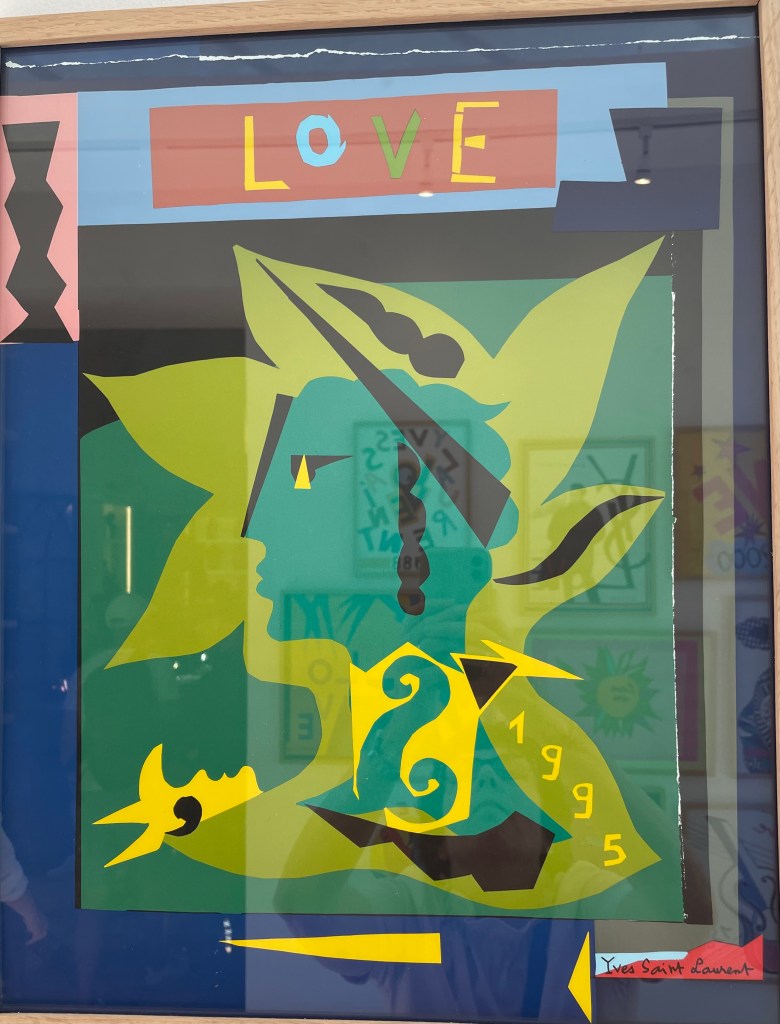
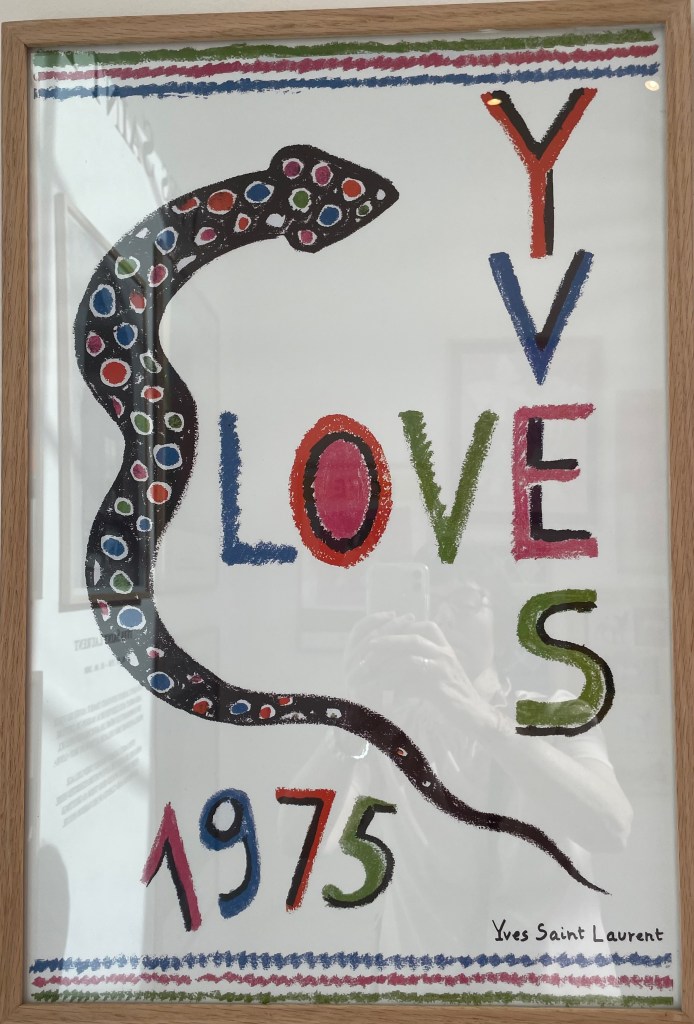
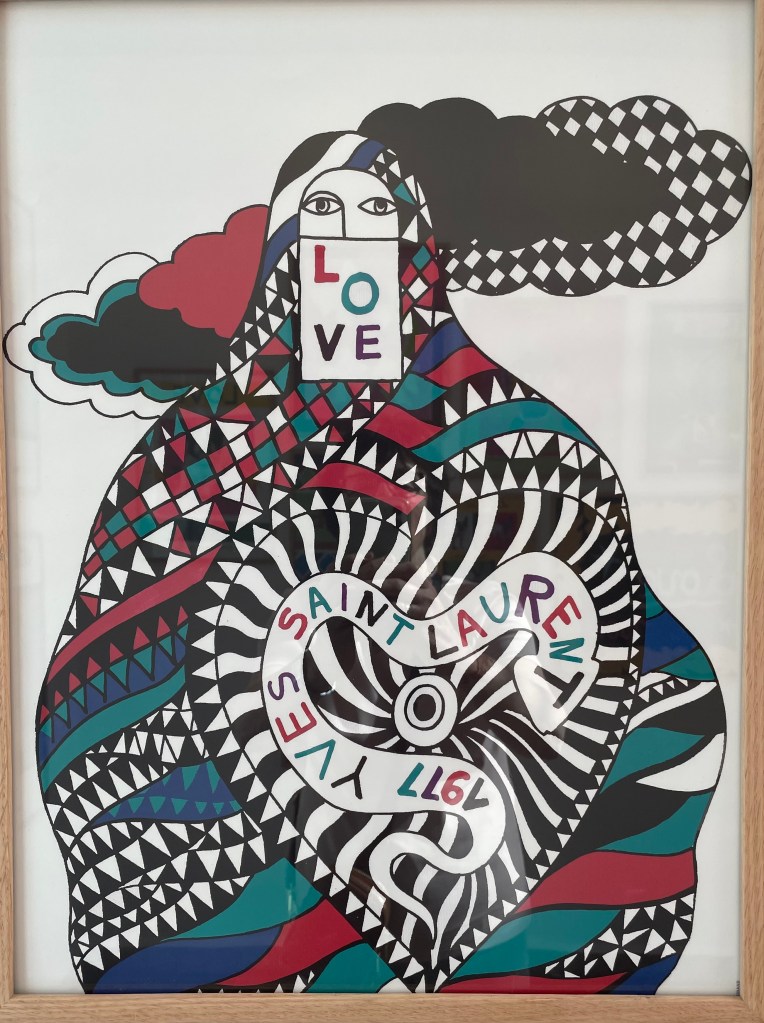
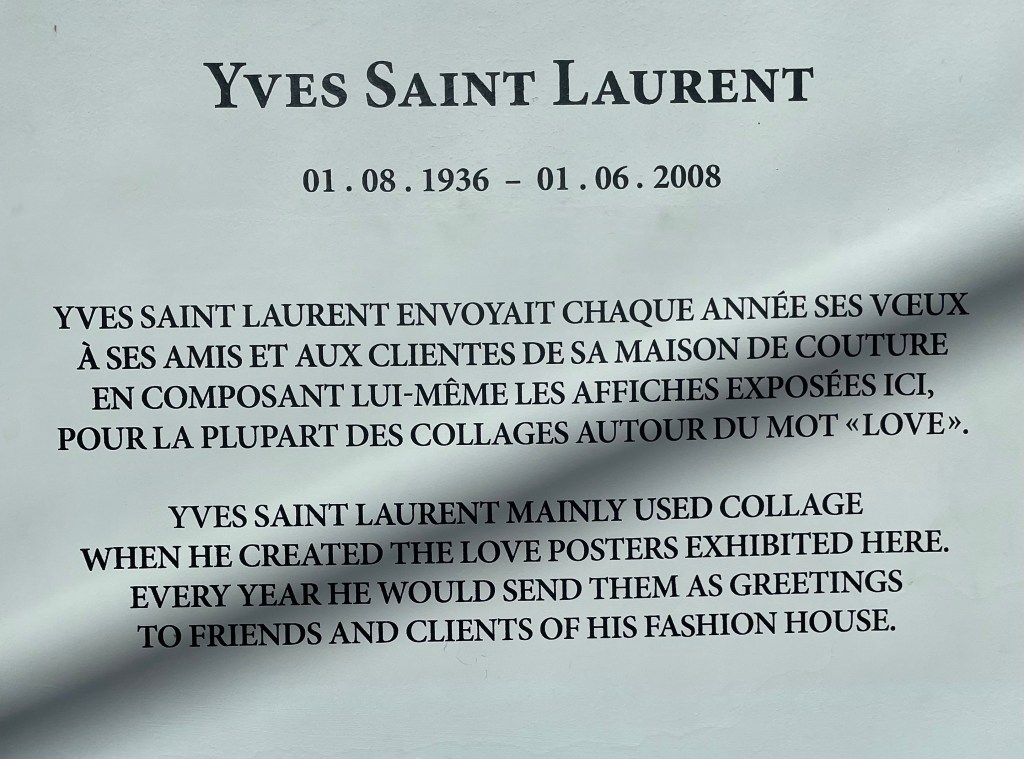
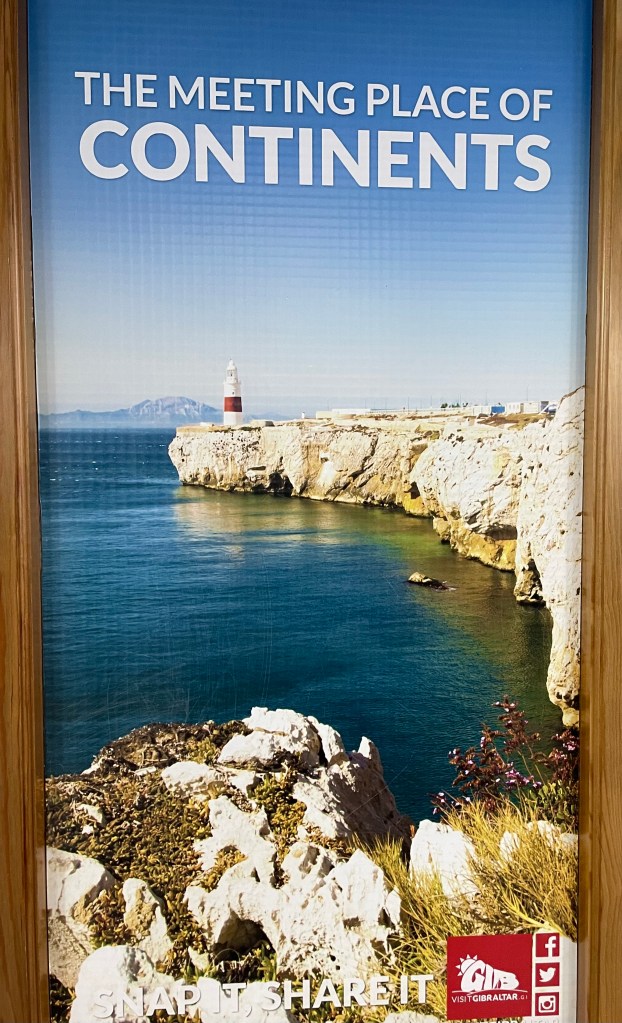
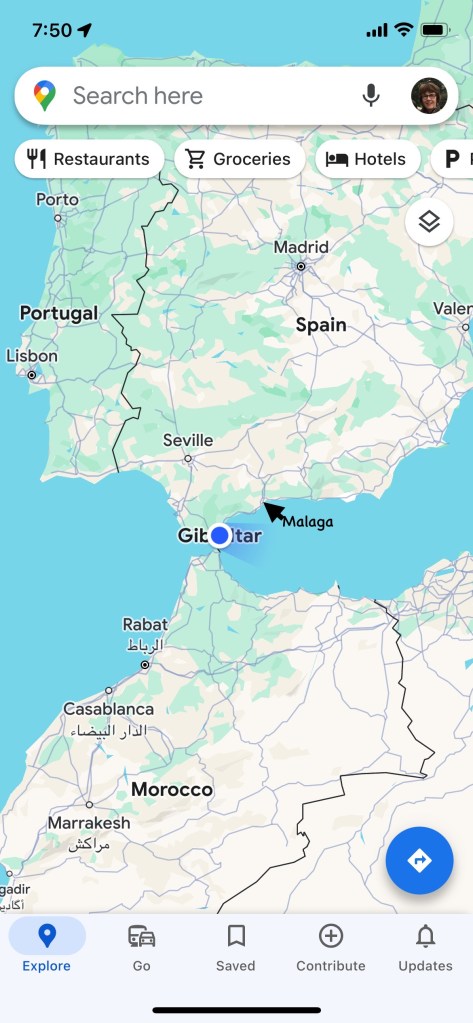
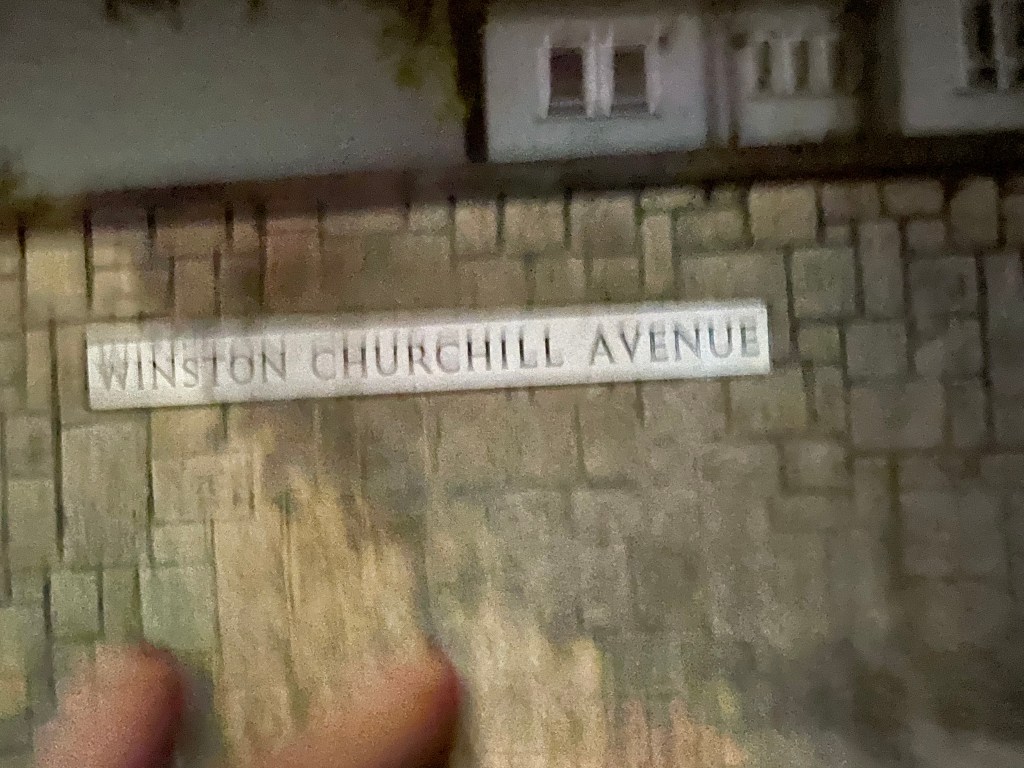
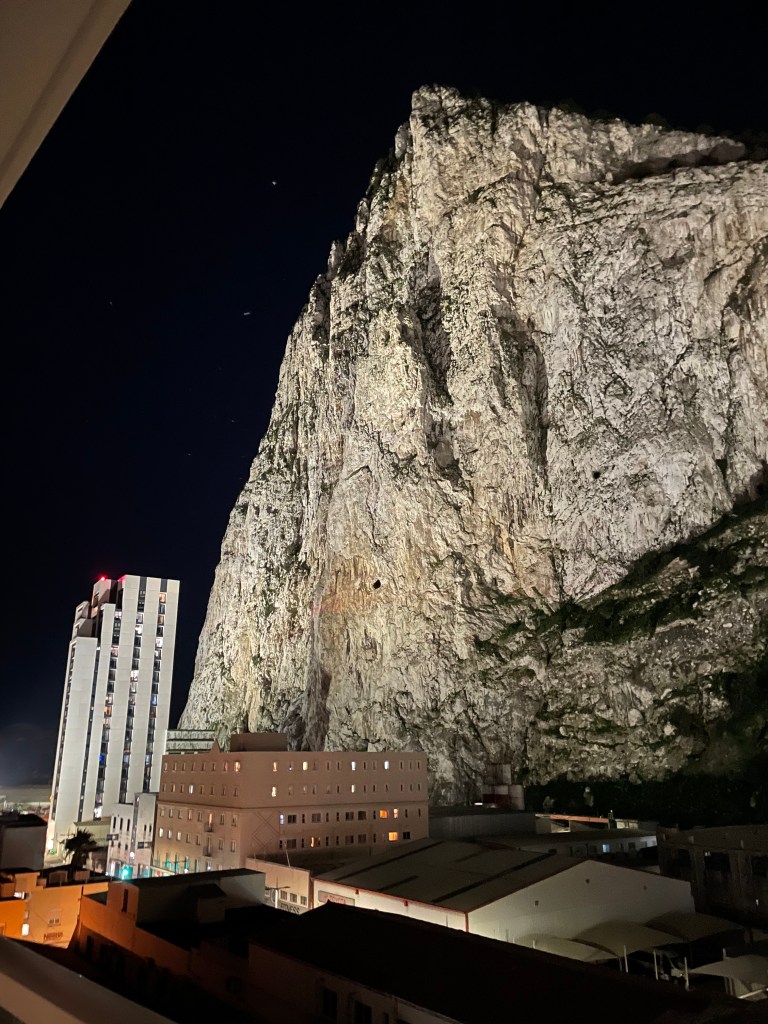
There must have been at least 25 different posters displayed similar to the ones pictured above, I captured a very few of them. The posters gave me a glimpse into Yves Saint Laurent’s personality. What a lovely gesture to send yearly greetings to his friends.These are a few photos from a run through Marrakesh. Later in the day we took a flight to Malaga, Spain.Even though Morocco and Gibraltar are very close to each other geographically, it was not easy to travel between the two. We needed to fly from Marrakesh to Malaga, Spain and then take a two hour bus ride to a small Spanish town next to Gibraltar arriving at 10:00 at night. We then walked across the border into Gibraltar. As soon as we walked across the border we knew we were in Gibraltar because of this sign. My photography skills were not at there best at this point.When we went out on the balcony of our rental apartment this was our view. We have definitely arrived at the Rock of Gibraltar.The next morning…
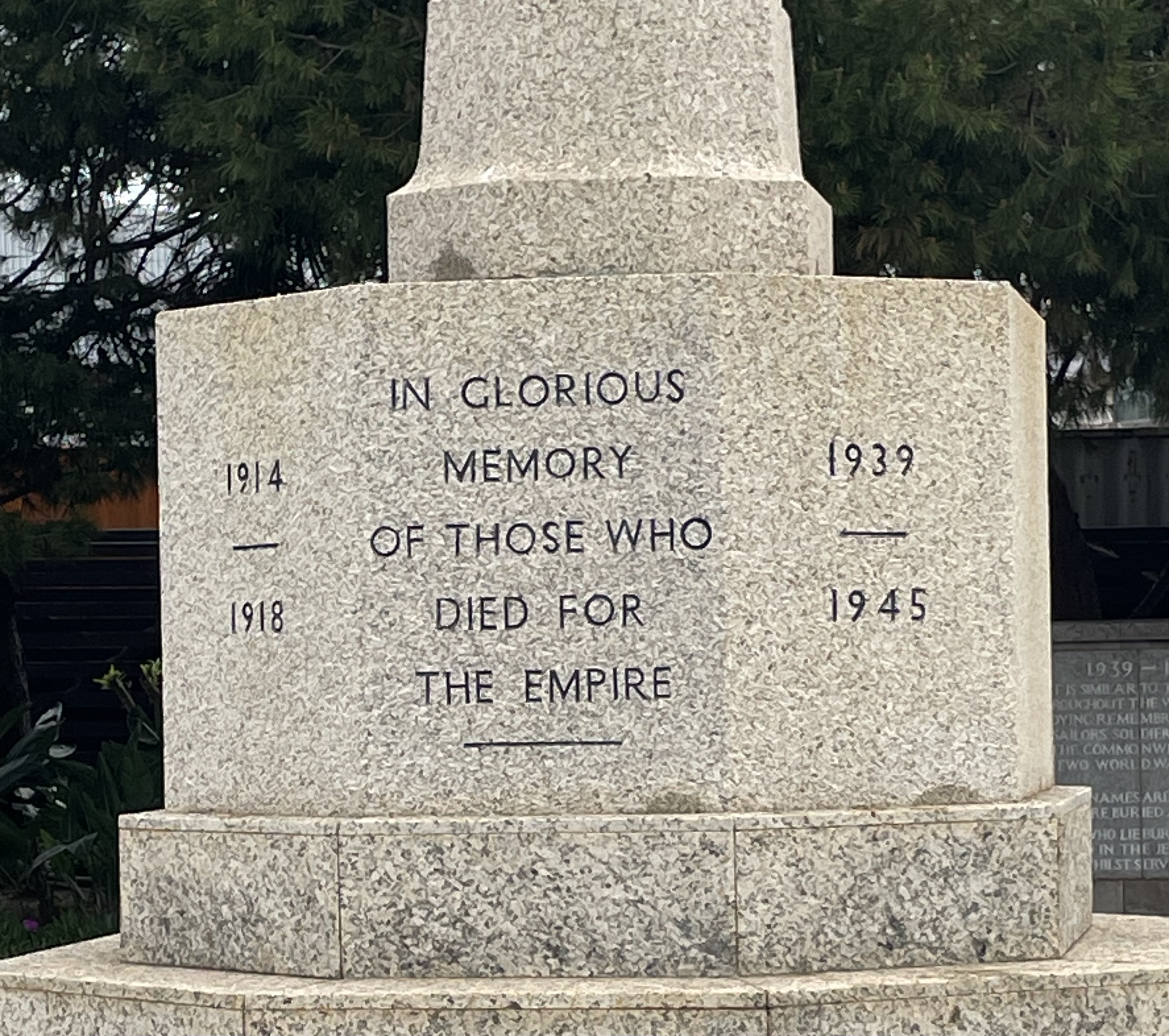
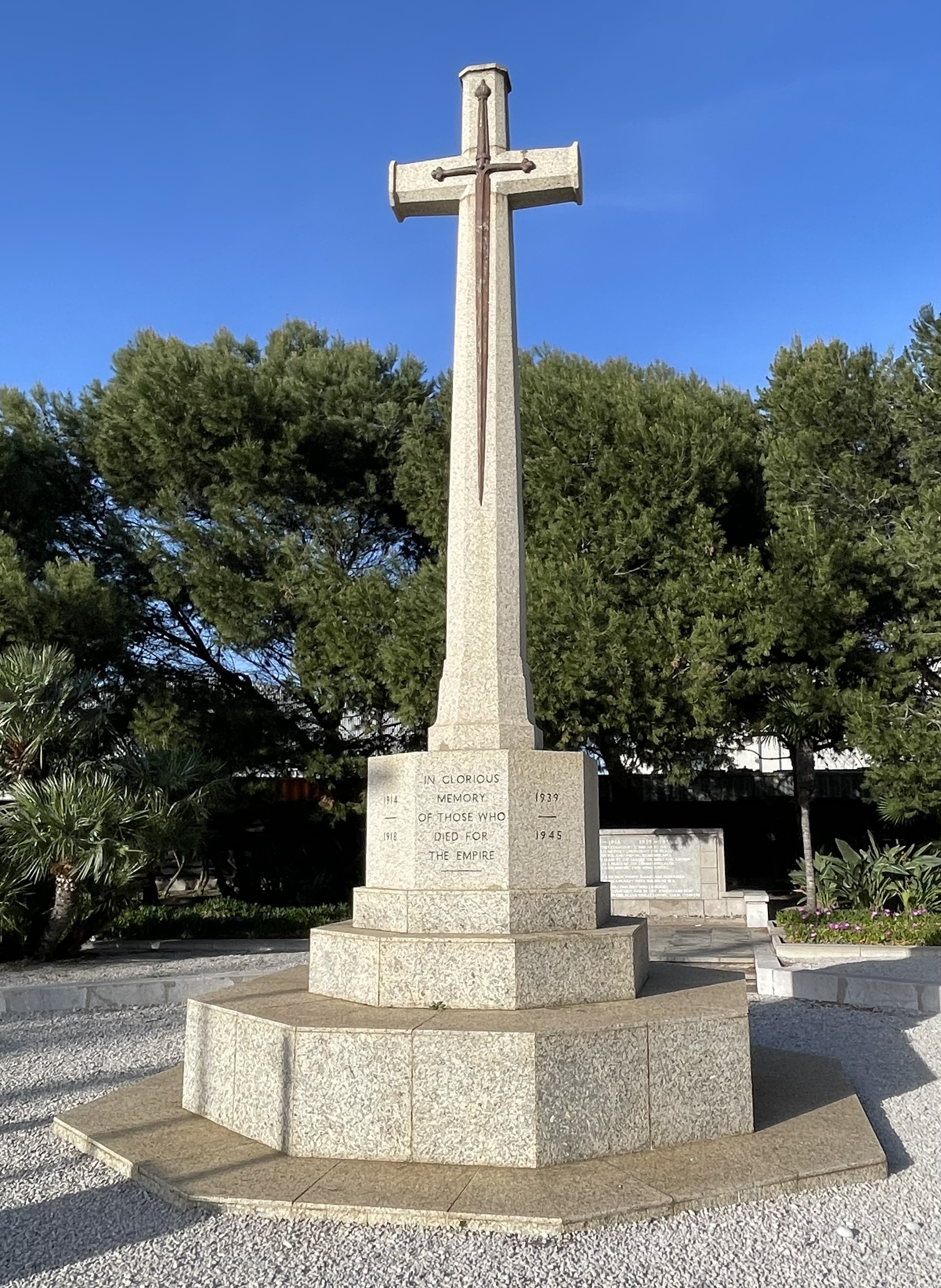
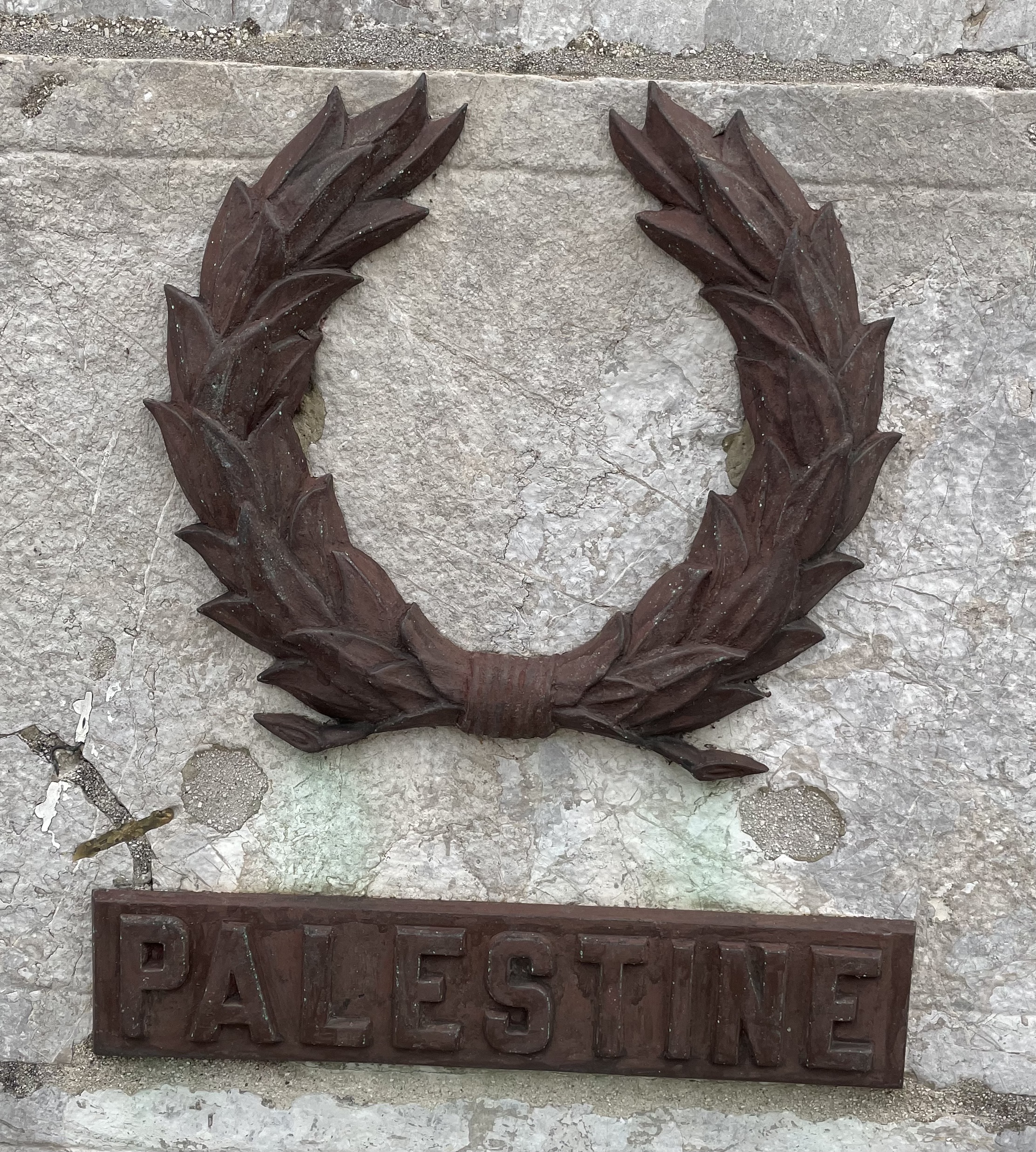
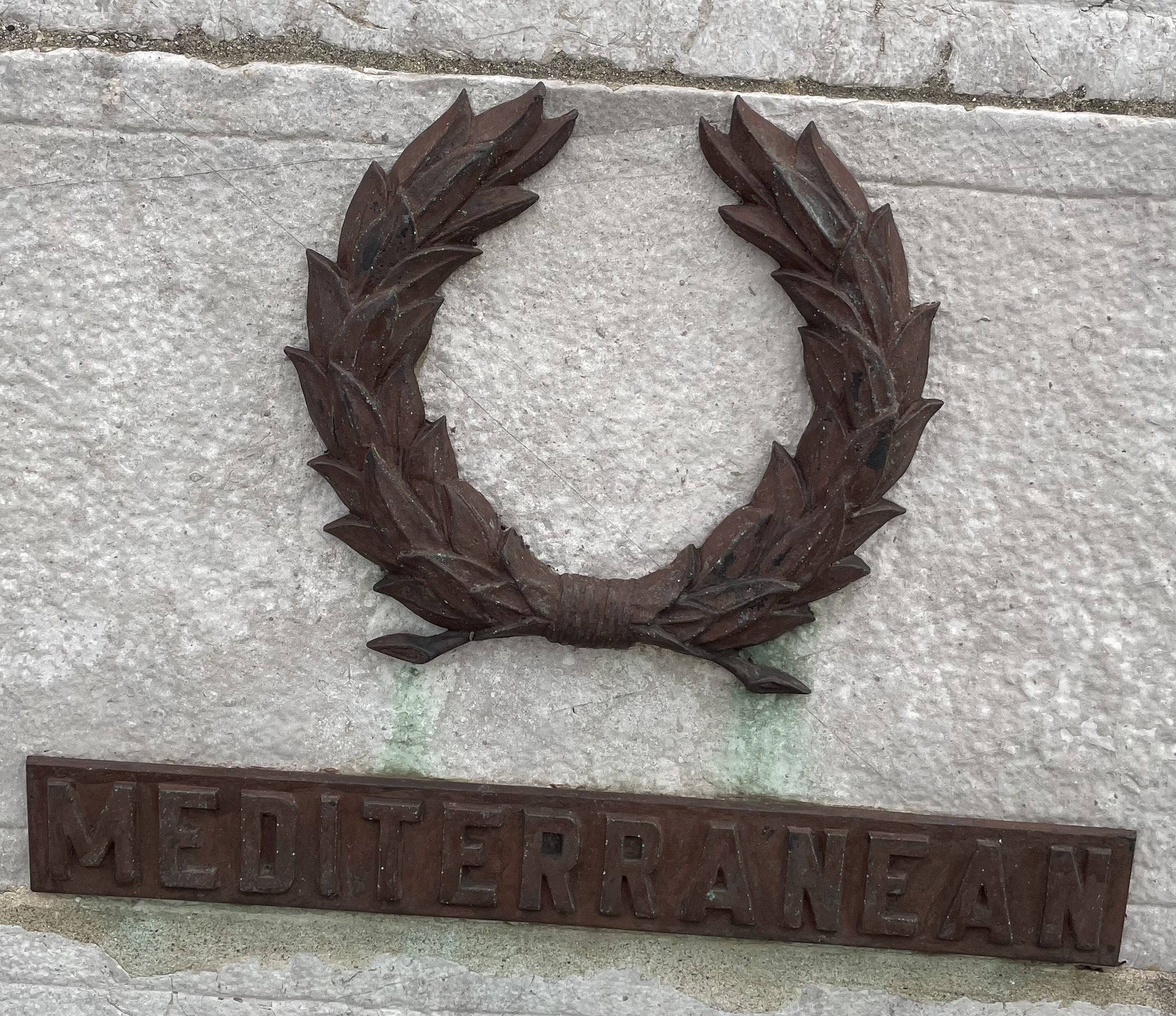
Wondering exactly the meaning of this memorial. Obviously it is a tribute to British soldiers who died in WWI and WWII but did they die in Gibraltar? Were there this many different parts of the world involved in conflicts here?
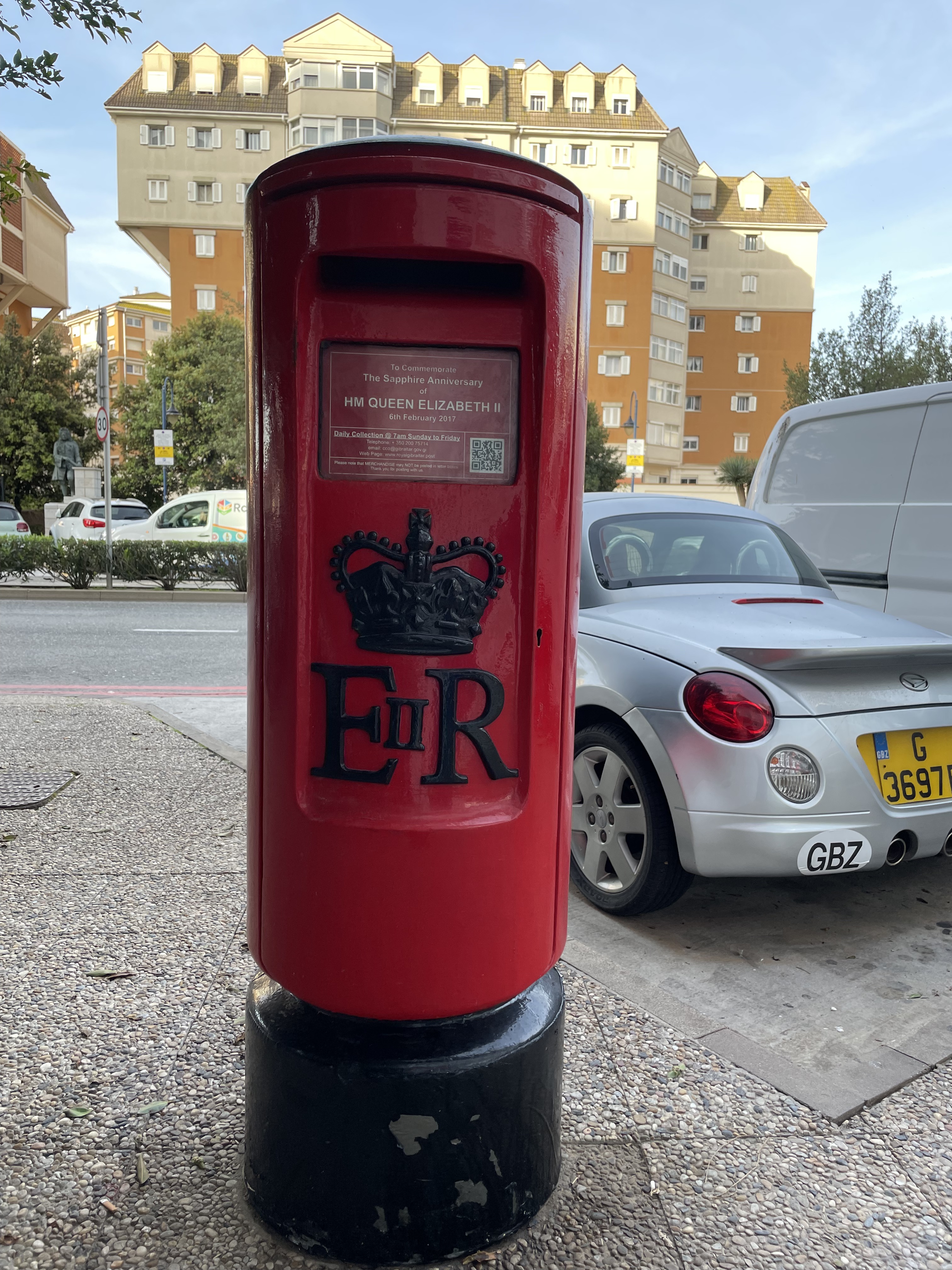
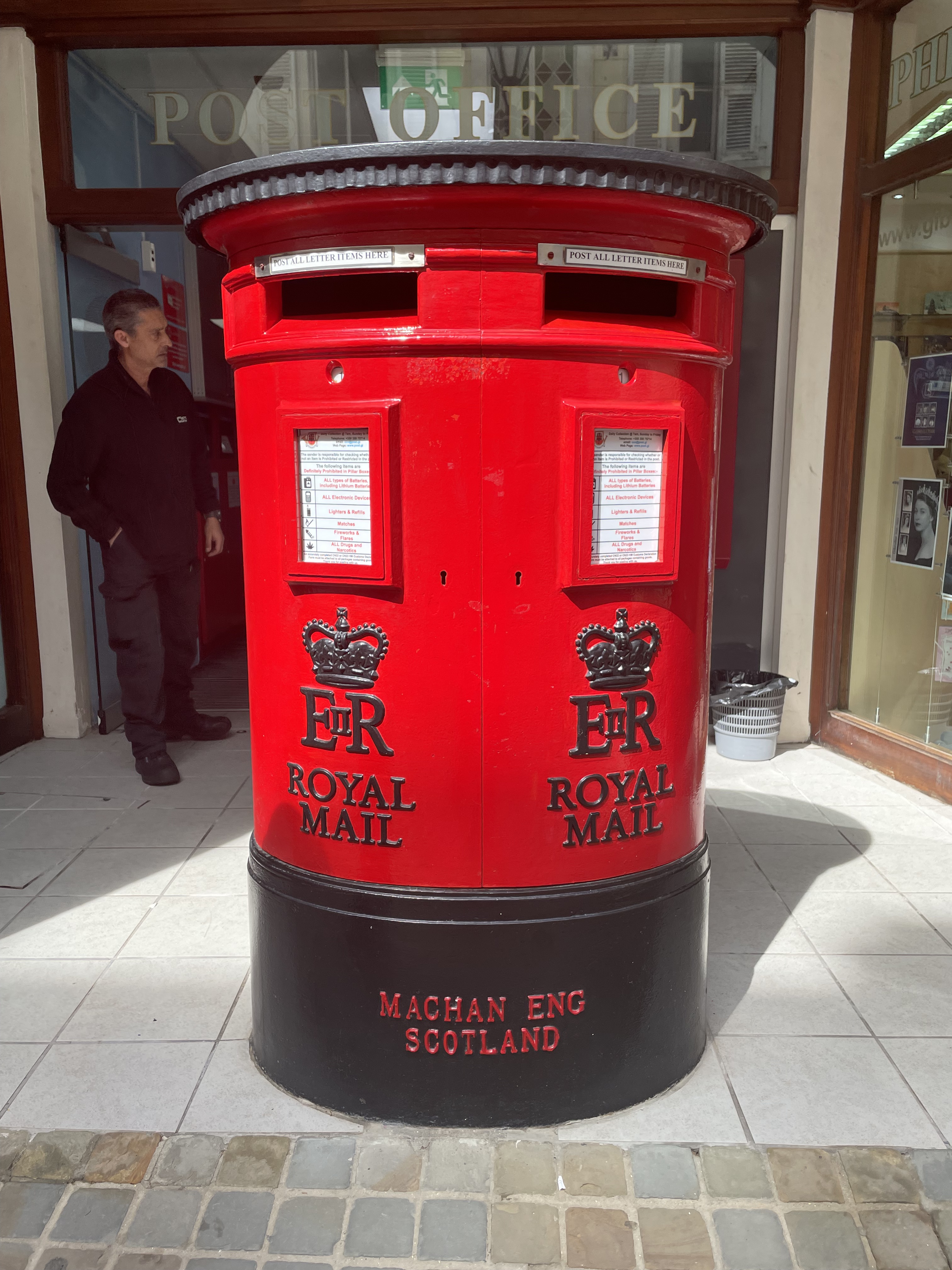
Although Gibraltar is not an integral part of the United Kingdom, it is easy to see the British influence. Gibraltar is considered a British Overseas Territory. The 30,000 people who live in Gibraltar hold British passports. Spain has pressed for sovereignty but it is repeatedly rejected by the UK and the residents of Gibraltar.
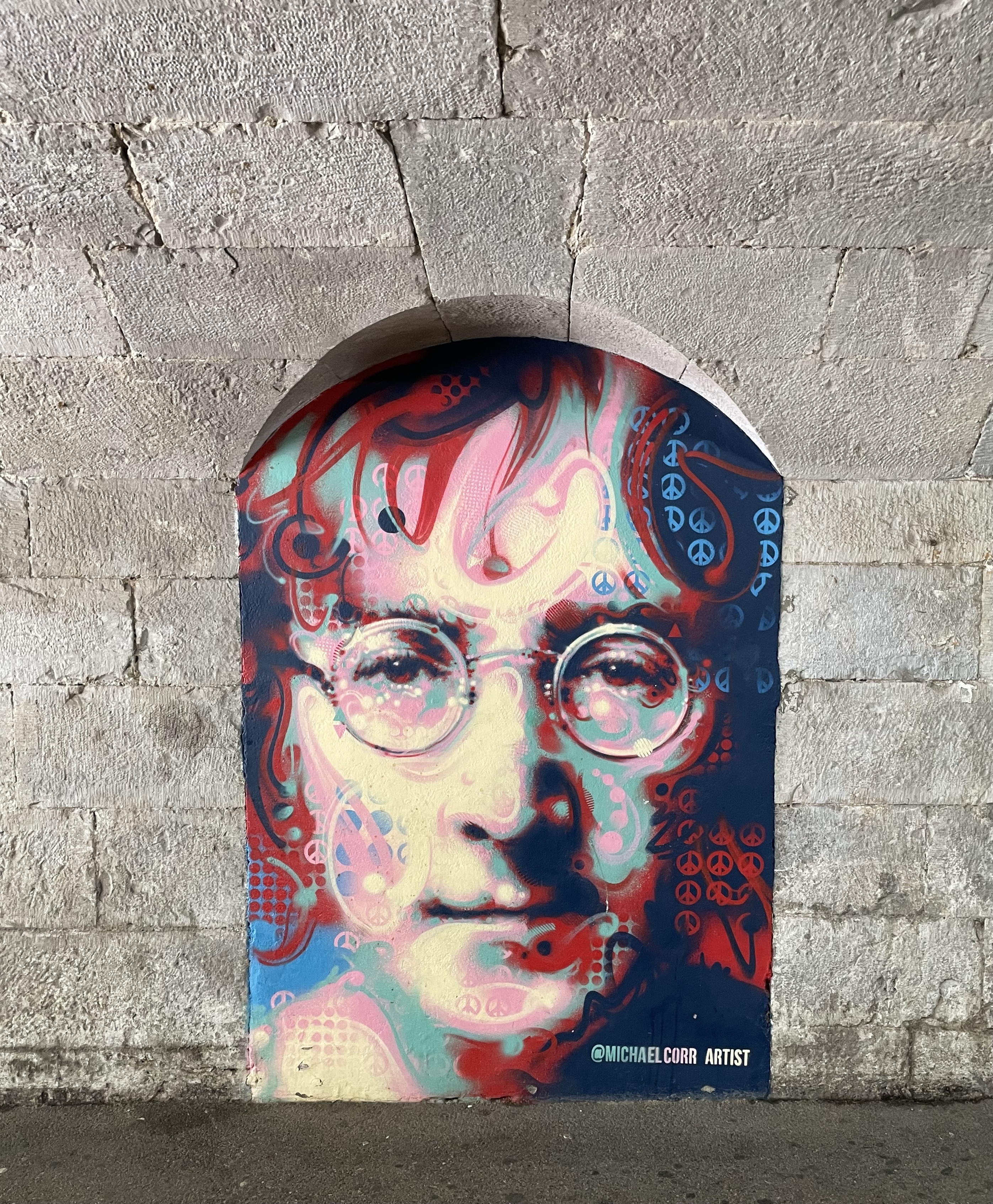
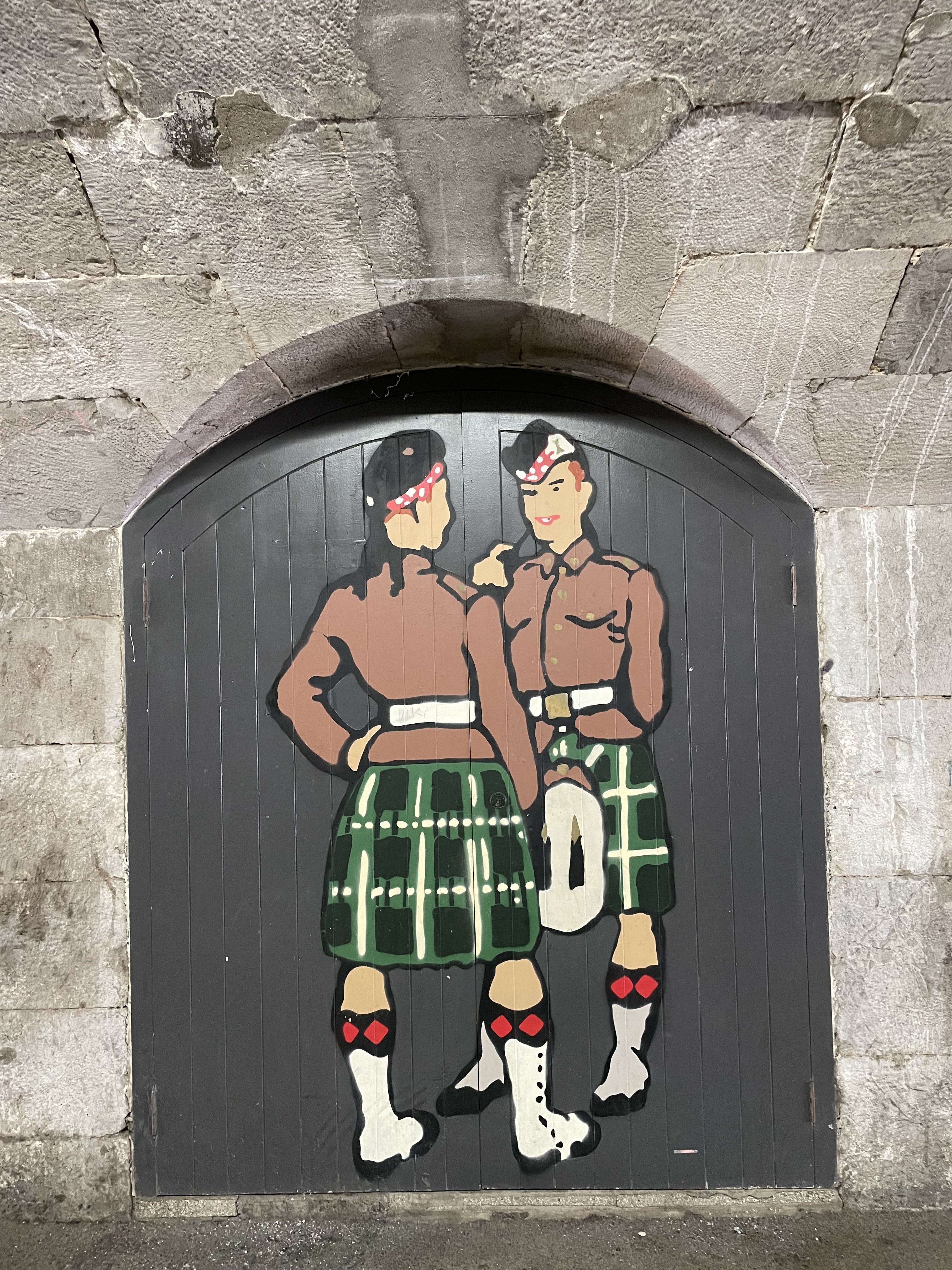
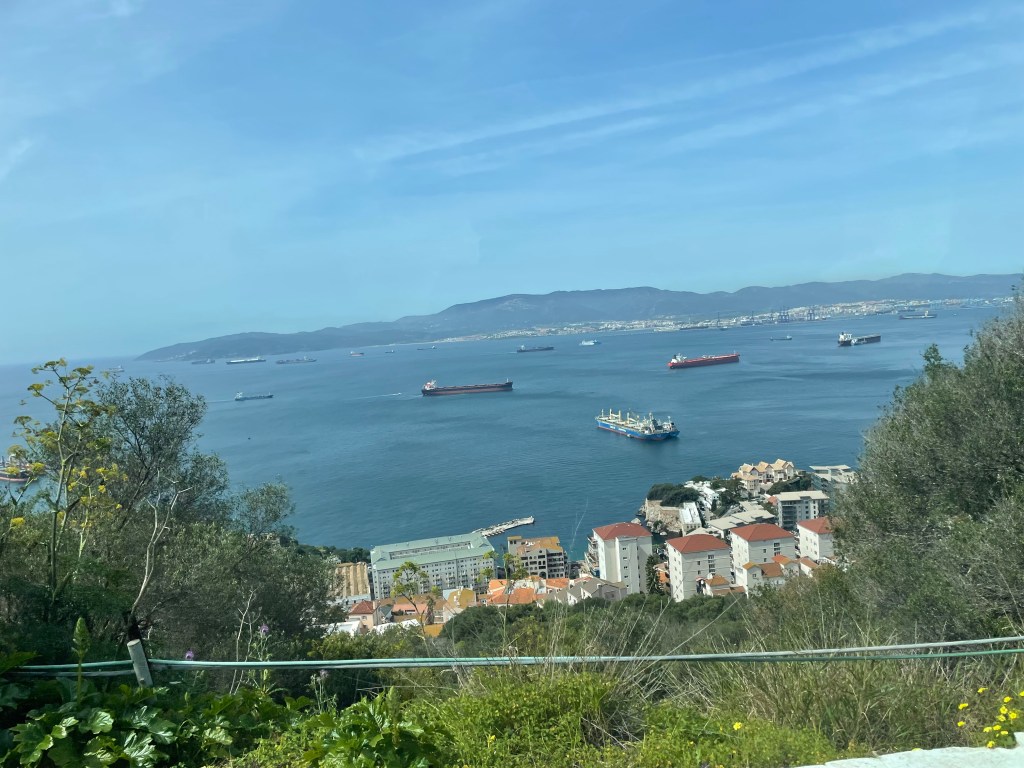
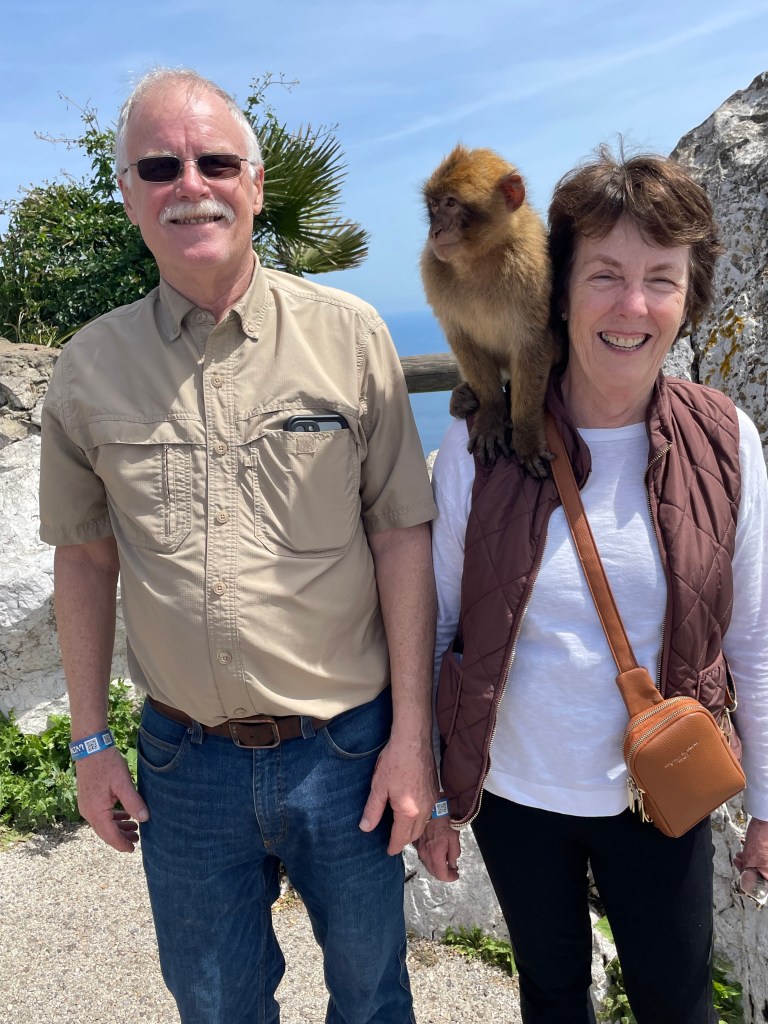
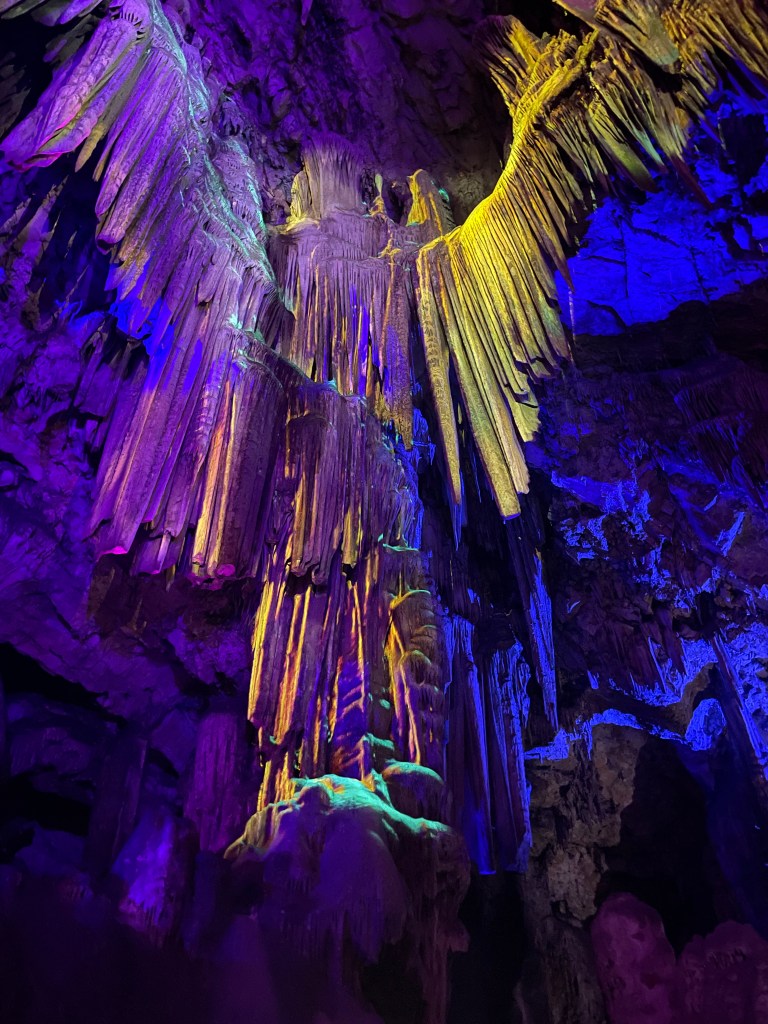
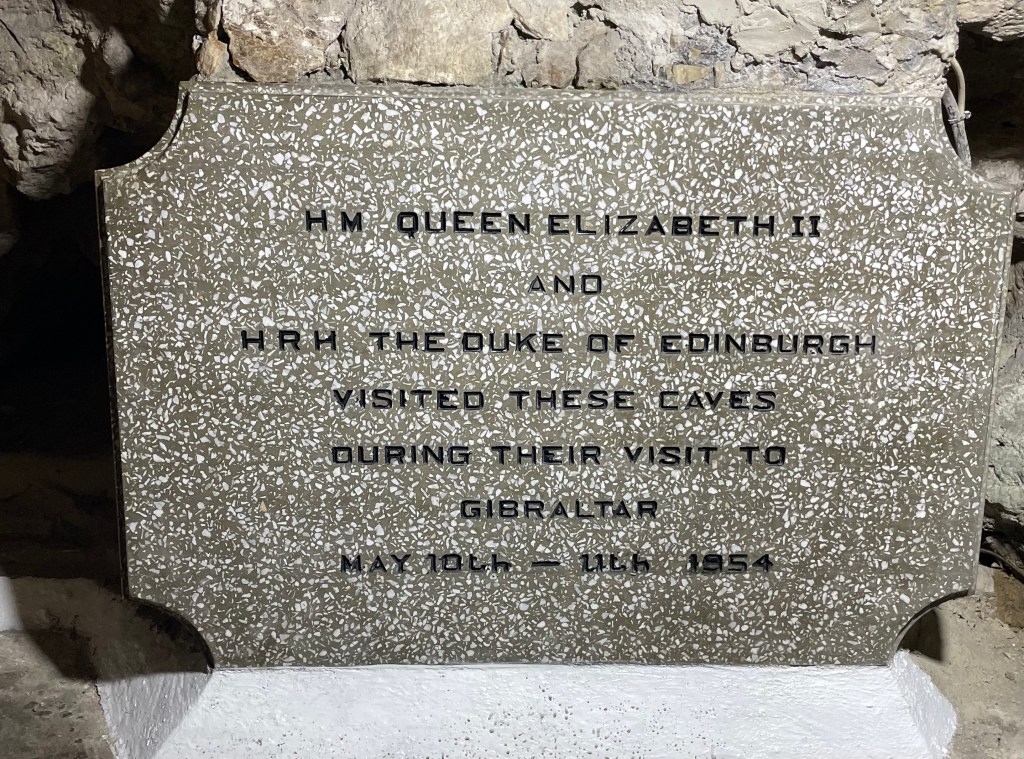
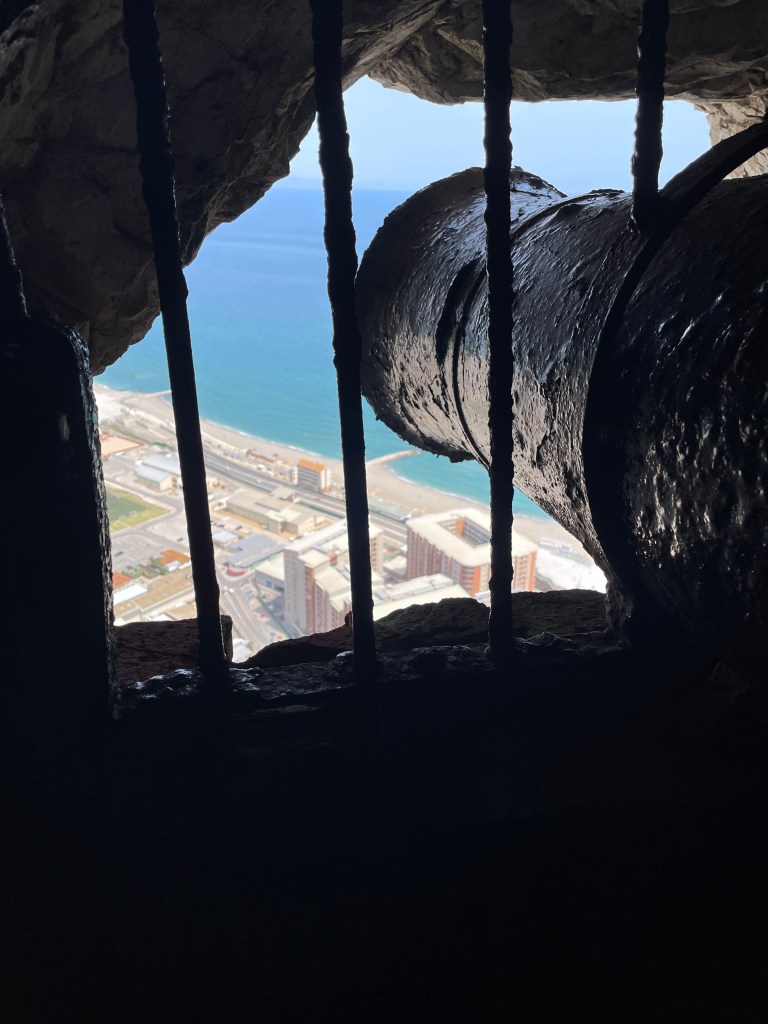
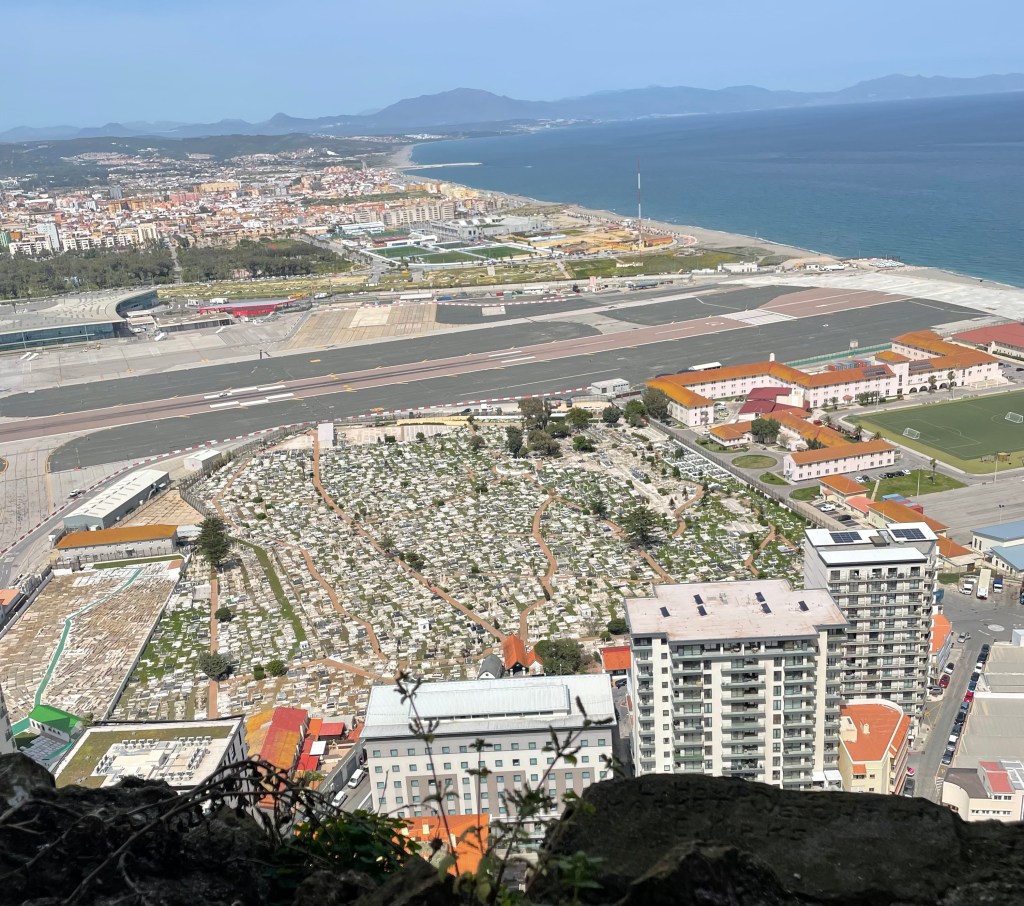
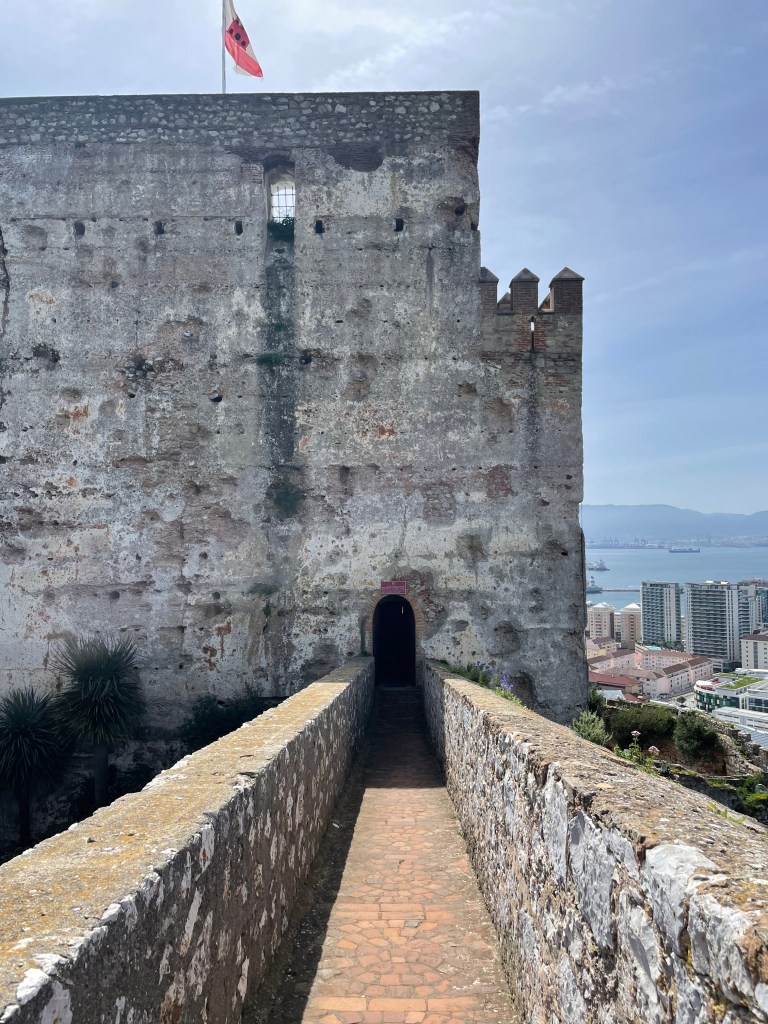
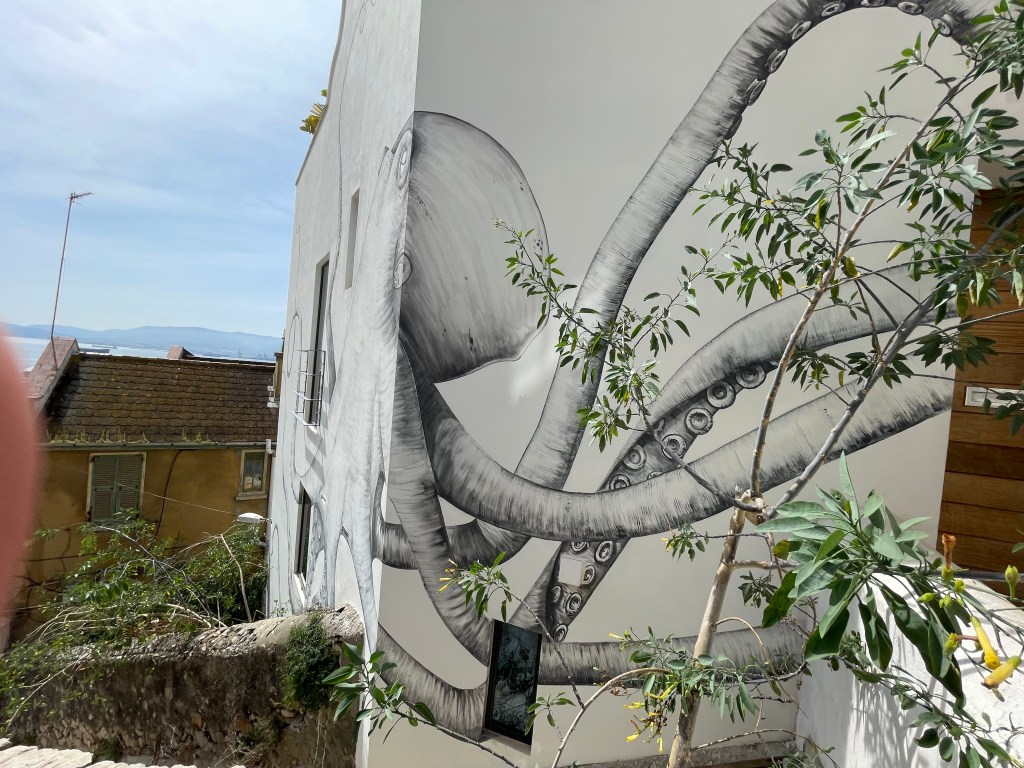
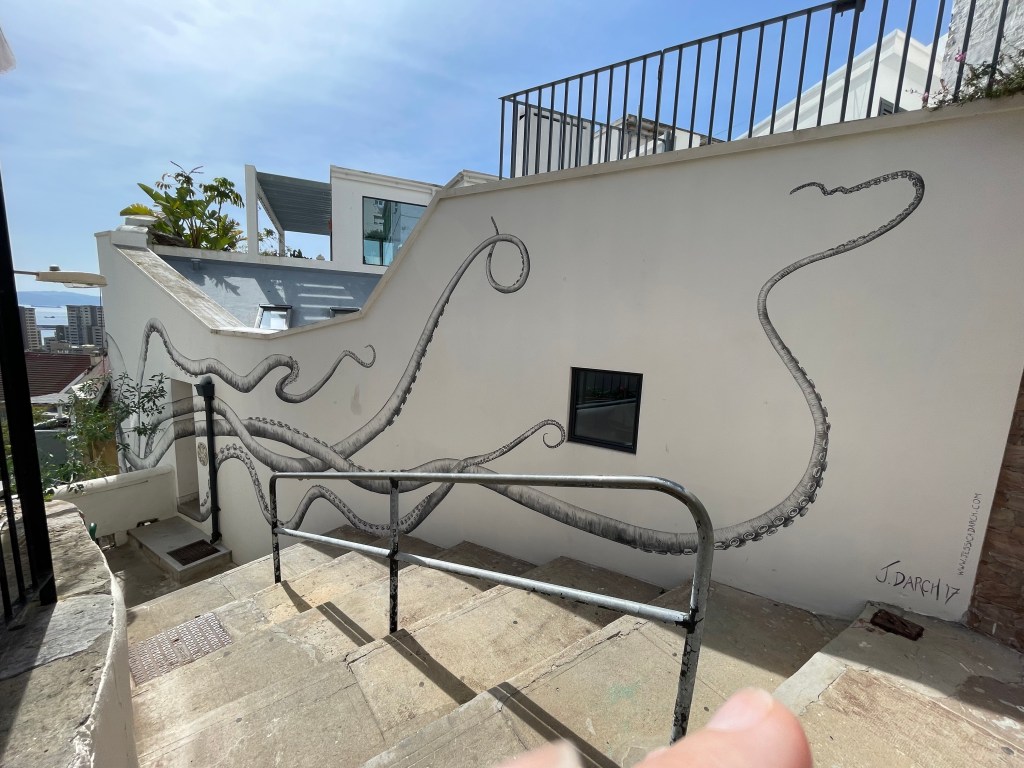
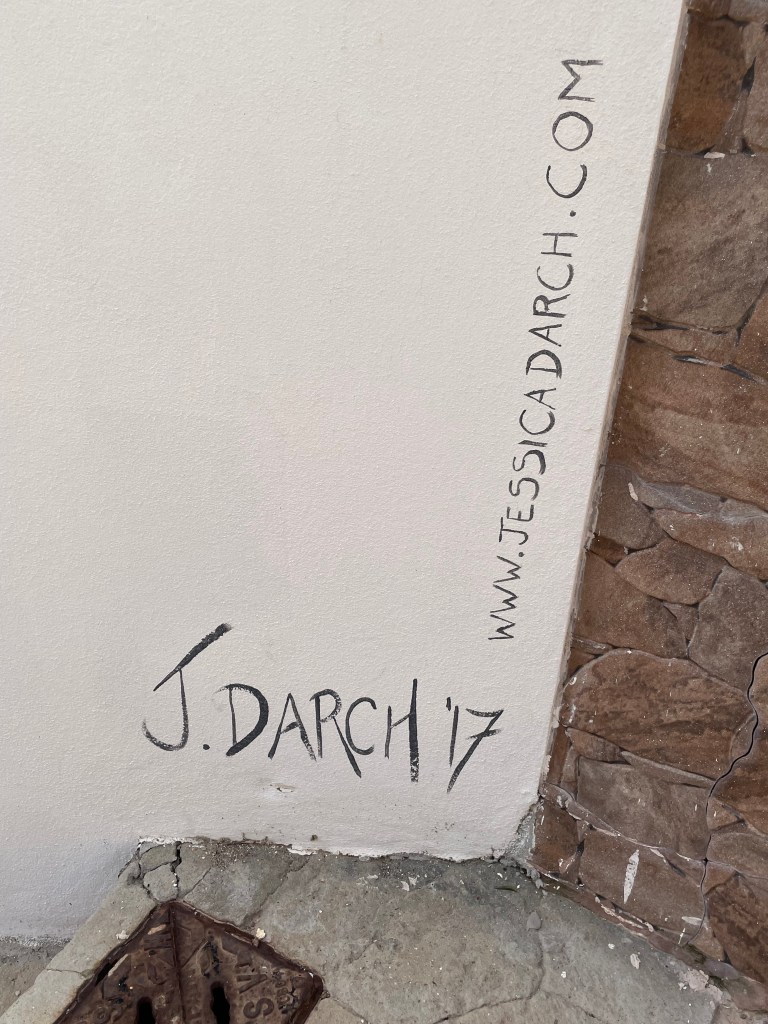
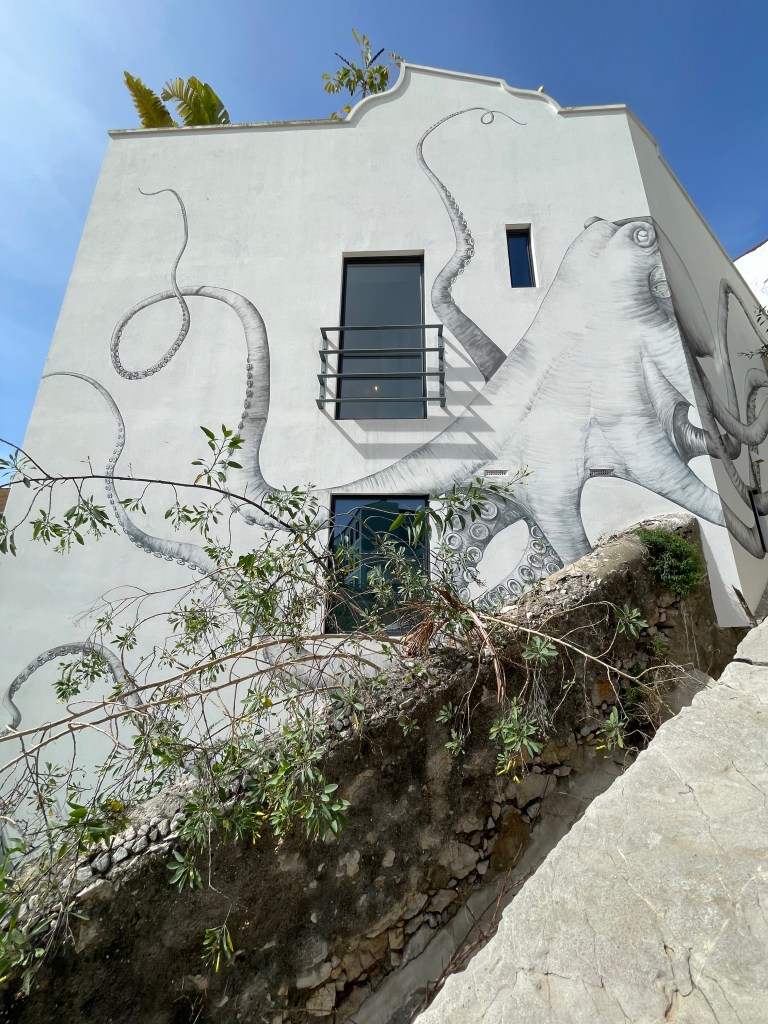
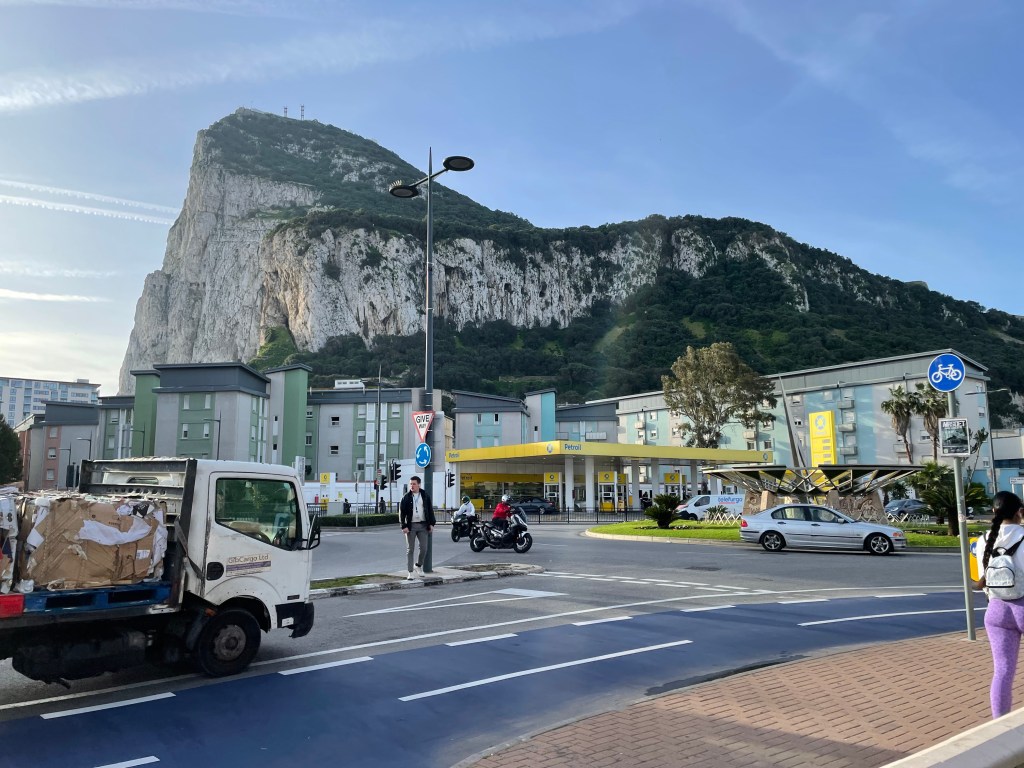
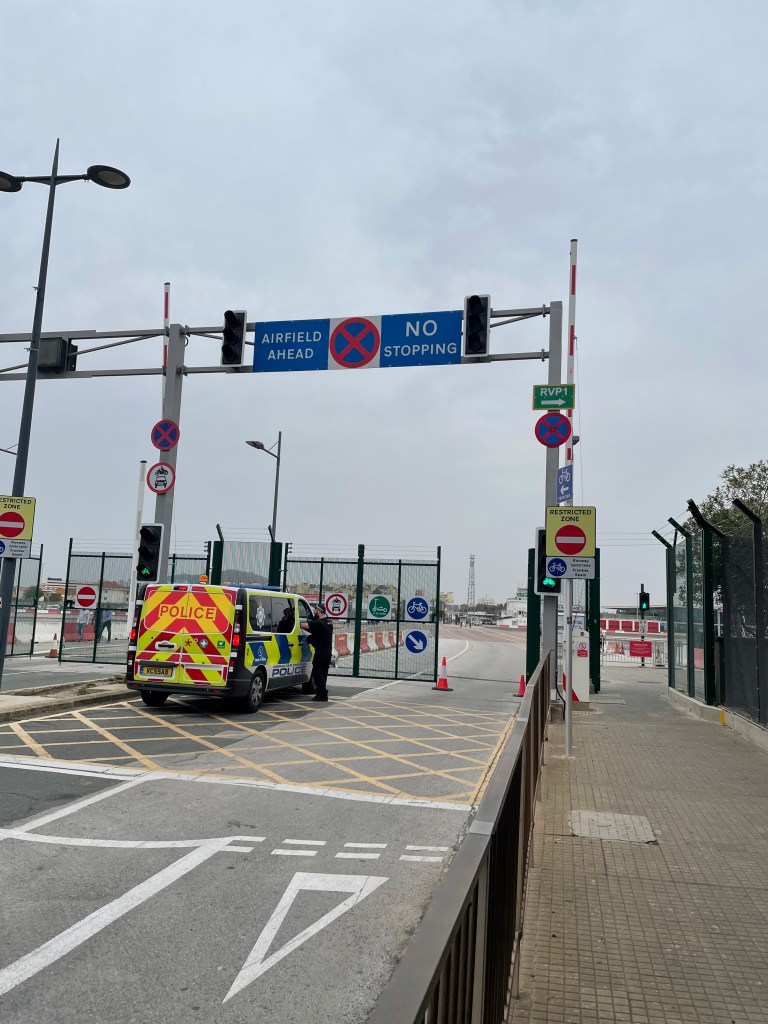
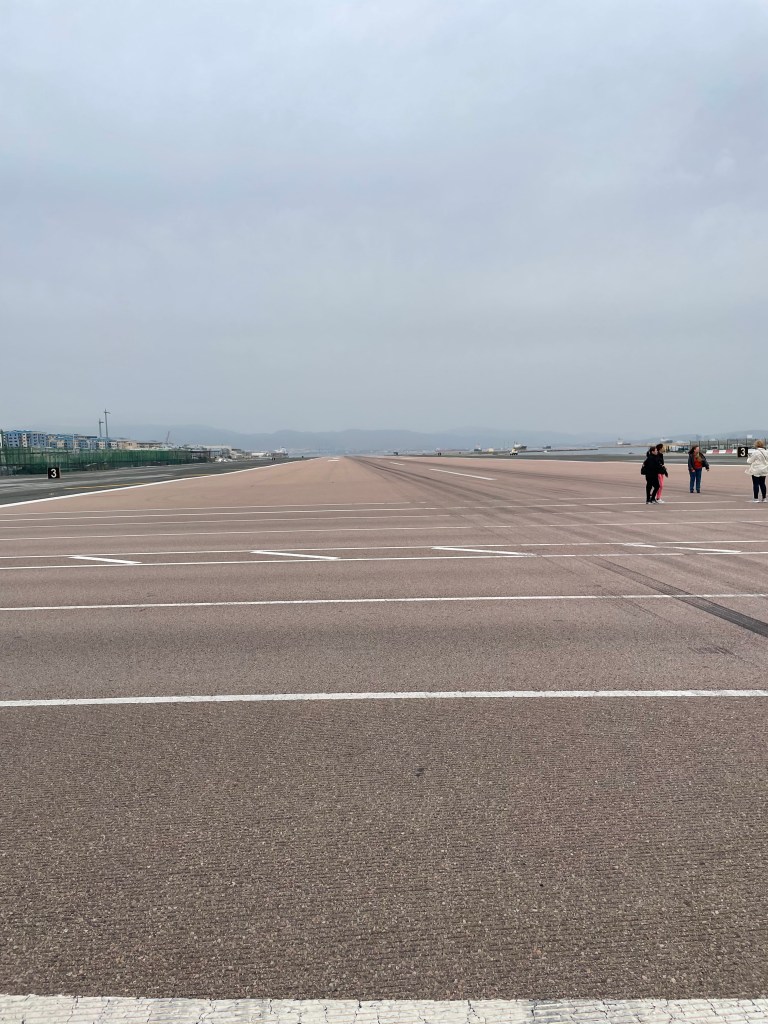
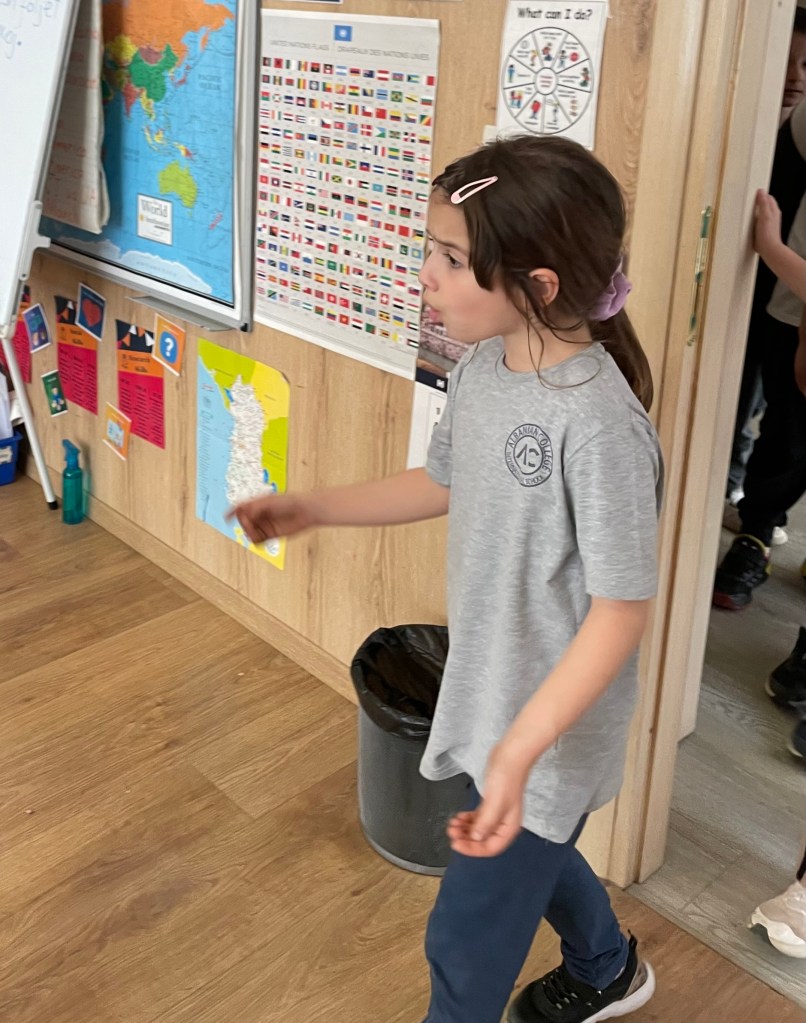
The green part of this map is where the actual Rock of Gibraltar is located. You can see several roads on the Rock but access to these roads is limited to residents and tour companies.Here we are with a tour group heading up the Rock overlooking the Bay of Gibraltar. The bay connects to the Strait of Gibraltar which then connects the Atlantic Ocean and the Mediterranean Sea. About 300 ships (mostly merchant ships) pass through the Strait of Gibraltar everyday. It is one of the busiest waterways in the world.It was recommended that I take my glasses off because the monkeys have been known to take them and run.The monkeys we saw on the Rock of Gibraltar look very similar to the monkeys we saw in Morocco. Here they are called Barbary Macaques and in Morocco they were called baboons.Visiting the caves on the Rock.There are 34 miles of tunnels within the Rock of Gibraltar. They were made over the course of 200 years and were primarily constructed by the British Army. They were used most recently during WWII to protect British soldiers as the Germans and Italians tried to force their way through the Strait of Gibraltar into the Mediterranean. The young man in the photo is a German we met on our tour who was very personable and knowledgable.Overlooking the Gibraltar Airport runwayYou probably recognize Winston Churchill visiting the Rock.When we were walking down the hill after visiting the tunnels we came across this tower that dates back to the 1300’s.As we continued walking down the Rock we came across this. You probably already know this from previously reading my blog that I love murals. Look at this octopus that winds itself around the building! Amazing!!!The next morning we started making our way back to Malaga, Spain so we could then fly home to Tirana. The only way to leave Gibraltar is to walk (or drive if you have a car) across the Gibraltar Airport runway. Of course, this crossing is very well regulated and allows you to only go at particular times. Here we go…You can see the airport and a parked plane in the distance.Looking down the runway.You may wonder why we did not fly in and out of the Gibraltar Airport. It costs five times as much to fly from Gibraltar as it does from Malaga.Telling us which way to go to walk over the border.Now all we need to do is wait a few minutes and then we will board the bus for the two hour ride to the Malaga Airport.After spring break our next IB theme in Grade Two was called Sharing the Planet. As a provocation, to get the kids thinking I collected some trash and then dumped it in the classroom while the kids were at recess. You can see how they reacted when they returned to the class. The trash got the kids talking and thinking about how to protect the Earth. We spent six weeks reading, writing, researching and doing a science experiment on the topic. The unit culminated with a field trip to a recycling center. It was a fun and interesting unit to teach.
As I said at the beginning of this post, I am behind with writing these blog posts. I still have a couple more to do before I close down the blog. Thank you for reading them and your ongoing interest in our international experience.
Currently, we are enjoying reconnecting with family and friends. The first month we were back in Fairport, our daughter along with her husband, four children and two dogs lived with us after moving out of their Virginia home and before their move to Thailand. It was a crazy month but we LOVED every minute with them.
5 thoughts on “A Spring Break Trip to Morocco and Gibraltar”
Your blogs are so interesting & informative, Sarah .. thanks for sharing your experiences! I especially liked the mosaic tiles, orange trees, “Blue City”, & nighttime view of the Rock of Gibraltar .. breathtaking! I think Americans could benefit from mint tea, too. Welcome Home, my friend! ❤️
Sarah, I was out of town, so I am late to your blog but you know I would never miss it! I am so appreciative of your pictures and commentary. What a great way to begin the lesson with the kids! Enjoy your fall.










































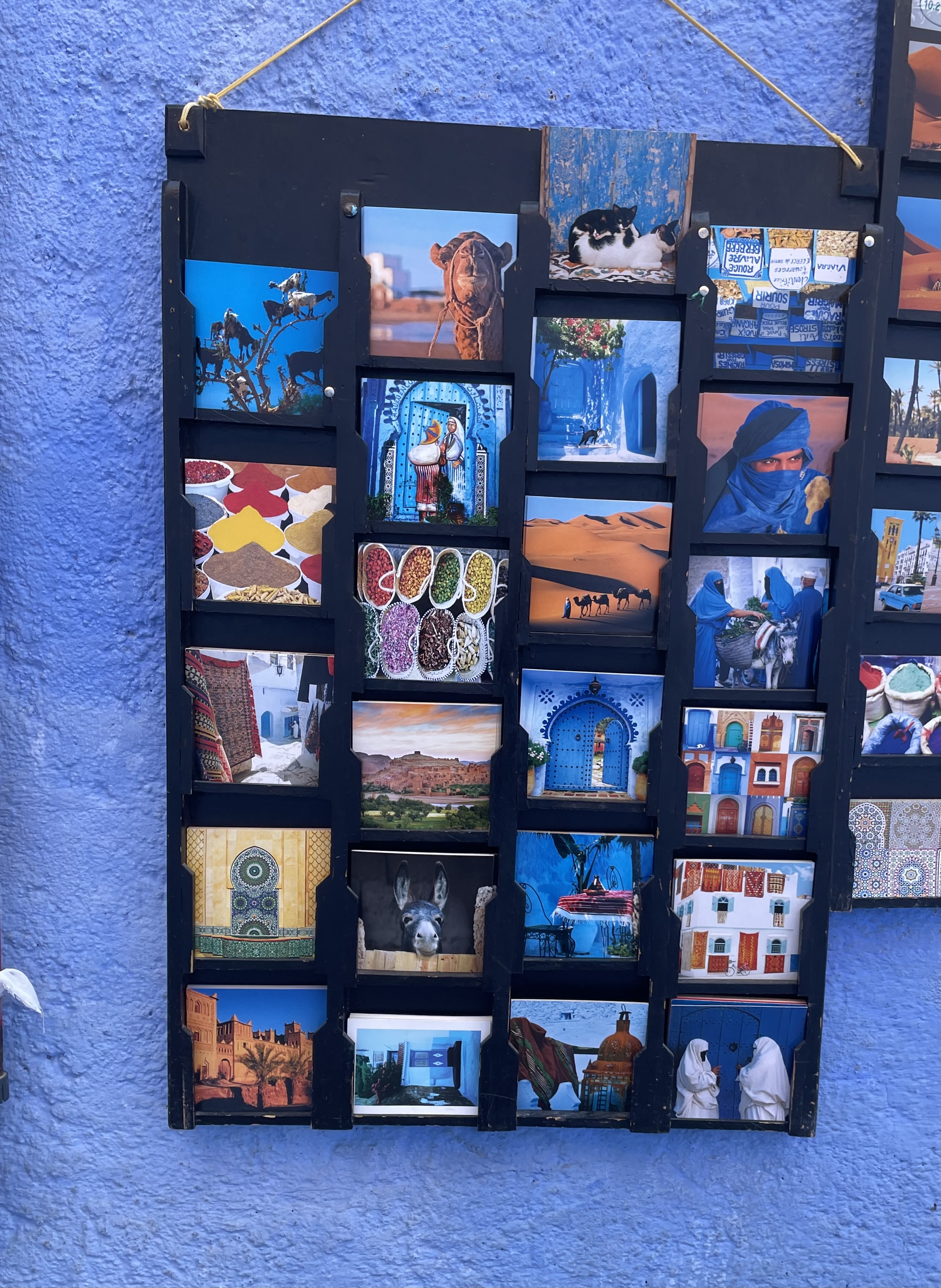
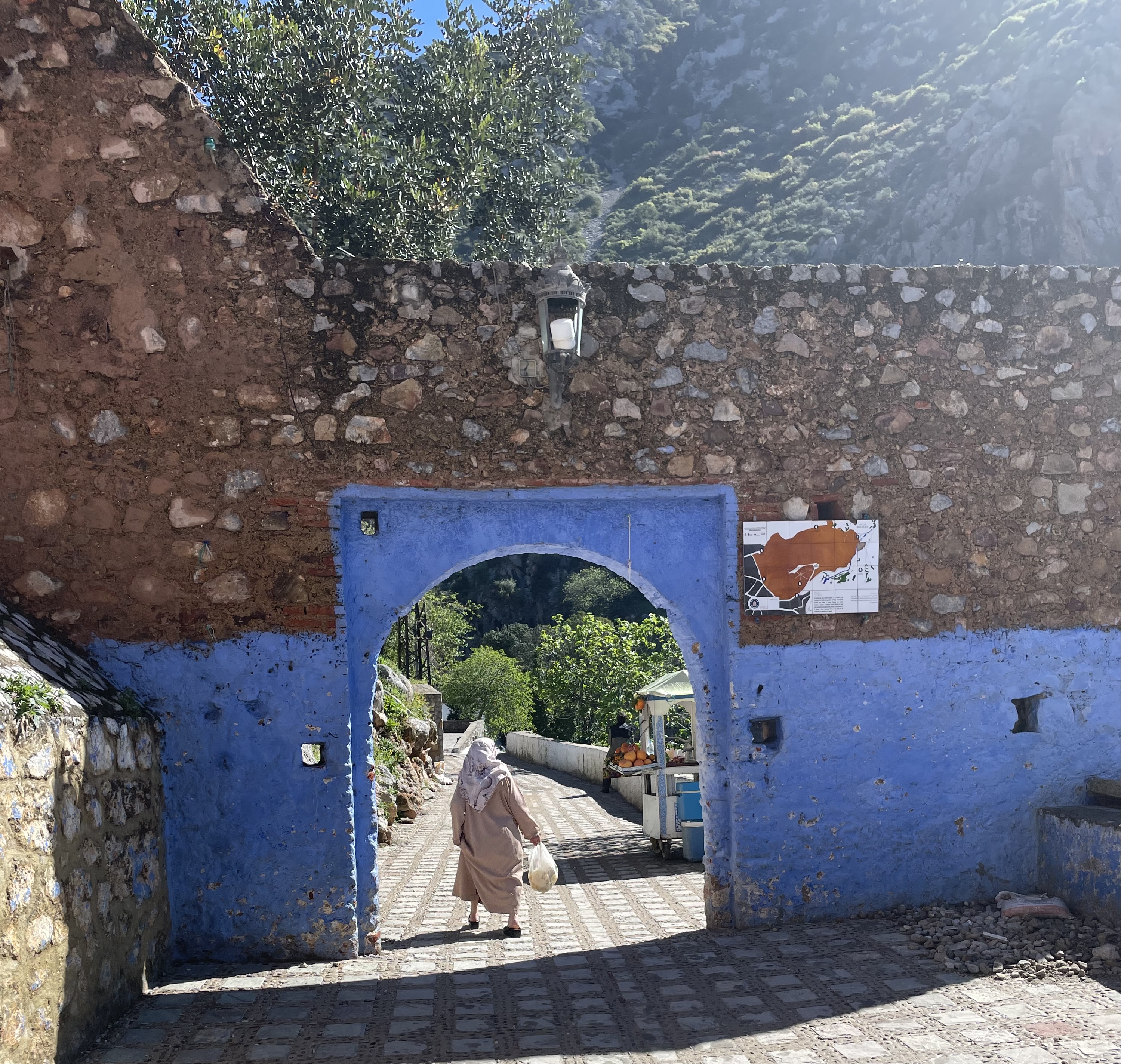









































 Teaching in Albania
Your blogs are so interesting & informative, Sarah .. thanks for sharing your experiences! I especially liked the mosaic tiles, orange trees, “Blue City”, & nighttime view of the Rock of Gibraltar .. breathtaking! I think Americans could benefit from mint tea, too. Welcome Home, my friend! ❤️
LikeLiked by 1 person
Thanks for reading, Lisa!
LikeLike
Fantastic write-up, thank you for all of these details and photos!
LikeLiked by 1 person
Sarah, I was out of town, so I am late to your blog but you know I would never miss it! I am so appreciative of your pictures and commentary. What a great way to begin the lesson with the kids! Enjoy your fall.
LikeLiked by 1 person
As always, thank for reading my blog, Lisa! I hope you were doing something fun when you were out of town.
LikeLike